
The Double-Dip: Stacking Amex FHR with Hyatt Elite Status
The cardinal rule of travel hacking is that you must book directly with the hotel to earn points and status. Here is the massive & highly lucrative exception to that rule, and how to execute the ultimate luxury arbitrage.
There is a frustrating dilemma that every premium credit card holder eventually faces. You’re holding the Amex Platinum card, which gives you a $600 annual credit to spend at Fine Hotels & Resorts (FHR). But you are also a loyalist to a specific hotel brand (like Hyatt) and you want to earn your points, get your elite night credits, and use your milestone awards.
Usually, the travel industry forces you to choose. If you book a hotel through a third-party portal like Expedia or Booking.com, the hotel refuses to acknowledge your loyalty status. You get no points, no upgrades, and no late checkout.
However, American Express Fine Hotels & Resorts is not a standard travel portal. It operates on a completely different backend system, creating a massive loophole that allows you to double-dip on the system. You can trigger your Amex statement credits and receive full Hyatt elite recognition on the exact same reservation.
The Fine Hotels & Resorts Exception
Unlike standard online travel agencies, Amex FHR bookings are processed as "eligible rates" by the World of Hyatt program.
This means that when you book an FHR property that is also a Hyatt property (like a Park Hyatt, Andaz, or Unbound Collection), you are stacking two completely different sets of benefits on top of each other.
From American Express, you automatically receive:
The $300 bi-annual Platinum statement credit.
A $100 on-property experience credit (usually for food, beverage, or the spa).
Guaranteed 4:00 PM late checkout.
Early check-in (upon availability)
Daily breakfast for two.
But because it is an eligible rate, you can immediately link your World of Hyatt membership number to the reservation. This allows you to earn base points on the cash you spent, earn an Elite Qualifying Night (EQN) toward your next status tier, and most importantly, apply your own Hyatt upgrades.
The Southern California Case Study: The "Staycation" Arbitrage
To understand just how great this overlap is, you have to look at a real-world execution. This strategy works nicely for quick, one-night weekend getaways where you want to use your Amex credit without having to buy a plane ticket.
If you are based in the LA or OC area, the drive down to Oceanside is the perfect arbitrage opportunity with two twin Hyatt properties sitting right on the water: Mission Pacific and The Seabird Resort. Both are part of the Hyatt portfolio, and both belong to the Amex FHR program.
Let’s run the math on a one-night stay in February:
The Booking: You book a standard room for $400 through the Amex FHR portal.
The Amex Rebate: Your Platinum card automatically reimburses you $300, dropping your actual out-of-pocket cost to $100.
The FHR Yield: At check-in, the front desk hands you a $125 food and beverage credit to use at Valle (their Michelin-starred restaurant) or the rooftop bar, plus they cover your breakfast the next morning (easily a $60+ value).
The Hyatt Multiplier: Because you linked your Hyatt number, you can apply a Guest of Honor (GOH) milestone award to the reservation.
The Guest of Honor Synergy
Here is where the stack becomes truly asymmetrical.
Amex FHR offers a room upgrade "when available," which usually just means a slightly better view on a higher floor. But when you attach a Hyatt Guest of Honor award to that same FHR reservation, you are officially prioritized in Hyatt's system for a Standard Suite Upgrade at check-in.
By combining the two programs on a single night at Mission Pacific, you effectively pay $100 out of pocket. In return, you secure a potential oceanfront suite, $185 in free food and beverage, guaranteed 4:00 PM checkout, and you still earn Hyatt points on the cash you spent. You also get to waive the resort fee ($57) because of the Guest of Honor award.
The Execution Protocol
To pull this off seamlessly, you have to follow a specific order of operations:
Book the reservation entirely through the Amex FHR portal.
Wait 24 to 48 hours for the reservation to sync between Amex and the hotel.
Do not rely on the Amex portal to add your loyalty number. Call the hotel's in-house reservation desk directly.
Give them your Amex confirmation number, ask them to manually attach your World of Hyatt number to the booking, and tell them you would like to apply your Guest of Honor award to the stay.
When you check in, the front desk will see a VIP reservation that holds both Amex FHR privileges and Hyatt top-tier status. You get maximum value from your credit card benefit, maintain your hotel loyalty, and experience a flawlessly optimized trip.
Read more on other places in SoCal to use your Amex FHR credits

The Rental Car Counter Trap: Primary vs. Secondary Insurance
Standing at the rental counter while an agent aggressively upsells you on daily collision coverage is a universal travel nightmare. Here is the exact breakdown of how your credit cards actually protect you, and the one massive blind spot you need to watch out for.
It happens on almost every single trip. You navigate the airport, take the shuttle to the rental car center, and finally make it to the front of the line. You just want the keys so you can start your vacation. But before they hand them over, the agent looks at the screen and asks the most stressful question in travel: “Would you like to add our Loss Damage Waiver for $30 a day to protect the vehicle?”
Panic usually sets in right here. You vaguely remember reading online that your credit card covers rental insurance, but you aren't entirely sure how it works. You don't want to get scammed into paying an extra $200 for a week-long rental, but you also don't want to be on the hook for a $30,000 vehicle if someone rear-ends you in a parking lot.
This confusion is exactly what the rental companies bank on. To navigate this confidently, you need to understand the critical difference between the two types of credit card coverage: Secondary and Primary.
The "Secondary" Illusion
Most standard travel credit cards offer what is called Secondary Collision Damage Waiver (CDW) coverage.
If you decline the rental agency’s insurance and pay for the car using a card with secondary coverage, you are technically protected if the car gets dented, scratched, or completely totaled. However, because it is secondary, the credit card company forces you to file a claim with your own personal auto insurance (like Geico or State Farm) first.
The credit card will only step in to pay your personal deductible or cover whatever your primary insurance refuses to pay.
While this saves you from total financial ruin, it is a logistical nightmare. Because you had to involve your personal auto insurance, your monthly premiums are almost guaranteed to skyrocket for the next three to five years. You saved $30 a day at the rental counter, but you will pay for it heavily in insurance rate hikes.
(Note: Surprisingly, the standard coverage on the ultra-premium Amex Platinum card is actually secondary, unless you manually enroll in their paid Premium Car Rental Protection program).
The "Primary" Cheat Code
This is where holding the right card completely changes your risk profile. A very small handful of premium travel cards offer Primary CDW coverage.
When you book the rental car using a card with primary coverage, the bank effectively acts as a brick wall between the rental agency and your personal auto insurance. If you back into a concrete pillar or a rogue shopping cart scrapes the door, you simply hand the keys back to the agency, file a claim through your credit card portal, and walk away.
Your personal auto insurance company never even finds out the accident happened. Your premiums stay exactly the same.
This is one of the greatest hidden superpowers of the Chase Sapphire Preferred and the Chase Sapphire Reserve. Just by paying for the rental with your Sapphire card and declining the agency's waiver, you are instantly wrapped in primary coverage. It effectively renders the pushy sales pitch at the rental counter completely irrelevant.
The Massive Liability Blind Spot
There is one crucial detail that trips up even advanced travelers, and it is vital that you understand the distinction before you drive off the lot.
Credit card insurance—whether primary or secondary—only covers the physical rental car itself. It covers the metal, the glass, and the tires of the vehicle you are driving.
It does absolutely nothing for Liability.
If you accidentally run a stop sign and total someone else's car, or worse, injure the other driver, your credit card will happily pay to replace your rental car. It will not pay a single dime toward the other person's medical bills or the damage to their vehicle.
To cover liability, you generally have to rely on your own personal auto insurance policy from back home (which usually extends your normal liability limits to your rental car). If you do not own a car and therefore do not have a personal auto insurance policy, you must purchase the Supplemental Liability Insurance (SLI) at the rental counter to protect yourself from potentially bankrupting lawsuits.
The Effortless Counter Strategy
Once you understand the mechanics, the rental counter stops being a high-pressure trap and becomes a simple, automated transaction.
Your strategy is now entirely frictionless. You walk up to the counter, hand them your Chase Sapphire Preferred to secure the primary coverage on the vehicle, and politely but firmly decline their Loss Damage Waiver. You drive off the lot knowing exactly where your coverage begins, where it ends, and that your personal insurance premiums are safely insulated from the chaos of the road.
The Airport Security Hierarchy: Global Entry vs. TSA PreCheck vs. CLEAR Explained
Global Entry vs TSA PreCheck, is CLEAR worth it, airport security fast track, difference between Global Entry and PreCheck, best way to skip airport lines.
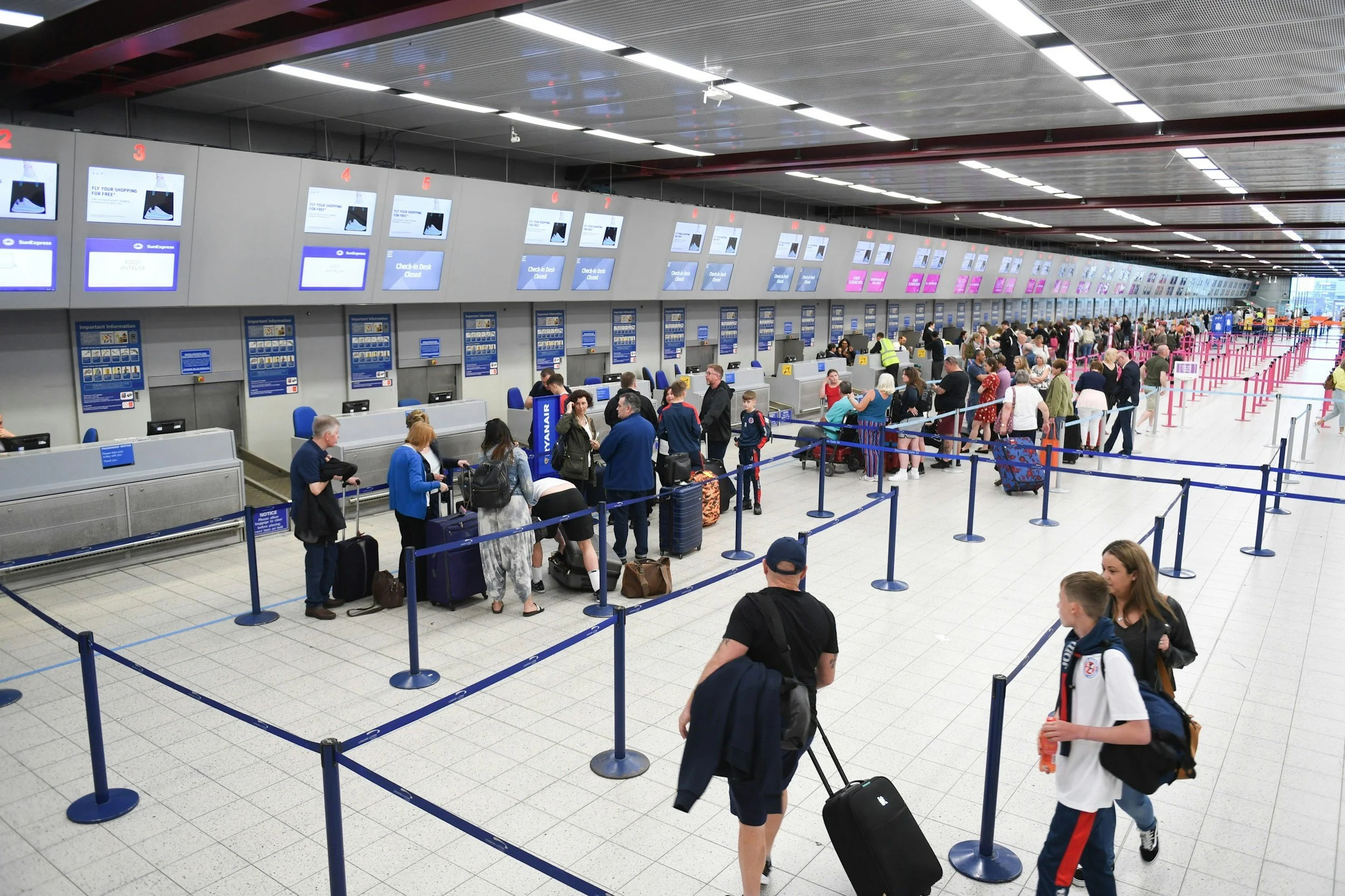
Navigating a crowded departure terminal doesn't have to be a miserable experience. Here is the exact combination of security clearances you need to permanently bypass the airport bottleneck, and how to get your credit cards to foot the bill.
Traveling should feel seamless, but the moment you walk through the sliding glass doors of a major international terminal, you are usually hit with a wall of sheer logistical friction. The standard security line is a chaotic mess of unpacking laptops, removing shoes, and slowly shuffling forward while holding your boarding pass.
If you travel more than twice a year, starting your vacation in that line is an exhausting drain on your energy. Fortunately, you can entirely bypass the bottleneck. But the alphabet soup of government and private security programs—TSA PreCheck, Global Entry, and CLEAR—usually leaves travelers completely paralyzed, wondering which application they actually need to fill out.
To build a frictionless travel strategy, you have to understand exactly what each of these programs does, where their limitations lie, and how they stack together.
TSA PreCheck: The Domestic Baseline
If we are looking at airport security as a pyramid, TSA PreCheck is the absolute foundational layer. It is a U.S. government program designed strictly to make your life easier when you are departing from an American airport.
When you have PreCheck, you are funneled into a dedicated, expedited physical screening line. The primary benefit here is the retention of your dignity and your time. You do not have to take off your shoes, remove your belt, or pull your carefully packed laptop out of your carry-on bag. You simply put your bag on the belt, walk through a standard metal detector, and keep moving.
It is a fantastic program, but it has one massive blind spot: it does absolutely nothing for you when you are flying back home from a foreign country.
Global Entry: The International Cheat Code
This is where the most common point of confusion lies. People often wonder if they should apply for TSA PreCheck or Global Entry.
The definitive answer is always Global Entry, for one very simple reason: Global Entry automatically includes TSA PreCheck.
Global Entry is managed by U.S. Customs and Border Protection. Its sole purpose is to rescue you from the most agonizing part of international travel: the U.S. Customs line. Imagine stepping off a fourteen-hour flight from Tokyo into LAX, completely exhausted, only to stare down a massive, winding queue of hundreds of people waiting to show their passports to a border agent.
With Global Entry, you bypass that sea of people entirely. You walk up to a dedicated row of electronic kiosks. The newest machines don't even require you to scan your passport or scan your fingerprints anymore; they use highly advanced facial recognition. You simply walk up, look at the camera for three seconds, wait for the screen to flash green, and walk straight out to the baggage claim. It turns a potential two-hour nightmare into a sixty-second formality.
CLEAR Plus: The Private Line-Cutter
While Global Entry and PreCheck are government-run, CLEAR Plus is a private biometric company, and understanding how it fits into the ecosystem is critical.
The biggest misconception in travel is that CLEAR replaces TSA PreCheck. It does not. Instead, it works brilliantly in tandem with it.
When you arrive at the airport security checkpoint, there are two distinct steps. First, the identity check (where the agent looks at your ID and boarding pass). Second, the physical screening (where your bags go through the scanner). PreCheck speeds up the physical screening. CLEAR speeds up the identity check.
When you have CLEAR, you bypass the entire line of people waiting to show their IDs. You walk up to a private biometric pod, scan your eyes or your fingerprints, and a CLEAR ambassador personally escorts you straight to the front of the physical screening line.
If you have both CLEAR and TSA PreCheck, you have built the ultimate airport fast-track. You use CLEAR to skip the ID line, and then they drop you off at the front of the PreCheck line so you don't have to take your shoes off. It is the closest thing to teleportation that exists in a commercial terminal.
How to Build the System for Free
If you were to pay cash for these programs out of pocket, it would cost you a decent amount of money. Global Entry requires a $100 application fee (good for five years), and CLEAR Plus costs a steep $189 per year.
However, if you are holding premium travel credit cards, you should absolutely never pay for these clearances yourself. The banks will subsidize the entire system for you.
Your Chase Sapphire Preferred or Reserve card comes with a statement credit that entirely reimburses the $100 Global Entry application fee. You simply pay for the application online using your Chase card, and the bank quietly wipes the charge from your statement a few days later.
If you also hold the Amex Platinum card, you can use its dedicated $209 annual CLEAR Plus credit to cover your biometric membership. By leveraging the cards already sitting in your wallet, you can secure the highest level of airport clearance without spending a single dime of your own capital.
The Positioning Flight Strategy: How to Unlock the Best International Award Space
Restricting your flight searches to your local airport is the number one reason you can’t find premium cabin award space. Here is how to expand your net and use short regional hops to catch the world's best flights.
If you have ever tried to book a highly coveted business class seat to Asia using your points, you already know how frustrating the search process can be. You log into your airline portal, type in your home airport, and cross your fingers, only to find that every single premium seat is completely blacked out for the next eleven months.
The biggest mistake travelers make at this exact moment is giving up. They assume that if the flight isn't available from their local runway, the trip just isn't happening.
But seasoned award travelers rarely fly direct from their driveway to their final destination. Instead, they rely heavily on a concept called the "positioning flight." Once you get comfortable with this strategy, your options for luxury travel essentially multiply overnight.
Expanding the Search Radius
Think of a positioning flight as a cheap, short-haul commuter ticket whose only purpose is to get you to the airport where the actual luxury award space exists.
For example, living out in the Inland Empire or eastern LA County means LAX is usually your default international hub. But relying exclusively on LAX to find a pair of ANA or Japan Airlines business class seats is incredibly limiting, simply because the competition for those specific seats is fierce.
If you hit a brick wall searching out of Los Angeles, the strategy is to immediately expand your search up the West Coast. You start looking at San Francisco (SFO), Seattle (SEA), or even Vancouver (YVR). Very often, you will find that SFO has two lie-flat seats wide open on the exact day you want to travel, while LAX has nothing.
Your next move is brilliantly simple: you book those dream seats out of SFO using your points, and then you just buy a cheap, one-way cash ticket from Ontario (ONT) or Burbank (BUR) to get yourself up to San Francisco in time for the main event.
The Golden Rule: Protect the International Leg
While this strategy unlocks massive value, it does introduce a specific layer of logistical risk. It is absolutely crucial to understand that your positioning flight and your international award flight are completely separate tickets.
If you book a Southwest flight to SFO that gets delayed by three hours because of fog, and you end up missing your flight to Tokyo, the international airline is not going to help you. As far as they are concerned, you just didn't show up to the gate. They are under no obligation to rebook you, and you could lose your points entirely.
Because of this, you have to protect the international leg at all costs. The golden rule of positioning flights is to build in a massive time buffer.
The Overnight Buffer Strategy
You should never book a positioning flight that lands just two or three hours before your international departure. One mechanical delay on your regional jet will ruin your entire vacation.
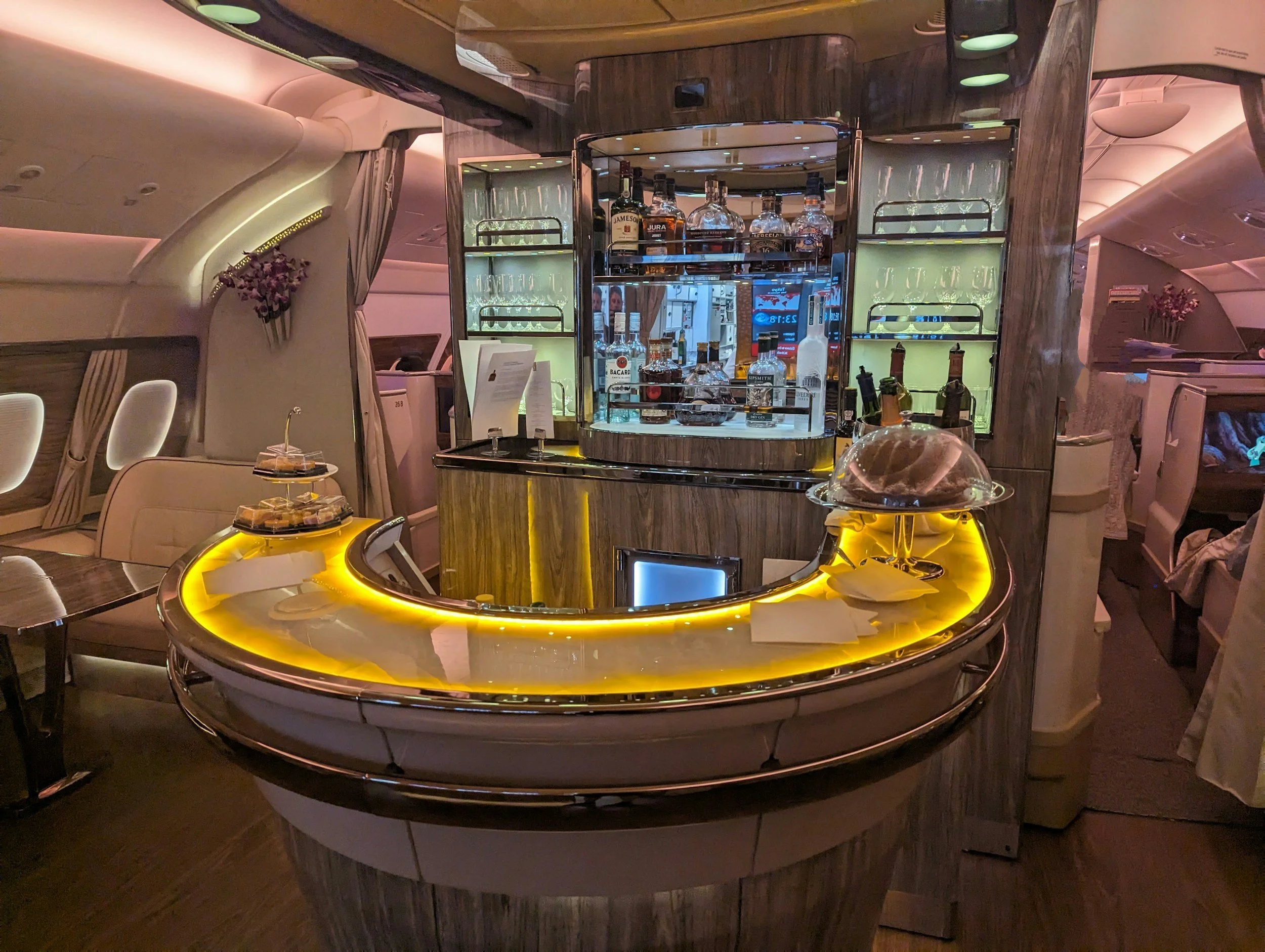
The safest, most stress-free way to execute this is to fly in the night before. You take a relaxing evening flight up to Seattle or San Francisco, check into an airport hotel, and get a great night's sleep. The next morning, you wake up completely refreshed, walk into the international terminal, and head straight to the premium lounge to enjoy a champagne breakfast before your long-haul flight.
If flying in the night before simply isn't possible due to your work schedule, you need to leave an absolute minimum of five to six hours between your flights. This gives you enough time to collect any checked baggage, switch terminals, re-check your bags with the new airline, and comfortably clear international security.
Liquidating Your Airline Credits
The best part about the positioning flight strategy is that it synergizes perfectly with the premium credit cards you are already holding.
If you are using the Amex Platinum card, this is the exact scenario where you deploy your $200 annual airline incidental credit or your accumulated United TravelBank funds. Instead of paying cash for that short regional hop up the coast, you use your card benefits to cover the cost of the positioning flight entirely.
By tying it all together, you are using your Amex benefits to fly up to San Francisco for free, and using your Chase or Alaska points to fly business class across the Pacific. You effectively manufacture a five-figure luxury experience for just the cost of airport taxes.

The Chase to Hyatt Pipeline: Why Ultimate Rewards Are the Ultimate Travel Currency
Earning free hotel nights by actually staying in hotels is a slow, exhausting game. The real secret to unlocking high-end luxury resorts is leveraging your everyday spending through the Chase credit card ecosystem.
If you talk to anyone who spends a lot of time optimizing travel rewards, you’ll notice they all have a deep, almost obsessive love for World of Hyatt points.
The reason is simple math. While programs like Hilton or Marriott have massively inflated their award charts (often charging 80,000 to 100,000 points for a single night at a nice property), Hyatt has kept things incredibly reasonable. You can frequently book breathtaking, top-tier resorts for just 25,000 to 30,000 points a night.
But there’s a catch. Because Hyatt has a smaller global footprint than the other mega-chains, earning points purely through hotel stays takes forever. That is exactly where the Chase Ultimate Rewards program completely changes the game.
The 1:1 Transfer Magic
Chase and Hyatt have a partnership that is arguably the most valuable relationship in the travel hacking world. If you hold a premium Chase credit card, you can transfer your Ultimate Rewards points directly into your World of Hyatt account at a strict 1:1 ratio.
Best of all, the transfers are instantaneous. You can find an available room on the Hyatt app, log into your Chase portal, move the points over, and book the room sixty seconds later. It completely removes the stress of waiting days for points to clear while praying your dream room doesn't sell out.
Whether you are planning a quick, romantic weekend getaway with your girlfriend down the coast, or pooling your points for a massive two-week trip to Asia, this transfer pipeline is the engine that funds the experience.
Building the Foundation: The Sapphire Preferred
If you are just starting to build your Chase ecosystem, you don't need to jump straight into the ultra-premium, high-fee cards. The undisputed champion for everyday travelers is the Chase Sapphire Preferred.
For a very reasonable $95 annual fee, this card acts as the gateway to the transfer pipeline. You earn solid multipliers on dining and everyday travel, but the real prize is the sign-up bonus. It also offers a very solid rental car insurance that acts as your primary insurance — even internationally. Chase frequently offers bonuses hovering around 60,000 points (sometimes higher) just for hitting the minimum spend requirement in the first few months.
When you translate that welcome bonus through the 1:1 Hyatt pipeline, you are instantly sitting on enough points to book two free nights at a stunning property like the Seabird in Oceanside, where cash rates regularly push past $500 a night. You are trading a $95 fee for a thousand dollars in luxury hotel value.
The Accelerator: The Freedom Combo
Once you have the Sapphire Preferred anchoring your wallet, you can dramatically accelerate your earning potential by adding Chase's no-annual-fee cards to your rotation, specifically the Chase Freedom Flex or Freedom Unlimited.
By themselves, the Freedom cards technically earn cash back. But when you also hold a Sapphire card, Chase allows you to combine your accounts. Suddenly, that "cash back" transforms into fully transferrable Ultimate Rewards points.
The strategy here is to use the Freedom cards for their specific bonus categories—like groceries, pharmacies, or rotating quarterly bonuses—to rack up points much faster than the Sapphire card could on its own. You then funnel all of those points upward to your Sapphire account, and from there, transfer them straight to Hyatt.
The Bottom Line
You do not need to be a corporate road warrior to stay at five-star hotels. You just need to be intentional about how you pay for your groceries, your dinners out, and your daily expenses. By routing your natural everyday spending through the Chase ecosystem, you are quietly funding your next luxury vacation every time you swipe your card.

Demystifying Hyatt’s Guest of Honor: How to Get Top-Tier Perks Without the 60-Night Grind
Earning elite hotel status usually requires living out of a suitcase for half the year. But if you know how to navigate Hyatt’s loyalty program, you can unlock free breakfast, suite upgrades, and late checkout for your next vacation—no massive night requirements necessary.
If you spend enough time reading about points and miles, you’ll quickly notice that everyone seems absolutely obsessed with Hyatt Globalist status. And honestly, the hype is entirely justified. While other hotel chains have severely watered down their elite benefits over the years, Hyatt still treats its top-tier members incredibly well.
The catch, of course, is that reaching Globalist organically requires spending 60 nights a year in a Hyatt property. For most of us, that just isn't realistic. But there is a brilliant, slightly hidden feature baked into the World of Hyatt program that lets you bypass the grind and taste the good life for a single trip: the Guest of Honor award.
What Actually is a Guest of Honor Award?
Simply put, a Guest of Honor (GOH) award is a digital certificate that can be applied to a single hotel stay (up to seven nights). Once attached to your reservation, the hotel treats you exactly as if you were a 60-night Globalist member for the duration of that specific trip.
That means you get to cut the line and enjoy the absolute best perks the hotel has to offer. You get free club lounge access or complimentary full breakfast for up to two adults and two children. You are bumped to the top of the list for room upgrades, including standard suites. You get a guaranteed 4:00 PM late checkout, which is an absolute game-changer for extending a beach weekend.
Seeing the Value in Action
To really understand why this is so valuable, you have to look at the math on a local weekend trip.
Take the Southern California coast, for example. When planning a romantic getaway down to Oceanside with my girlfriend, we were looking at splitting our time between Mission Pacific and The Seabird. Both are fantastic properties, but the incidental costs can add up incredibly fast.
If you just book a standard room, you're paying out of pocket for parking, and a nice sit-down breakfast for two can easily push past $80 a day. However, if you book that room using Hyatt points and apply a Guest of Honor award, the entire financial picture changes.
Because you are treated as a Globalist, the hotel completely waives the valet parking fees on award stays. You wake up, walk down to Valle or Piper for a beautiful, ocean-view breakfast, and the bill simply disappears from your folio. On top of that, you are highly likely to get bumped from a standard city-view room to an ocean-view balcony. On a quick three-night stay, that single certificate can easily save you $400 in hidden fees and food costs, while drastically improving the actual experience of the trip.
How Do You Actually Get One?
Hyatt recently revamped how these awards are distributed, which actually made them much easier for casual travelers to acquire.
1. You can earn them yourself (faster than before). You no longer have to hit 60 nights to get a taste of GOH. Hyatt now ties these awards to their "Milestone Rewards" program. You earn your first Guest of Honor award right when you hit 40 nights in a calendar year.
2. The "Gifted" Route. This is where the travel community really shines. Guest of Honor awards are completely transferrable. If you have a friend, family member, or coworker who travels constantly for business and earns more of these certificates than they can personally use, they can easily transfer one directly into your World of Hyatt account online. You can then attach it to a reservation you make yourself, whether you are paying with cash or using your own points.
A Quick Word of Strategy
If you do manage to secure a Guest of Honor award, be incredibly strategic about where you use it. Don't waste it on a one-night stay at a Hyatt Place by the airport, where breakfast is already free for everyone anyway.
Save it for a premium property—like a Park Hyatt, an Andaz, or a high-end resort—where the on-site dining is expensive, the standard suites are beautiful, and parking costs a premium. That is where you extract hundreds of dollars in real, tangible value and turn a standard vacation into a genuinely luxurious experience.

The FHR Arbitrage: Maximizing the $600 Amex Platinum Credit in Southern California
Most travel blogs suggest blowing your Fine Hotels & Resorts credit on a $1,500-a-night mega-resort. Here is why targeting mid-tier luxury properties across Los Angeles and San Diego is the actual mathematical sweet spot.
When it comes to realizing the $600 Amex Fine Hotels & Resorts (FHR) statement credit ($300 bi-annually), the mainstream advice is almost always wrong. Generic travel blogs usually tell you to treat yourself by applying the credit to an iconic, ultra-expensive property like the Beverly Hills Hotel or the Resort at Pelican Hill.
While that sounds nice on paper, it's a terrible financial strategy. If you apply a $300 discount to a $1,400 per night room, you are still bleeding a massive amount of out-of-pocket capital. The credit becomes nothing more than a minor rounding error on your final folio.
The true value of the FHR program unlocks when you flip the purpose. The goal is to find highly rated luxury properties where the base rate hovers between $350 and $500. At this price point, your $300 Amex credit covers roughly half the room rate, while you still trigger the full suite of FHR benefits: noon check-in, a 4:00 PM guaranteed checkout, daily breakfast for two, and a $100 property experience credit.
When you run the math on these specific properties in Southern California, you stop paying for hotel rooms and start generating positive yield on your weekend getaways.
Los Angeles: Stacking Status at the Conrad
When looking at the Los Angeles market, the immediate temptation is to book something right on the water in Santa Monica, but the Conrad Los Angeles in downtown is where the actual arbitrage happens.
Because the Conrad is a Hilton-portfolio property, holding the Amex Platinum card gives you an immediate, compounding advantage since it automatically grants you Hilton Honors Gold status. When you stack that existing hotel status on top of an FHR booking, the benefits begin to heavily overlap. You are securing a baseline $100 property credit, which is perfectly used at their incredible rooftop restaurant, Agua Viva, alongside the generous FHR daily breakfast allowance.
Since downtown LA caters heavily to corporate travel, you can frequently find weekend rates dropping into the mid-$300s. Once the statement credit clears, you are effectively paying the equivalent of a standard airport motel rate for one of the newest architectural centerpieces in the city.
Oceanside: The Michelin Loophole at Mission Pacific
Moving south toward the Orange County border, Oceanside has quietly developed into a massive sweet spot for luxury award travelers. Mission Pacific sits directly on the beach, and it presents one of the most fascinating stacking opportunities on the West Coast if you understand how to navigate the Hyatt ecosystem.
Technically a Hyatt property, Mission Pacific becomes incredibly lucrative if you happen to hold Globalist status or have a Guest of Honor (GOH) award to burn. But even without any underlying Hyatt loyalty, booking this property through the Amex FHR portal transforms a standard beach weekend into a heavily subsidized culinary experience. You actually get a $125 credit, not just $100 at this property.
The strategy here is entirely focused on their on-site restaurant, Valle, which recently earned a Michelin star. By utilizing the $125 FHR property credit toward your dinner reservation, you are essentially using your credit card benefits to discount a world-class tasting menu, all while enjoying guaranteed late checkout the following afternoon so you don't have to rush your morning surfing or coffee run.
San Diego: Historic Arbitrage at The US Grant
Down in San Diego proper, The US Grant (part of Marriott’s Luxury Collection) remains one of the most reliable and mathematically efficient ways to liquidate your annual credit in the entire state.
Because it operates primarily as a historic downtown business hotel rather than a sprawling beachfront resort, weekend rates frequently plummet to levels that make the math almost unfair. Depending on the season, it is entirely common to find base rates sitting right around $250 or $275 a night.
When you subtract your $300 Amex statement credit from a $350 room, your actual out-of-pocket cost is $50. Once you factor in the free breakfast for two and the $100 food and beverage credit that you can spend at the legendary Grant Grill, the hotel is practically paying you to sleep there. You are gettuing far more value in food and beverages than you are paying for the physical room.
The Execution
You should never let the $300 FHR credit expire, but you also shouldn't let it bait you into spending a thousand dollars you weren't planning on parting with. By targeting these specific geographic sweet spots, you can treat the benefit exactly how it was intended to be used: as a heavily subsidized way to upgrade your lifestyle without inflating your budget.
See which restaurants are best to spend your Resy credit in LA/OC

The Luggage Lifecycle Analysis: Why Polycarbonate is a Depreciating Asset
Travelers waste capital replacing $300 hard-shell suitcases every four years when the wheels fail. Here is the mathematical argument for the lifetime acquisition.
The Capital Expenditure Problem
Most travelers view luggage as a disposable container. They go to a department store or browse Amazon for a sleek, hard-shell polycarbonate carry-on. They spend $250. It looks great on the first trip.
By year three, the telescopic handle sticks. The wheels drag because the bearings are completely shot. The zipper tracks separate under the tension of being overpacked. The traveler throws it away and spends another $250.
Over a ten-year timeline, the amateur spends $750 to $1,000 on mediocre hardware that actively introduces friction into their travel logistics. We do not rent our gear. We buy permanent assets.
The Polycarbonate Trap
The travel industry heavily markets polycarbonate (hard-shell) luggage. Brands like Away and Samsonite push the aesthetic of a smooth, rigid exterior.
From an engineering perspective, a rigid exterior is a massive liability.
When you fly on smaller regional jets, the overhead bins are compressed. If you force a rigid polycarbonate shell into a space that is a fraction of an inch too small, the shell cracks. There is no flex. Once the structural integrity is compromised, the bag is garbage.
Furthermore, hard-shell bags split exactly down the middle (clam-shell design). This means you need a massive footprint to open the bag in a standard hotel room. It is a highly inefficient use of space.
The Ballistic Nylon Arbitrage
If you look at the flight crews doing long-haul routes to Asia, they do not carry hard-shell luggage. They carry soft-sided Ballistic Nylon.
The premier asset in this category is the Briggs & Riley Baseline Essential Carry-On.
It retails for a massive premium upfront. It is a $700+ capital expenditure. However, when you run the lifecycle analysis, the math heavily favors the acquisition.
1. The CX Compression Engineering Standard suitcases use expanding zippers. If you overpack, the bag expands outward, and suddenly it no longer fits in the overhead sizer. You are forced to check the bag and pay a fee.
The Briggs & Riley uses a proprietary internal ratcheting system. You pull the internal walls up, pack the bag full, zip it shut, and then physically press down on the top of the suitcase. The internal steel brackets compress the air out of the clothing and lock the bag down to the exact legal carry-on dimensions. You fit 25% more inventory into the exact same spatial footprint.
2. The Perpetual Warranty This is the single variable that changes the mathematical equation. Briggs & Riley offers an unconditional lifetime guarantee.
If the airline rips the handle off, they fix it for free. If you wear the wheel bearings down to the axle after five years of heavy travel, they replace them for free. You never have to buy another piece of primary luggage for the rest of your life.
The $700 upfront cost amortized over a 20-year travel career reduces your annual luggage cost to $35 a year.
The Final Assessment
Stop treating your travel hardware as a disposable expense. You are trusting this container to protect your clothing, technology, and personal items thousands of miles from home.
A failed zipper in an international terminal is a catastrophic logistical failure. Eliminate the failure point entirely.

The Michelin Cross-List: Maximizing the Resy Credit at Starred Restaurants
Deploying the $100 Amex Platinum credit at Michelin-recognized venues requires strict financial discipline. Here is the blueprint for extracting maximum value in Los Angeles and Orange County.
The Prestige Trap
When cardholders see a Michelin star, they assume the $100 credit is irrelevant against a massive tasting menu bill. If you book a multi-course dinner at a two- or three-star establishment, the credit simply becomes a minor discount on an $800 check.
You want to experience Michelin-level execution while keeping your out-of-pocket capital as close to zero as possible. This requires targeting specific restaurants where the menu structure allows for a la carte ordering or accessible bar seating.
The Los Angeles Michelin Targets
Camphor (Arts District) – 1 Michelin Star
Camphor applies classical French techniques to a modern bistro setting. Committing to a full dinner will destroy your $100 limit instantly. The strategy here is strictly at the bar. Secure a seat and order the signature Le Burger—an off-menu item that has gained a massive following—alongside their steak tartare and a cocktail. You experience a Michelin-starred kitchen's precision for the exact amount of the statement credit.
Osteria Mozza (Hollywood) – 1 Michelin Star
Nancy Silverton’s flagship Italian restaurant has held a star for years. The main dining room pushes you toward a heavy, expensive meal. The optimal play is the Amaro Bar. You sit at the bar, order the legendary burrata from the mozzarella bar, a handmade pasta like the ricotta egg raviolo, and a glass of Italian wine. The $100 credit absorbs a world-class meal without the three-course commitment.
Kato (Arts District) – 1 Michelin Star
Chef Jon Yao’s Taiwanese-American tasting menu is expensive and heavily booked. However, Kato features an exceptional bar program that does not require the full tasting menu commitment. You book a bar reservation, order a few of the elevated a la carte bar snacks—like the tapioca pearl crab or the milk bread—and explore their highly complex cocktail list. You get the atmosphere and execution of a starred restaurant at a fraction of the cost.
The Orange County Michelin Targets
Orange County has a very small footprint of actual Michelin stars, and the few that exist do not currently use Resy for reservations. To deploy the Amex credit effectively in OC, the strategy shifts to Michelin Bib Gourmand venues. This designation represents exceptional food at a more accessible price point, making the $100 credit even more powerful.
Heritage Barbecue (San Juan Capistrano) – Michelin Bib Gourmand
This is widely considered the best Texas-style barbecue in Southern California. The lines can be long, but the pricing is completely in your control since you order meat by the pound. A $100 budget here is massive. You can secure a pound of brisket, beef ribs, and multiple sides. The Amex credit effectively buys a premium barbecue feast for two people.
Chaak Kitchen (Tustin) – Michelin Bib Gourmand
Chef Gabbi Patrick focuses on the cuisine of the Yucatan peninsula. The space is stunning, featuring an open-air roof and a large bar. The menu is heavily skewed toward small plates and antojitos. Ordering the smoked chicken empanadas, the cochinita pibil, and a round of mezcal cocktails will land perfectly on the $100 mark. It is a highly efficient way to fund a premium date night.
Fable & Spirit (Newport Beach) – Michelin Bib Gourmand
Already a prime target for the standard Resy credit, its Michelin Bib Gourmand status confirms the quality. The strategy remains the same: bypass the heavy entrees. Sit at the bar, order the Guinness brown bread, a shared appetizer, and a few craft cocktails. The $100 credit turns a recognized, high-demand neighborhood spot into a free evening out.
If you are dining in Newport Beach, you are fifteen minutes from the Waldorf Astoria Monarch Beach. Read my guide on how to manufacture a free night there using the Amex FHR Double-Dip.
The Execution
Do not walk into these establishments and order blindly. A Michelin-starred kitchen will drain your wallet if you let them dictate the pace. Review the bar menu beforehand, calculate your price targets, and use the Amex Platinum credit to forcefully subsidize the best food in the region.

Top Restaurants to Maximize the $100 Resy Credit in LA and OC
The Amex Platinum requires you to spend $100 per quarter on the Resy platform. Here is the breakdown of the best high yield redemptions in Los Angeles and Orange County.
The Quarterly Challenge
The $400 annual Resy credit is split into $100 quarters. If you do not use it by the last day of March, June, September, and December, the money vanishes. You cannot roll it over.
Many cardholders treat this as an excuse to book a $400 dinner at Providence and view the statement credit as a minor discount. That is one way to play it. A more efficient approach is targeting restaurants where $100 covers a significant portion of the bill, turning the credit into a heavily subsidized date night or a completely free lunch.
Southern California has one of the highest concentrations of Resy restaurants in the country. Here are the most strategic targets across LA and OC.
The Los Angeles Targets
Pizzeria Sei (Pico Robertson) This is arguably the highest yield redemption in Los Angeles. Pizzeria Sei serves Tokyo style Neapolitan pizza. It is incredibly difficult to get a table, but if you secure a spot, the pricing is extremely fair. Two pizzas and a couple of appetizers will land right around the $100 mark after tax and tip. You walk out having paid almost nothing out of pocket.
Kismet (Los Feliz) Kismet is a Mediterranean spot that excels at shared plates. It is perfect for a weekend brunch or a casual lunch. If you order the Turkishish Breakfast spread and a few sides, you can easily max out the $100 credit while feeding two people exceptionally well. It is a daytime redemption that feels like a full experience.
Mother Wolf (Hollywood) If you want the high end scene, Evan Funke's Roman pasta palace is a prime target. You are not walking out of here for under $100. However, if you sit at the bar and order two spectacular pasta dishes and a cocktail, that $100 credit takes the sting out of a very premium Hollywood evening.
Bavel (Arts District) Bavel is a Middle Eastern powerhouse and one of the hardest reservations in the city. The bill here can climb quickly if you order heavy entrees. The strategy is to sit at the bar and focus entirely on the shared plates. Ordering the hummus with duck 'nduja, the oyster mushroom kebab, and a cocktail perfectly maximizes the $100 limit. You get the full atmosphere of a premium Arts District spot for a fraction of the cost.
Gjelina (Venice) This is the ultimate daytime play. Gjelina is an institution on Abbot Kinney. Going for dinner can be loud and expensive. Booking a late lunch on a Tuesday changes the math completely. Their vegetable dishes and wood-fired pizzas are perfectly priced for this credit. You can order three vegetable plates, a pizza to share, and two coffees, and the Amex credit absorbs the entire check.
Republique (Mid-Wilshire) Attempting to use the credit here for dinner is a losing mathematical game; the bill will rapidly exceed $300. The strategy here is the morning arbitrage. Republique is arguably the best bakery and brunch space in the city. You arrive at 9:00 AM, bypass the dinner reservation fight, and order the kimchi fried rice, a French omelette, and premium pastries. The $100 credit completely absorbs a world-class brunch for two.
Saffy's (East Hollywood) This is the slightly more casual sister restaurant to Bavel and Bestia. It focuses on Middle Eastern skewers and shawarma. It is the perfect low-friction date night. Because the menu is built around manageable shared plates rather than massive entrees, you have absolute control over the final check. A round of cocktails, the hummus, and two skewers will land perfectly on the $100 mark.
Elephante (Santa Monica) This venue is notorious for being an expensive, scene-heavy rooftop. You are paying a premium for the unobstructed views of the Pacific Ocean. This is exactly when you deploy the Amex credit. You do not book a full dinner. You book a late afternoon time slot, order a wood-fired pizza and two cocktails, and watch the sunset. The credit turns what is normally an overpriced trap into a completely subsidized coastal lounge experience.
Pizzeria Mozza (Hollywood) Nancy Silverton’s pizza institution remains one of the most consistent kitchens in Los Angeles. The move here is securing two seats at the bar. Ordering the fennel sausage pizza, the Nancy's chopped salad, and a glass of wine is a quintessential LA dining experience. Because the pricing is anchored to pizza rather than heavy proteins, the $100 limit covers the entire evening with ease.
Hatchet Hall (Culver City / Mar Vista) If you are on the Westside, this wood-fired restaurant is a prime target. The main dining room is excellent, but the true yield is found in the "Old Man Bar" tucked in the back. It features a massive, dark-spirits cocktail list. You can drop in, order the yeast rolls, the roasted vegetables, and a few heavy pours of whiskey. The statement credit effectively buys you an elite happy hour without the commitment of a three-course meal.
The Orange County Targets
Vaca (Costa Mesa) Located near South Coast Plaza, Chef Amar Santana's Spanish tapas and steakhouse is a fantastic use of the credit. Tapas are inherently scalable. You can drop in for lunch, order the bikini sandwiches, pan con tomate, and some charcuterie, and hit the $100 threshold with precision.
Fable and Spirit (Newport Beach) This is a neighborhood staple with a Michelin Bib Gourmand. It is heavily booked, but the food is consistently excellent. The $100 credit perfectly covers a round of drinks, the famous Guinness brown bread, and a shared main course at the bar.
Seabutter (Laguna Beach) Finding good sushi on Resy can be challenging, but Seabutter fills the gap perfectly. Sitting on PCH with ocean views, you can order a few premium rolls and some sashimi. The $100 credit turns an expensive coastal sushi habit into a highly subsidized lunch.
A Restaurant (Newport Beach) This is a classic, old-school Newport Beach institution. It is dark, moody, and very expensive. Do not book a table for a full dinner unless you want to spend heavily. The move here is strictly at the bar. You walk in, order the spicy yellowfin tuna appetizer, split a wedge salad, and order two premium martinis. The $100 credit turns an expensive luxury lounge into a highly subsidized happy hour.
Angelina’s Pizzeria Napoletana (Irvine)
High-end Neapolitan pizza is the perfect vehicle for this credit because the pricing is completely predictable. Located at the Irvine Spectrum, Angelina's gives you absolute control over the check. You can order a Margherita Diavola, a truffle pizza, and two glasses of wine, and the bill lands softly right at the limit. It is a fantastic, low-stress lunch option that doesn't require overspending to feel like a complete meal.
Malibu Farm (Newport Beach)
Situated right on the water in Lido Marina Village, you are paying for the aesthetic just as much as the food. Dinner here can escalate quickly. The optimal move is a weekend brunch. Ordering the Swedish mini pancakes, a breakfast scramble, and fresh-pressed juices allows you to enjoy the premium waterfront environment while the statement credit absorbs the entire cost.
CIR Lounge (Fountain Valley)
When planning a date night with your partner, CIR Lounge provides a much darker, moodier atmosphere than the typical coastal spots. The menu focuses heavily on Japanese fusion and craft cocktails. Sitting at the bar and ordering a few elevated rolls alongside a round of drinks brings the check right to the $100 mark. It turns a standard evening out into a heavily subsidized luxury experience.
CasaDamí (Newport Beach)
Tucked away on the Balboa Peninsula, this Modern European spot excels at small plates. The menu is designed for grazing, which gives you complete mathematical control over the final tab. Focus on the crudo, the burrata, and the extensive wine list. It is an ideal target for a lighter, late-afternoon meal before the evening rush begins.
The Carry Over Method
Sometimes a quarter ends and you simply do not have time to make a reservation. You do not have to lose the money.
Many Resy restaurants sell physical gift cards in person at the host stand. If the restaurant processes their in house gift cards through their main point of sale system, it often triggers the Amex credit.
You can walk into a local spot like Bestia or Pitfire Pizza on the last day of the quarter, buy a $100 physical gift card, and trigger the statement credit. You just successfully converted an expiring benefit into liquid restaurant currency that you can use next year.
OR you can purchase a virtual gift card via Toast to a place like Holbox for a easy virtual way to bank this $100 until you can get a reservation for their tasting menu.
Next Steps
Log into your Amex account and ensure you have clicked "Enroll" on the Resy benefit.
Open the Resy app and bookmark these local targets.
Set a calendar reminder for the 25th of every third month to ensure you have liquidated the funds.
The TravelBank Strategy: Liquidating the Most Restrictive Amex Credit
Most cardholders let their airline incidental credit expire or waste it on checked bags. Here is the exact method to turn those restricted funds into liquid airfare.
The Frustration of the Airline Credit
American Express offers a $200 annual statement credit for airline incidental fees. On paper this sounds like a great benefit. In reality it is notoriously difficult to use.
The terms and conditions explicitly exclude the things you actually want to buy. You cannot use it for airfare. You cannot use it for cabin upgrades. You cannot use it to buy miles. It is strictly designed for checked bags, lounge day passes, and in-flight food.
If you are a frequent traveler you probably already get free checked bags through airline status or other credit cards. You already have lounge access from the Platinum card itself. This leaves you trying to spend $200 on overpriced airplane snacks. Many people simply let the credit expire at the end of the year.
The United TravelBank Solution
You do not have to settle for buying seat assignments you do not need. You can bypass the restrictions entirely by funding a digital wallet.
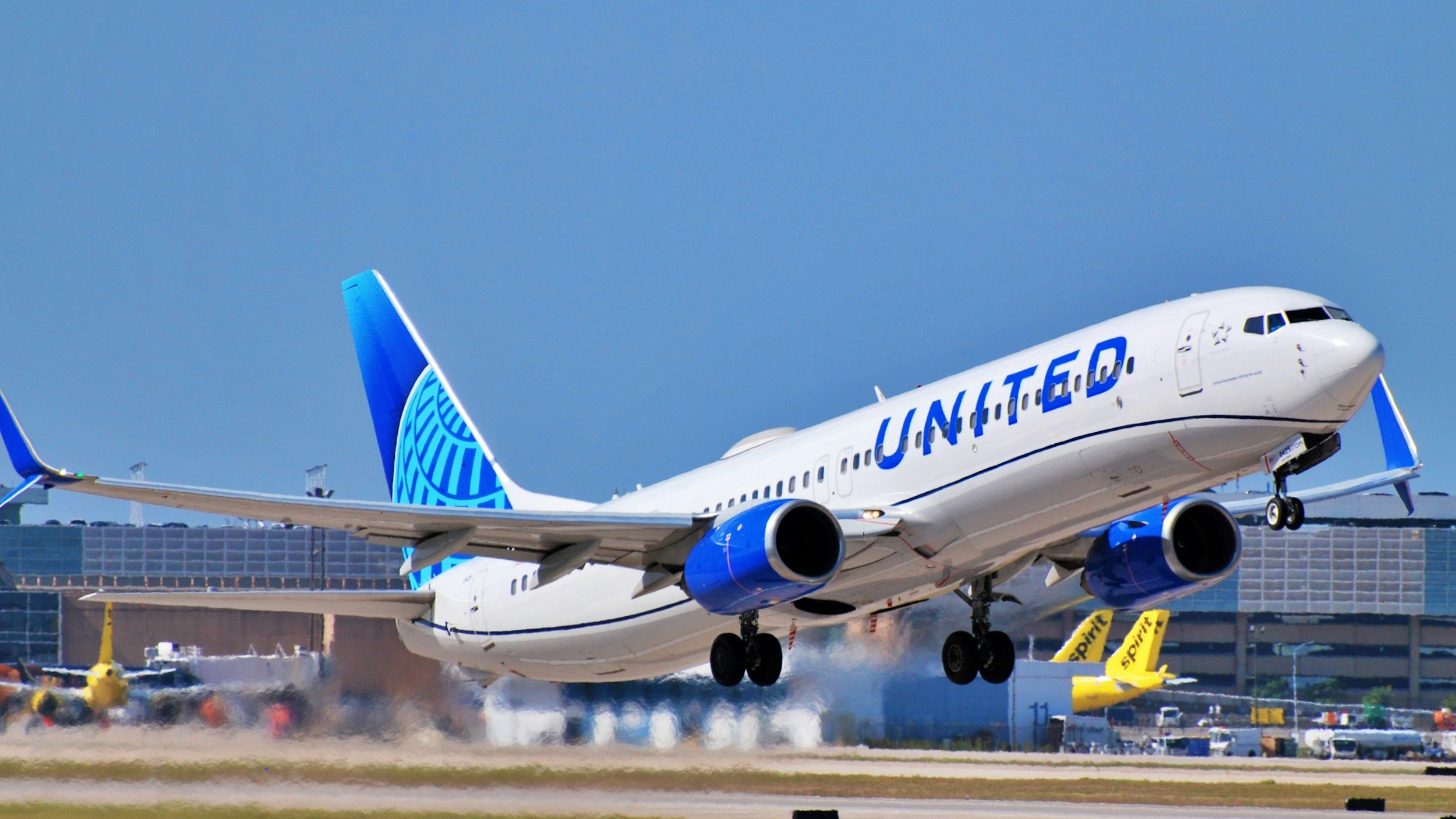
United Airlines has a feature called the TravelBank. It acts like a digital checking account tied directly to your frequent flyer profile. You load money into the account and use those funds to buy regular plane tickets later.
According to the official American Express rules, funding a digital wallet should not trigger the statement credit. The system is programmed to deny gift card purchases. However, the specific billing code United uses for certain TravelBank deposits currently slips past the filters. The system misinterprets the deposit as a standard baggage or fee charge.
The Execution Steps
You must follow the steps in a very specific order to ensure the credit posts correctly.
First you must log into your American Express account. Navigate to the benefits section and select United Airlines as your designated airline for the calendar year. You have to do this before making any purchases. If you skip this step you will not get your money back.
Next you go to the United Airlines website and find the TravelBank page. Log into your MileagePlus account.
Make a deposit of exactly $100 using your American Express Platinum card. Do not attempt a single $200 transaction. The system usually recognizes larger amounts as gift cards and denies the credit. You need to make two separate $100 deposits a few days apart.
The Liquid Result
Check your American Express statement a few days after the charges post. You will see two $100 statement credits offsetting your deposits.
You have successfully converted a highly restricted expiring benefit into liquid travel capital. Those TravelBank funds sit in your United account for up to five years. You can use them to book any standard United flight without restrictions. You bypass the original rules entirely and secure actual value from a frustrating benefit.

The FHR Stack: Liquidating the $300 Hotel Credit for Maximum Yield
Most cardholders use the Platinum hotel benefit to slightly discount a massive vacation bill. We use a loyalty stack to mathematically manufacture a free luxury night.
The Inefficient Application
American Express offers a $300 semi-annual statement credit for prepaid bookings through their Fine Hotels & Resorts (FHR) program. The average consumer approaches this benefit completely backwards. They book a four-night stay at a resort in Europe for $3,000, apply the $300 credit, and consider it a victory.
This dilutes the value of the FHR program. The true power of this booking channel is not the baseline discount. It is the fixed assets attached to every reservation.
Every FHR booking guarantees free daily breakfast for two, a $100 property credit (usually for food and beverage or spa services), and a guaranteed 4:00 PM late checkout.
If you spread those fixed benefits over four nights, the daily yield is terrible. If you compress them into a single night, the return on investment skyrockets.
The One-Night Protocol
The most efficient way to liquidate this credit is the local, one-night staycation. You isolate a luxury property close to home and book a single night.
Consider a standard weekend rate at a property like Mission Pacific or The Seabird in Southern California. The baseline room rate might run around $350 including the $57 resort fee.
Here is how this transaction breaks down. You pay the $350 upfront on the Amex Platinum. The $300 statement credit triggers a few days later. Your actual out-of-pocket capital is $50.
In exchange for that $50, you check in at noon and check out at 4:00 PM the next day. You get 28 hours of resort access. You get an upgraded room (hopefully an ocean view suite). You consume $80 worth of breakfast in the morning and charge $125 worth of dinner and drinks to the room that evening (the credit here actually goes up to $125).
You just extracted $205 in hard food and beverage value for a $50 net cost, meaning the luxury room itself was effectively free.
The Loyalty Multiplier
This is where the strategy shifts from a simple discount into an advanced arbitrage play.
When you book a hotel through a standard online travel agency like Expedia or Booking.com, you surrender your elite status. The hotel will not give you points, they will not give you elite night credits, and they will not honor your tier benefits.
The Amex FHR portal is a rare exception to this rule in the travel industry. FHR reservations code as direct bookings in the hotel's internal system.
This means you can double-dip.
When you arrive at the front desk, you hand them your Platinum card and provide your World of Hyatt membership number. The system recognizes both sets of privileges. You receive the Amex benefits, but you also earn standard Hyatt points on the cash you spent. You earn an elite qualifying night toward your next tier status.
The Status Override
Because the booking codes directly with the loyalty program, you can also inject your own earned status benefits on top of the FHR perks.
If you hold elite status, you can apply your own Suite Upgrade Awards to the reservation in advance. You can even utilize Guest of Honor privileges to extend top-tier perks to a friend or family member while still capturing the Amex statement credit and getting the resort fees waived.
You are forcing two massive corporate entities to stack their promotional budgets onto a single 24-hour window.
The Execution
Thoroughly examine & review your local geography or surrounding area of a planned trip. Find a high-end property in the FHR directory that belongs to your primary hotel loyalty program. Book a single night to trigger the $300 credit, consume the entire property credit at the on-site restaurant/room service/spa, and ensure your frequent guest number is attached to the folio before you check out. THIS is how you properly take advantage of this benefit, essentially wiping $600+ off of the $895 annual fee.
The Tokyo Arbitrage: Turning 90,000 Points into an $8,000+ Experience
Most travelers liquidate their credit card points at a flat one percent yield. We use alliance loopholes to multiply that yield by ten. Here is the blueprint for crossing the Pacific.
The Liquidation Trap
When you log into your Amex account, the system nudges you toward the travel portal. It offers you a very simple trade. You can buy a flight and pay with your points at a flat valuation of one cent each.
This is financial malpractice.
If you spend 100,000 points to cover a $1,000 economy ticket, you are accepting the absolute floor of your asset's value. You need to stop treating points like a cash-back catalog. You need to treat them like a foreign currency. The goal is to find an exchange rate that heavily favors you.
The Alliance Loophole
Airlines do not operate in a vacuum. They belong to global alliances and sign independent partner agreements with one another. This creates massive pricing inefficiencies.
The core rule of travel hacking is that you do not have to buy a ticket from the airline flying the plane. You can buy that exact same seat using the loyalty currency of their partner. Often, that partner uses a completely different pricing algorithm for the exact same inventory.
The Execution
Let's look at a specific high-value route. Getting from Southern California across the Pacific in a lie-flat bed is one of the most highly demanded flights in the world.
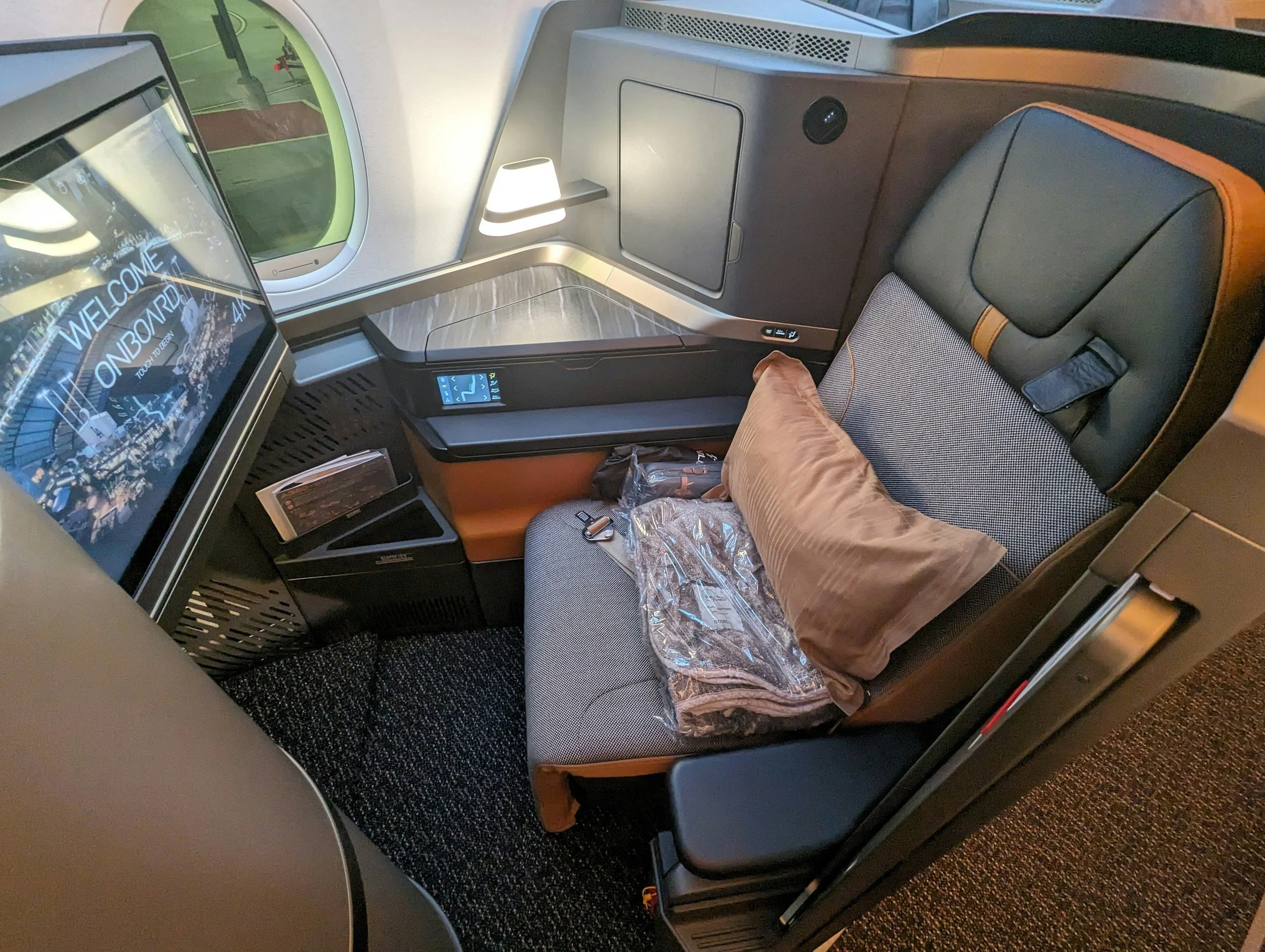
If you want to fly All Nippon Airways (ANA) Business Class from Los Angeles to Tokyo, the cash price regularly sits around $8,000.
If you transfer your Amex points directly to ANA to book it, the process is notoriously clunky and strictly requires round-trip commitments.
The optimization play is Virgin Atlantic.
Virgin is an entirely different airline based in the UK. They have a unique bilateral partnership with ANA. More importantly, Virgin Atlantic uses a legacy distance-based award chart that severely underprices this specific Pacific route.
Here is the exact protocol:
You find available partner award space on the ANA flight.
You transfer 90,000 Membership Rewards points from your Amex account directly to Virgin Atlantic.
You call the Virgin Atlantic booking desk and ask them to secure the ANA seat.
The final cost is 90,000 points plus a couple hundred dollars in taxes. Your yield just jumped from 1 cent per point to nearly 9 cents per point. You turned a credit card sign-up bonus into an $8,000 international business class ticket.
The Operational Friction
There is a reason everyone does not do this. It requires extreme patience and an understanding of inventory management.
Airlines only release a tiny fraction of their premium cabins to partner airlines. ANA is notoriously strict with this inventory. They typically release partner award space at two distinct moments. The first drop happens exactly 355 days before departure. The second drop happens within 14 days of the flight when the airline algorithm realizes the seat will go unsold.
This is not a strategy for someone who wants to book a convenient flight for next month on a random Tuesday. It requires strict calendar management or extreme last-minute flexibility.
The Move
Stop browsing the Amex travel portal. Set up a Virgin Atlantic Flying Club account today. Start monitoring ANA award space out of LAX or SFO or SEA using an award flight search tool. Once you see the inventory open up, execute the transfer and make the call.

The Positioning Flight Protocol: Why Searching "Home-to-Destination" is Financial Suicide
Airlines charge a premium for "convenience." We use Network Optimization to break the ticket into independent segments, saving 40-60% on long-haul routes.
The Executive Summary
If you live in a secondary market (e.g., Cleveland, Austin, Phoenix) and you search for a flight to a remote destination (e.g., Bali, Maldives), the algorithm will quote you $2,500+.
Why? Because you are asking one alliance to handle the entire logistical chain.
The Hacker's Approach:
We do not search "Cleveland to Bali."
We search "Major Hub to Major Hub" (e.g., LAX to Singapore).
Then, we buy a separate, cheap domestic ticket (the "Positioning Flight") to get to the hub.
Scenario A (The Amateur): Cleveland —> Bali (Single Ticket). Cost: $2,800.
Scenario B (The Strategist):
Cleveland —> LAX (Southwest). $200.
LAX —> Singapore (Competition Route). $800.
Singapore —> Bali (Budget Carrier). $100.
Total Cost: $1,100.
Savings: $1,700 (60%).
Phase 1: The "Hub-and-Spoke" Algorithm
Airlines compete fiercely on "Trunk Routes" (e.g., NY to London, LA to Tokyo). Prices on these routes are artificially low due to competition.
They have zero competition on "Spoke Routes" (e.g., Cleveland to Bali).
The Protocol:
Identify the Gateway: Where is the cheapest exit point from your continent? (Usually JFK, LAX, SFO, or ORD).
Identify the Entry Point: Where is the cheapest entry point to their continent? (Usually LHR, TYO, SIN, or DXB).
Book the "Trunk": Secure the long-haul flight first using cash or points.
Book the "Spokes": Fill in the gaps with cheap domestic carriers (Southwest, RyanAir, AirAsia).
Phase 2: The "Unprotected Connection" Risk
There is a catch.
If you book Cleveland —> LAX on Southwest and LAX —> Tokyo on JAL as separate tickets, Southwest does not communicate with JAL.
If Southwest is late and you miss the JAL flight, JAL owes you nothing. You lose the ticket.
The Risk Mitigation (The 4-Hour Rule):
In Operations Research, we build "Buffers" into any critical path.
Minimum Buffer: 4 Hours.
Ideal Buffer: The "Overnight Layover."
Fly into LAX the night before.
Get a hotel (using points).
Have a nice dinner.
Fly out the next morning stress-free.
Note: The cost of the hotel is usually $200. The savings on the flight is $1,700. The math still wins.
Phase 3: The "Ghost" Inventory (Award Seats)
This strategy is mandatory for Points Bookings.
If you want to book a Business Class seat with points, you will almost never find availability from a secondary airport.
Austin —> Paris: 0 Seats available.
JFK —> Paris: 4 Seats available.
The Strategy:
Book the JFK —> Paris seat with points. Buy a cheap cash ticket from Austin to JFK.
This "re-positions" you to where the inventory exists.
Final Calibration
Stop letting the airline dictate your route.
Zoom Out: Look at the major hubs on both continents.
Disconnect: Break the chain. Buy the long-haul flight separately.
Buffer: Add 4+ hours or an overnight stay to insure against delays.
You are trading Complexity for Equity. A little extra planning saves you the price of the entire vacation.
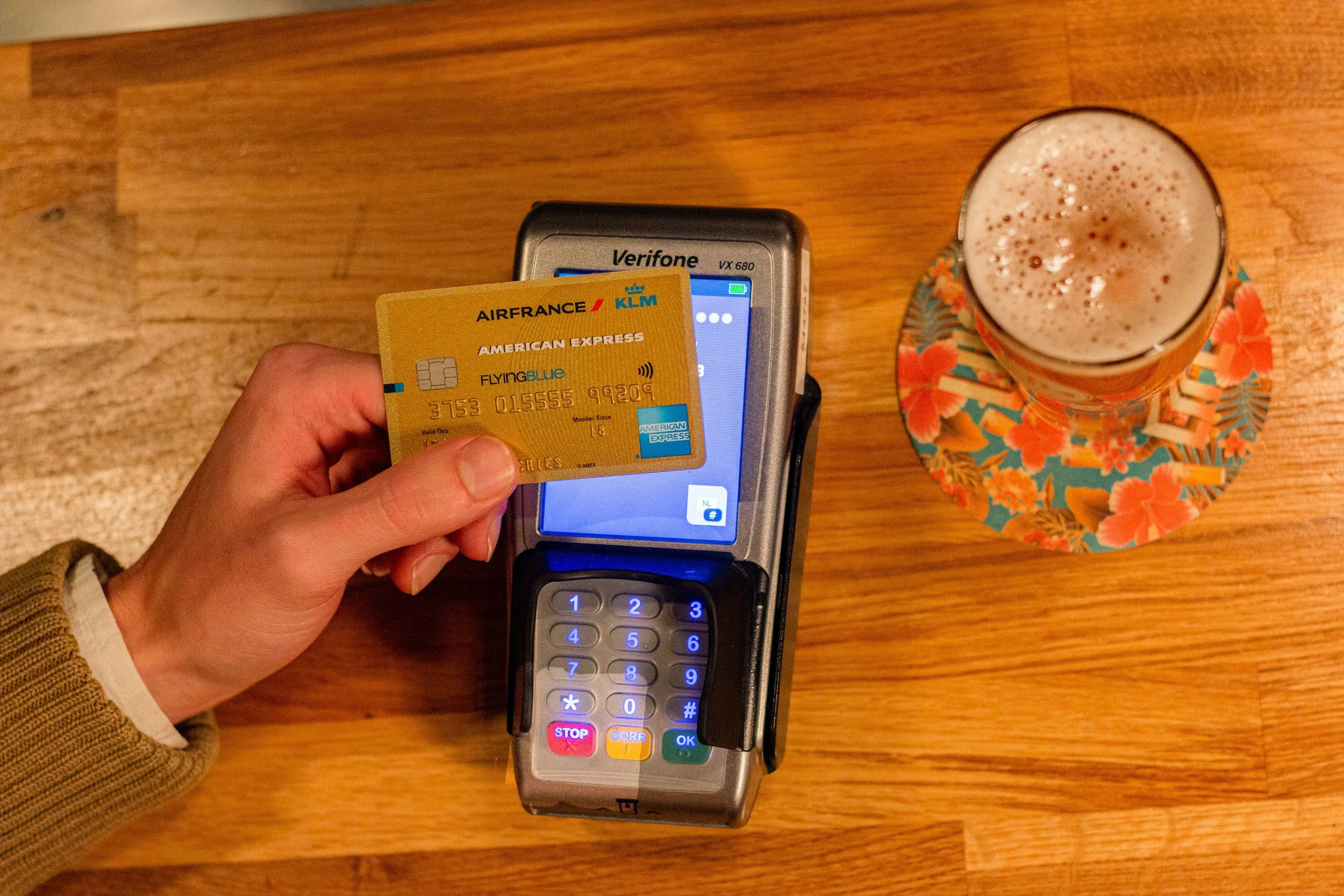
The 3% Ignorance Tax: How to Stop Bleeding Money Abroad
Dynamic Currency Conversion (DCC) and Foreign Transaction Fees are the silent killers of your travel budget. Here is the protocol to reach 0% waste.
The Executive Summary
When you travel internationally, there are two ways to lose money instantly:
The Bank Fee: Your bank charges you 3% just for the privilege of using your card outside the US.
The Merchant Trap: The payment terminal asks, "Pay in USD or EUR?" and you choose USD because it feels "safer."
If you spend $5,000 on a trip to Italy, these two errors can cost you $300+ in pure friction costs. That is the price of a Michelin-star dinner wasted on bank fees.
Phase 1: The "No Foreign Transaction Fee" (NFTF) Baseline
If you are using a standard bank debit card or a basic cash-back credit card (like the Citi Double Cash), you are paying a 3% Foreign Transaction Fee (FTF) on every swipe.
The Math: You buy a €100 dinner. Your bank charges you $109 (Exchange Rate + $3 Fee).
The Fix: You must hold a card with 0% FTF.
Chase Sapphire Preferred: 0% Fees.
Capital One Venture X: 0% Fees.
Amex Gold/Platinum: 0% Fees.
The Rule: If your card has an FTF, leave it in the hotel safe. It is "Emergency Only."
Phase 2: The "Dynamic Currency Conversion" (DCC) Scam
This is the most sophisticated trap in travel. When you insert your card in Paris, the machine detects it is a US card. It offers you a choice:
Option A: Pay in Euros (€).
Option B: Pay in US Dollars ($).
The Instinct: "I know what dollars are worth. I'll pick B." The Trap: If you pick USD, the merchant's bank does the currency conversion, not your bank. They can set any exchange rate they want. Usually, they add a 5% to 7% markup to the spread.
The Protocol: ALWAYS choose the Local Currency. Let your bank (Chase/Amex) handle the conversion. They give you the "Interbank Rate" (the wholesale rate), which is the best you can get.
Phase 3: The Cash & ATM Algorithm
Never exchange money at the airport. The kiosks at Heathrow or Narita charge a "Service Fee" plus a 10-15% spread on the rate. It is robbery.
The ATM Protocol:
Decline the Conversion: The ATM will also try the DCC scam. It will say "Guaranteed Exchange Rate of 1 USD = 0.85 EUR." Decline it. Proceed without conversion.
The Debit Card: Use a debit card that refunds ATM fees (like Charles Schwab or Fidelity). If you don't have one, withdraw the maximum daily limit once to minimize the flat fee ($5 per withdrawal), rather than taking out $40 five times.
Final Calibration
Travel is expensive. Don't make it 10% more expensive by being operationally lazy.
Card: 0% Foreign Transaction Fee (Sapphire/Venture X).
Terminal: Always press "Pay in Local Currency."
Cash: Never at the airport. Only at bank ATMs.
Get the Amex Platinum or Chase Sapphire Preferred

The Suite Upgrade Algorithm: Why Asking "Do You Have an Upgrade?" Always Fails
Front desk agents follow a script. We use inventory logic to break it. Here is the email template and the timing protocol to secure the Junior Suite.
The Executive Summary
Hotels are a perishable inventory business. An empty suite tonight earns $0. However, hotels protect their "Brand Integrity" by not giving suites away for free just because you asked. They need a "Reason Code" to justify the upgrade in their system.
If you wait until you are at the front desk to ask, you have already failed. The "Room Controller" assigned the inventory at 6:00 AM that morning. We don't rely on charm. We rely on Pre-Arrival Logistics.
Phase 1: The Leverage (Status as a Key)
You cannot play this game without a "Key." The Front Desk Agent needs a valid excuse to override the system.
The Key: Marriott Gold or Hilton Gold Status.
The Hack: You do not need to stay 50 nights to get this. The Amex Platinum grants this status instantly. (This is the "Reason Code" the agent enters: "Loyalty Upgrade").
Phase 2: The Inventory Audit (The 48-Hour Window)
Do not email them 2 months in advance. They don't know their inventory yet. Do not ask at check-in. The rooms are already blocked. The Sweet Spot: 48 to 72 Hours Prior to Check-in.
The Audit:
Go to the hotel's website.
Search for your exact dates.
Check Inventory: Are "Junior Suites" or "Corner Rooms" still available for sale?
If Yes: The hotel has "Distressed Inventory." They are motivated to move a guest up to free up a Standard Room (which is easier to sell last-minute).
If No: The hotel is sold out. Do not bother asking.
Phase 3: The "Revenue Manager" Email Script
Do not email info@hotel.com. Call the front desk and ask for the "Front Office Manager" or "Room Controller's" email address. Send this script exactly 2 days before arrival:
Subject: Upcoming Stay - [Your Last Name] - Confirmation #[12345] - [Status Level] Member
Dear [Manager Name],
I am writing to confirm my reservation for this upcoming weekend. I am a [Gold/Platinum] member and I am traveling to celebrate [Reason: Anniversary/Engagement/Project Completion].
I see online that you still have [Specific Room Type: e.g., King Corner Suites] available for my dates.
I know upgrades are subject to availability at check-in, but if the inventory remains unsold, I would value the opportunity to experience that room product. I am happy to write a detailed review of the property specifically mentioning the upgrade.
Best, [Your Name]
Why this works:
You did the homework: You know the room is empty.
You offered value: A "Detailed Review" is currency for a Manager.
You respected the process: You acknowledged "subject to availability."
Final Calibration
An upgrade is never guaranteed. It is a probability game. By holding the Status (Amex Platinum), Auditing the Inventory, and sending the Pre-Arrival Email, you move your probability from 5% (Random Luck) to 65% (Operational Execution).