
How to use the $400 Amex Platinum Resy Credit in Orange County
When American Express hiked the Platinum Card's annual fee to $895, they attempted to soften the blow by offering a $400 annual dining credit. But because it operates on a strict "use-it-or-lose-it" quarterly timeline, it is designed to be forgotten. Here is the operational protocol to ensure you extract every dollar.
If you hold the American Express Platinum Card, you recently experienced the most aggressive fee hike in the luxury travel market. The annual cost of holding the card jumped from $695 to $895.
To justify this premium, Amex injected a suite of new lifestyle benefits into the ecosystem. The most lucrative (and the most commonly misunderstood) is the $400 Annual Resy Credit.
Amex breaks this down into $100 statement credits per quarter (Q1: Jan-Mar, Q2: Apr-Jun, etc.). The catch is that it does not roll over. If you reach March 31st and haven't triggered your Q1 credit, that $100 simply vaporizes back into Amex's corporate treasury.
To maintain the mathematical advantage of holding the Platinum Card, you have to treat this credit like a mandatory quarterly dividend. If you are based outside LA, you are sitting just a short drive away from one of the highest concentrations of premium Resy restaurants in the country: Orange County.
The Mechanics of the Liquidation
Before we look at the specific restaurants in OC, you need to understand exactly how the Resy integration actually works. The travel community massively overcomplicates this.
You do not need to make a reservation through the Resy app to trigger the credit. You do not even need to have a Resy profile.
Resy is simply the backend reservation software that these restaurants use to manage their tables. As long as a restaurant is "live" on the Resy platform, any charge processed by that restaurant's physical point-of-sale system will automatically trigger your statement credit.
The Execution: You simply log into your Amex account once, click "Enroll" on the Resy benefit, and then swipe your physical Platinum card at the restaurant. Within 3 to 5 business days, a $100 credit appears on your statement. It covers food, alcohol, taxes, and the tip.
The Orange County Hit List
If you are driving down to use your quarterly credit, you want to target restaurants that actually justify the drive and the price point. Here are three highly vetted targets in Orange County where you can deploy your capital for maximum yield.
1. The High-Yield Dinner: Vaca (Costa Mesa) Located right next to South Coast Plaza, Chef Amar Santana’s Spanish tapas spot is arguably one of the best restaurants in Orange County. Because the menu is built entirely around small plates and premium imported meats, it is incredibly easy to strategically hit the $100 threshold.
The Play: Order the Pan con Tomate, the smoked chicken cannelloni, and a couple of bespoke cocktails at the bar. Swipe your Platinum card, and your $100 tab is entirely subsidized by Amex.
2. The Weekend Brunch: Fable & Spirit (Newport Beach) If you don't want to fight for a prime-time Friday night dinner reservation, pivot your strategy to weekend brunch. Fable & Spirit holds a Michelin Bib Gourmand and utilizes Resy for their backend.
The Play: Secure a Sunday morning table in the Lido Peninsula area. The credit completely covers a high-end brunch for two, allowing you to extract your capital without burning your evening hours.
3. The Coastal Sunset: Seabutter or The Rooftop Lounge (Laguna Beach) If you are combining your dining strategy with a drive down the PCH, Laguna Beach has multiple Resy-integrated options.
The Play: Seabutter offers premium sushi right on the Coast Highway. Alternatively, if you just want to liquidate the credit on drinks with a view, The Rooftop Lounge sits on top of La Casa del Camino hotel. Grab two cocktails and an appetizer, watch the sun drop into the Pacific, and let Amex cover the check.
The "Bailout" Protocol (The Gift Card Loophole)
There will inevitably be a quarter where you reach the final week and simply do not have the time to drive down to Costa Mesa for a sit-down meal.
Don’t let the $100 expire.
Because the credit triggers on any transaction processed by the restaurant, you can simply walk into a Resy-affiliated restaurant (like Arc Food & Libations in Costa Mesa) and purchase a $100 physical gift card at the host stand. OR if any restaurant offers takeout, this works too!
As long as the transaction is run through the restaurant's main register, Amex registers it as a standard dining purchase and issues your credit. You have successfully locked in the expiring credit and transferred it into one that you can use on a future date. (Note: Do not buy digital e-gift cards online, as those are often processed by third-party vendors like Toast or Square, which will fail to trigger the Resy credit). Some Toast gift cards DO work however, such as, Holbox in LA.
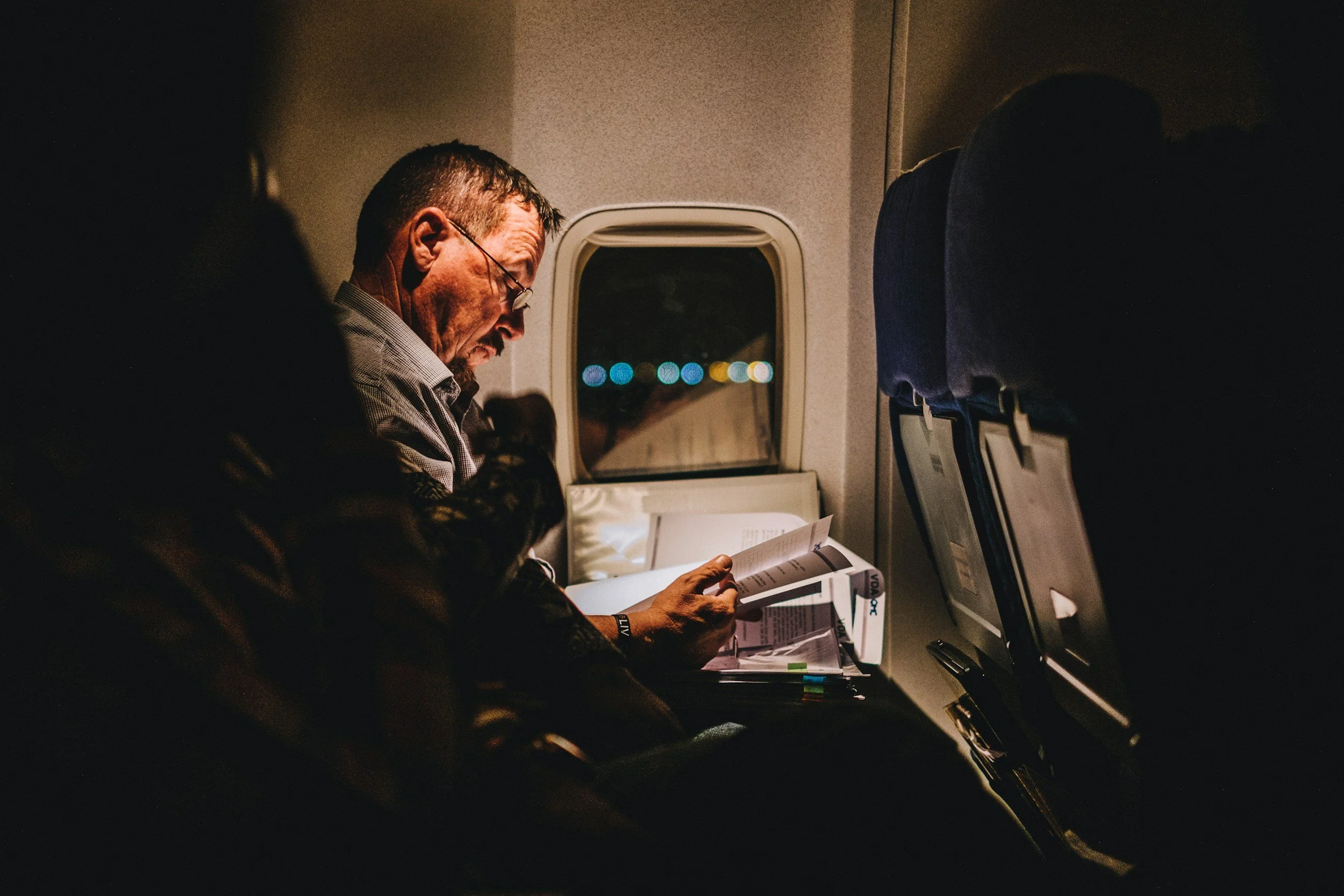
The Cabin Air Protocol: Maintaining Your Skin Barrier at 35,000 Feet
Standard travel blogs will tell you to drink a bottle of water and put on a sheet mask. If your daily grooming infrastructure relies on high-grade active ingredients, that advice is completely useless. Here is the chemical protocol to survive a zero-humidity environment.
If you have executed the transpacific award strategy and secured a 14-hour lie-flat seat to Asia, you have solved the logistics of your physical comfort. But the moment those cabin doors seal, you are trapped in an environmental hazard.
Commercial airplane cabins are pressurized and heavily filtered, resulting in ambient humidity levels that hover between 10% and 20%. For context, the Sahara Desert sits at roughly 25%.
This aggressively arid environment actively leeches moisture directly out of your skin. If you are a professional who uses a rigid, high-performance skincare routine to maintain a sharp appearance, specifically relying on active ingredients like cell-turnover retinoids or chemical exfoliants, a long-haul flight is a recipe for massive irritation.
If you do not adapt your chemical layering for the altitude, you will land for your morning meeting in Tokyo with a compromised, peeling, and highly inflamed skin barrier.
Standard travel blogs will tell you to drink a bottle of water and put on a sheet mask. If your daily grooming routine relies on high-grade active ingredients, that advice is completely useless. Here is the step-by-step routine to survive a zero-humidity environment.
If you have executed the transpacific award strategy and secured a 14-hour lie-flat seat to Asia, you’ve solved the logistics of your physical comfort. But the moment those cabin doors seal, you are trapped in an environmental hazard.
Commercial airplane cabins are pressurized and heavily filtered, which results in humidity levels that hover between 10% and 20%. For context, the Sahara Desert sits at roughly 25%.
This aggressively arid environment actively leeches moisture directly out of your skin. If you are a professional who uses a rigid, high-performance skincare routine to maintain a sharp appearance, specifically relying on active ingredients like cell-turnover retinoids or chemical exfoliants, a long-haul flight is a recipe for massive irritation.
If you don’t adapt your chemical layering for the altitude, you will land for your morning meeting in Tokyo with a compromised, peeling, and highly inflamed skin barrier.
The Tretinoin Suspension
The foundation of any serious anti-aging and skin-texture protocol is tretinoin. It is the undisputed gold standard for cell turnover.
However, tretinoin inherently thins the outermost layer of dead skin and leaves the fresh skin underneath highly sensitive to moisture loss. Applying your standard dose of tretinoin the night before an international flight is a mistake. The zero-humidity cabin air will dry out your face, causing a painful, red, and flaky reaction known as retinoid dermatitis.
The Protocol: You need to take a pause on your tretinoin application exactly 48 hours before wheels up. Give your skin barrier two full nights to recover its natural lipid layer before you step into the pressurized tube. You don’t lose any long-term anti-aging benefits by pausing for two days, but you completely mitigate the risk of severe in-flight inflammation.
The Hyaluronic Paradox
When travelers realize their skin is drying out on a flight, they usually make their second critical mistake: they slather their face in hyaluronic acid (HA) mid-flight.
Hyaluronic acid is a humectant. It acts like a chemical sponge, capable of holding 1,000 times its weight in water. But a sponge has to get that water from somewhere.
When you are on the ground in a normal environment, HA pulls moisture from the air and binds it to your face. But when you are at 35,000 feet in a 10% humidity cabin, there is zero moisture in the air. The HA sponge flips its direction. It starts aggressively pulling the deep, remaining moisture out of your lower dermal layers to the surface, where it immediately evaporates into the cabin. Applying HA incorrectly on a plane will actually dehydrate you faster.
The Protocol: Never apply HA mid-flight. You apply it in the airport lounge bathroom right before boarding, and you must apply it to a physically damp face. Lock the moisture into the sponge before you enter the dry environment.
The Niacinamide Shield
To survive a 14-hour transit, you have to transition your grooming routine from "active repair" to "defensive shielding."
Once you have applied your HA to damp skin in the lounge, your next layer should be niacinamide (Vitamin B3). Niacinamide is the ultimate logistical stabilizer for your face. It actively reduces the redness and inflammation caused by the recycled cabin air, and it stimulates the natural production of ceramides, which physically reinforce your skin's outer wall.
The Occlusive Seal (The Final Step)
Your final step before boarding is not a lightweight lotion. You need an occlusive barrier.
Occlusives do not provide moisture; they provide a physical, watertight roof over the HA and niacinamide you just layered. By applying a heavier, ceramide-rich cream (or even a thin layer of a medical-grade ointment on extremely dry areas), you trap the hydration underneath. The cabin air can no longer leech the moisture out of your skin because the occlusive barrier blocks the evaporation.
When you finally land and arrive at the Park Hyatt, you simply wash the occlusive layer off, reintroduce your standard tretinoin routine that evening, and step into your trip looking completely untouched by the 14-hour transit.

The Transpacific Arbitrage: Unlocking First Class to Asia with the Alaska Mileage Plan
Amex and Chase points are incredibly easy to earn, which means their booking portals are highly inflated. If you want to cross the Pacific in a $15,000 lie-flat suite without draining your capital, you have to look at the most undervalued currency in the industry.
If you have spent any time in the travel rewards ecosystem, you know that flying to Europe in business class is relatively straightforward. There are dozens of routes, massive availability on carriers like Air France or Iberia, and you can usually secure a seat with a simple transfer from your Chase Sapphire Preferred.
Amex and Chase points are incredibly easy to earn, which means their booking portals are highly inflated. If you want to cross the Pacific in a $15,000 lie-flat suite without draining your capital, you have to look at the most undervalued currency in the industry.
If you have spent any time in the travel rewards ecosystem, you know that flying to Europe in business class is relatively straightforward. There are dozens of routes, massive availability on carriers like Air France or Iberia, and you can usually secure a seat with a simple transfer from your Chase Sapphire Preferred.
But attempting to book a premium cabin to Tokyo, Taipei, or Hong Kong is a completely different operational challenge.
Transpacific routes are the most highly coveted, fiercely competitive award tickets on the market. If you try to book a Delta One suite to Asia using standard SkyMiles, the algorithm will routinely ask for an absurd 300,000 to 400,000 miles for a single one-way ticket. It is a mathematical dead end.
To bypass this inflation, you cannot use the standard domestic carriers. You have to execute an arbitrage strategy using the Alaska Airlines Mileage Plan.
The Oneworld Advantage
Alaska Airlines doesn't actually fly their own planes to Asia. The power of their program lies entirely in their membership within the Oneworld alliance, and their highly negotiated independent partnerships.
Alaska miles act as a skeleton key. They allow you to book flights on some of the most luxurious, elite airlines on the planet, including Japan Airlines (JAL), Cathay Pacific, and Starlux, at incredibly fixed, low-yield mileage rates.
While an airline like United might charge you dynamically based on the cash price of the ticket, Alaska publishes a relatively strict distance-based award chart. This means that if you can find the "Saver" availability, you can lock in a 14-hour business class flight to Tokyo on Japan Airlines for roughly 75,000 Alaska miles. That same cash ticket would cost upwards of $8,000.
The Stopover Loophole
The single greatest feature of the Alaska Mileage Plan (and the reason it is fiercely protected by pro travel hackers) is their free stopover policy on one-way international award tickets.
Most airlines force you to book a round-trip ticket if you want to stop in a connecting city for a few days. Alaska allows you to build a multi-city itinerary on a single one-way ticket at zero additional mileage cost.
Let’s say you are flying out of Los Angeles (LAX) and your final destination is Bangkok, Thailand. If you book this on Japan Airlines using your Alaska miles, you don't have to just transit through Tokyo for a two-hour layover. You can build a three-day stopover in Tokyo into the itinerary, allowing you to explore Japan, before continuing on to Bangkok a few days later, all for the exact same amount of miles as a direct flight.
You are effectively getting two distinct international vacations on a single award redemption.
Acquiring the Capital
The reason Alaska miles retain such massive value is that they are notoriously difficult to earn. Unlike Hyatt or United, you cannot simply transfer your Chase Ultimate Rewards or Amex Membership Rewards points directly to Alaska. They operate a closed-loop system.
To build your transpacific bankroll, you have to rely heavily on their co-branded credit cards.
This requires strict 5/24 planning. Because you only have five slots available for personal cards every two years, burning a slot on an airline card is a calculated move. You secure your foundational Chase cards first, and then deliberately target the Alaska Airlines Visa Signature card strictly for the sign-up bonus to fund your Asia pipeline.
Additionally, because Alaska frequently offers a "Companion Fare" benefit on their co-branded cards, you can use that to heavily subsidize domestic positioning flights. If you live in Southern California but the only Japan Airlines award space available is flying out of Seattle or San Francisco, you can use your companion fare to get you and your partner to the international gateway city for next to nothing.
Booking Execution
Booking these partner awards requires patience and rigid timing.
Airlines like JAL and Cathay Pacific release their premium award seats approximately 355 to 360 days before departure. If you are casually searching for a flight three months before your trip, you will find absolutely zero availability. You must plan your transpacific routes nearly a full year in advance, ready to execute the booking the exact hour the calendar opens. They may also release some 7-14 days before departure, so flexibility and/or early planning is a must.

The Double-Dip: Stacking Amex FHR with Hyatt Elite Status
The cardinal rule of travel hacking is that you must book directly with the hotel to earn points and status. Here is the massive & highly lucrative exception to that rule, and how to execute the ultimate luxury arbitrage.
There is a frustrating dilemma that every premium credit card holder eventually faces. You’re holding the Amex Platinum card, which gives you a $600 annual credit to spend at Fine Hotels & Resorts (FHR). But you are also a loyalist to a specific hotel brand (like Hyatt) and you want to earn your points, get your elite night credits, and use your milestone awards.
Usually, the travel industry forces you to choose. If you book a hotel through a third-party portal like Expedia or Booking.com, the hotel refuses to acknowledge your loyalty status. You get no points, no upgrades, and no late checkout.
However, American Express Fine Hotels & Resorts is not a standard travel portal. It operates on a completely different backend system, creating a massive loophole that allows you to double-dip on the system. You can trigger your Amex statement credits and receive full Hyatt elite recognition on the exact same reservation.
The Fine Hotels & Resorts Exception
Unlike standard online travel agencies, Amex FHR bookings are processed as "eligible rates" by the World of Hyatt program.
This means that when you book an FHR property that is also a Hyatt property (like a Park Hyatt, Andaz, or Unbound Collection), you are stacking two completely different sets of benefits on top of each other.
From American Express, you automatically receive:
The $300 bi-annual Platinum statement credit.
A $100 on-property experience credit (usually for food, beverage, or the spa).
Guaranteed 4:00 PM late checkout.
Early check-in (upon availability)
Daily breakfast for two.
But because it is an eligible rate, you can immediately link your World of Hyatt membership number to the reservation. This allows you to earn base points on the cash you spent, earn an Elite Qualifying Night (EQN) toward your next status tier, and most importantly, apply your own Hyatt upgrades.
The Southern California Case Study: The "Staycation" Arbitrage
To understand just how great this overlap is, you have to look at a real-world execution. This strategy works nicely for quick, one-night weekend getaways where you want to use your Amex credit without having to buy a plane ticket.
If you are based in the LA or OC area, the drive down to Oceanside is the perfect arbitrage opportunity with two twin Hyatt properties sitting right on the water: Mission Pacific and The Seabird Resort. Both are part of the Hyatt portfolio, and both belong to the Amex FHR program.
Let’s run the math on a one-night stay in February:
The Booking: You book a standard room for $400 through the Amex FHR portal.
The Amex Rebate: Your Platinum card automatically reimburses you $300, dropping your actual out-of-pocket cost to $100.
The FHR Yield: At check-in, the front desk hands you a $125 food and beverage credit to use at Valle (their Michelin-starred restaurant) or the rooftop bar, plus they cover your breakfast the next morning (easily a $60+ value).
The Hyatt Multiplier: Because you linked your Hyatt number, you can apply a Guest of Honor (GOH) milestone award to the reservation.
The Guest of Honor Synergy
Here is where the stack becomes truly asymmetrical.
Amex FHR offers a room upgrade "when available," which usually just means a slightly better view on a higher floor. But when you attach a Hyatt Guest of Honor award to that same FHR reservation, you are officially prioritized in Hyatt's system for a Standard Suite Upgrade at check-in.
By combining the two programs on a single night at Mission Pacific, you effectively pay $100 out of pocket. In return, you secure a potential oceanfront suite, $185 in free food and beverage, guaranteed 4:00 PM checkout, and you still earn Hyatt points on the cash you spent. You also get to waive the resort fee ($57) because of the Guest of Honor award.
The Execution Protocol
To pull this off seamlessly, you have to follow a specific order of operations:
Book the reservation entirely through the Amex FHR portal.
Wait 24 to 48 hours for the reservation to sync between Amex and the hotel.
Do not rely on the Amex portal to add your loyalty number. Call the hotel's in-house reservation desk directly.
Give them your Amex confirmation number, ask them to manually attach your World of Hyatt number to the booking, and tell them you would like to apply your Guest of Honor award to the stay.
When you check in, the front desk will see a VIP reservation that holds both Amex FHR privileges and Hyatt top-tier status. You get maximum value from your credit card benefit, maintain your hotel loyalty, and experience a flawlessly optimized trip.
Read more on other places in SoCal to use your Amex FHR credits

Negotiating the Setting: Bypassing the Retail Markup on Custom Engagement Rings
You optimized the perfect loose diamond, securing maximum optical yield without the retail premium. But don’t immediately lose all your saved capital by paying a 300% markup on a mass-produced gold band.
If you followed the mathematical framework for evaluating cut, fire, and brilliance, you are now holding a loose diamond that visually outperforms stones costing twice as much. You have successfully bypassed the first major trap of the jewelry industry.
The second trap is the setting itself.
When you walk into a traditional luxury showroom with a loose stone and ask them to build a ring around it, you are stepping back into a massive asymmetry of information. Retailers know that the emotional weight of an engagement makes buyers highly price-insensitive. They will happily take your loose diamond and set it in a standard, pre-cast 18k gold solitaire ring, charging you $1,500 for a piece of hardware that cost them $200 to manufacture in an overseas factory.
To maintain your financial leverage, you must completely avoid the retail showroom and go directly to the source of the labor.
The Bench Jeweler Arbitrage
The people standing behind the glass display cases in a jewelry store are salespeople, not artisans. The actual manufacturing of the ring is outsourced to a "bench jeweler."
A bench jeweler is the craftsman who actually melts the gold, operates the CAD (Computer-Aided Design) software, casts the mold, and physically sets your diamond into the prongs. When you buy from a retailer, you are paying the bench jeweler's fee plus the retailer's massive overhead for their prime real estate, marketing budget, and commission structure.
Your operational strategy is to cut out the showroom entirely. If you are out in Southern California, for example, taking your loose stone directly to the craftsmen in the LA Jewelry District allows you to bypass the middlemen completely. You are no longer paying for the brand name on the velvet box; you are paying strictly for the raw materials and the hourly labor of the artisan.
The Commissioning Protocol
When you sit down with an independent bench jeweler, the financial conversation changes drastically. You are no longer asking, "How much is this ring?" You are treating it like a standard manufacturing contract.
Here is exactly how you structure the negotiation:
The CAD Fee: You bring high-resolution inspiration photos of the exact ring architecture your partner wants. The jeweler will charge a flat fee (usually between $150 and $300) to render a 3D CAD model and print a wax prototype for your approval.
The Metal Weight: You do not pay a flat retail price for the band. You pay for the exact gram weight of the refined metal used in the final casting, based on the daily spot price of 18k gold or platinum, plus a standard sourcing margin.
The Setting Labor: You pay the jeweler's flat hourly rate to physically set the center stone and any smaller pavé diamonds along the band.
By itemizing the invoice this way, a custom-designed, platinum setting that a luxury retailer would quote at $3,500 suddenly costs you $1,200. You get a completely bespoke, heavier, higher-quality piece of hardware for a fraction of the cost.
The Security Checkpoint (The Plotting Protocol)
The biggest psychological hurdle to this strategy is handing a highly valuable, loose diamond to a jeweler you just met.
Professional bench jewelers handle this seamlessly through a process called "plotting." Before you ever leave the stone in their possession, they will place your diamond under a high-powered microscope and pull up your GIA grading certificate.
Every single natural diamond has a unique "fingerprint" of microscopic internal inclusions. The jeweler will map out those exact inclusions with you, verifying that the physical stone matches the certificate perfectly. When you return two weeks later to pick up the finished ring, they will place it back under the microscope so you can personally verify that the exact same inclusions are present.
This protocol completely eliminates the fear of a stone being swapped and keeps the transaction highly professional and strictly analytical.
The Final Ring
By separating the acquisition of the diamond from the manufacturing of the setting, you have optimized every single variable of the engagement ring. You secured the highest possible light performance on the center stone, commissioned a heavier, bespoke setting, and retained thousands of dollars in capital.
That is the exact mindset required to navigate a high-friction market and walk away with a superior ring.
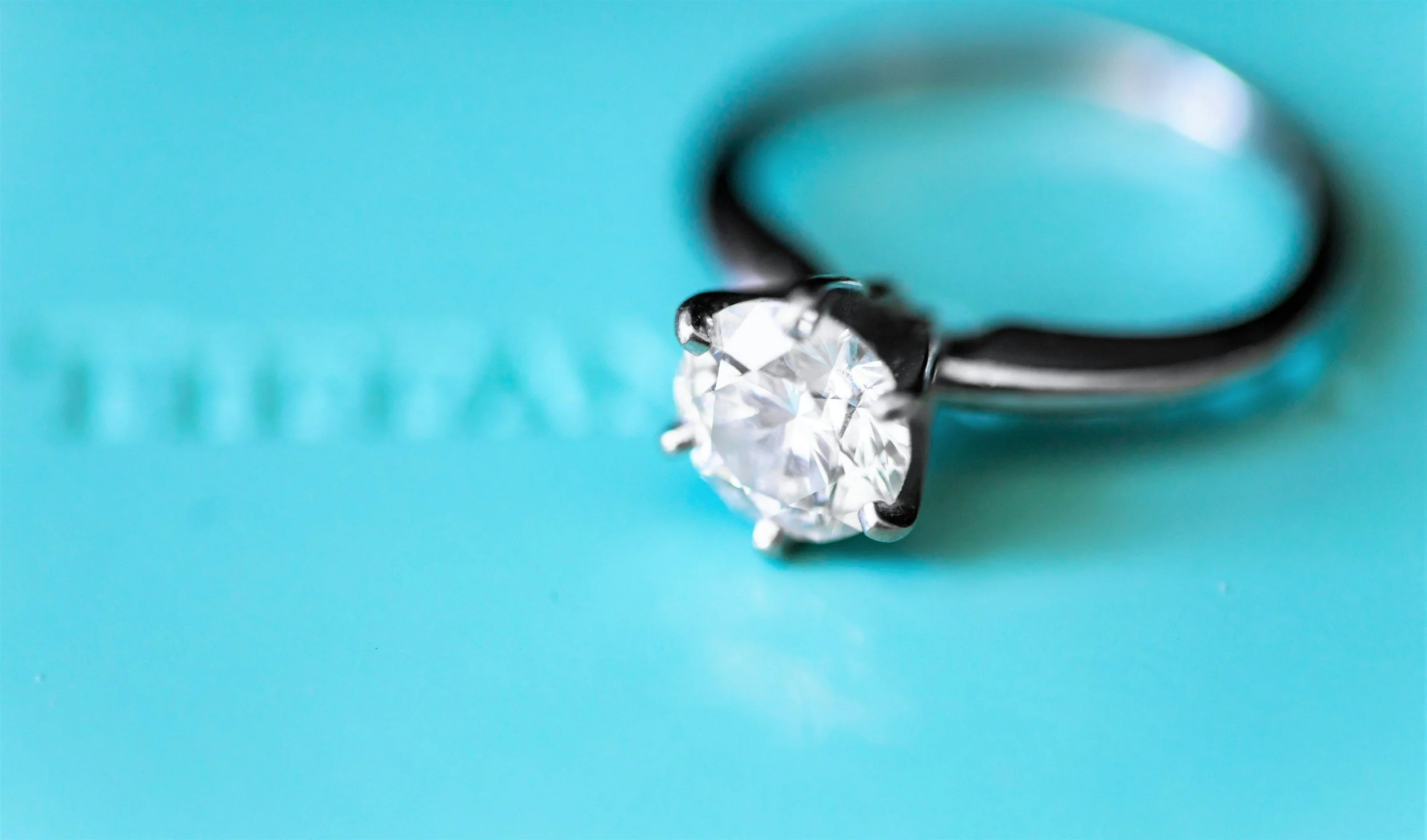
Beyond the 4Cs: Why Cut, Fire, and Brilliance Actually Determine Your Diamond's Value
The retail jewelry industry is built on a massive asymmetry of information. Here is the exact mathematical framework you need to stop overpaying for marketing metrics and secure a stone that actually performs.
When you walk into a traditional jewelry store, the salesperson will inevitably pull out a laminated chart explaining the "4Cs"—Color, Clarity, Carat, and Cut. They will tell you that to show your partner how much you care, you need to invest heavily in a "colorless" stone with "flawless" clarity.
This is the ultimate retail trap.
The diamond industry has spent decades conditioning consumers to heavily weight their capital toward metrics that the human eye cannot even perceive without a 10x jeweler's loupe. Paying a massive premium for a VVS1 (Very Very Slightly Included) clarity grade over a VS2 grade is effectively burning money. No one is staring at your partner's hand through a microscope.
If you want to maximize your yield and secure a stone that looks massive, incredibly bright, and draws attention from across the room, you have to completely ignore the sales pitch and look strictly at the geometry.
The only thing that actually matters is Light Performance, and that is entirely dictated by the Cut.
The Physics of a Diamond
A diamond is not just a rock; it is a highly complex optical prism. Its entire purpose is to gather light from the room, bounce it around its internal facets like a series of mirrors, and shoot it directly back into the viewer's eye.
When a diamond does this perfectly, it creates two distinct visual effects:
Brilliance: The intense flashes of pure white light.
Fire: The dispersion of light into rainbow colors.
If a diamond is cut too deep, the light enters the top and immediately leaks out the bottom. The stone will look dark and dead in the center. If it is cut too shallow, the light passes straight through, making the diamond look glassy and lifeless.
You can buy a perfect D-color, internally flawless diamond, but if the cut geometry is poor, it will look like a piece of dull plastic. Conversely, an expertly cut diamond will return so much blinding light to the eye that it will physically mask lower color and clarity grades, allowing you to buy a significantly cheaper stone that looks vastly superior.
The "Excellent" Cut Illusion
Here is the most dangerous blind spot for consumers: a GIA certificate rating of "Excellent" for the cut is not enough.
The gemological labs cast an incredibly wide net for what qualifies as an Excellent cut. You can have two diamonds sitting next to each other, both graded as Excellent, but one is mathematically precise while the other is an optical failure. To secure a high-yield stone, you have to look past the grade and analyze the actual architectural blueprints printed on the certificate.
The Mathematical Cheat Sheet
To guarantee maximum fire and brilliance, you need to restrict your search to stones that fall within a very tight, highly optimized set of geometric proportions. If you are looking at a standard Round Brilliant diamond, do not buy it unless it meets these exact structural parameters:
Crown Angle: This is the angle of the top facets. It dictates the diamond's fire (the rainbow flashes). You want this sitting strictly between 34.0° and 35.0°.
Pavilion Depth: This is the angle of the bottom half of the stone, acting as the primary mirror. It dictates the brilliance (the white light return). This must be between 40.6% and 41.0%.
Table Percentage: The flat top of the stone. Keep this between 54% and 58%.
Depth Percentage: The overall depth of the stone. Keep this between 60% and 62.5%.
When you perfectly pair a ~34.5° crown with a ~40.8% pavilion, you create a synergistic optical engine. The light enters the table, hits the pavilion at the perfect angle, and explodes back out of the crown.
The Execution Strategy
Understanding this geometry gives you absolute leverage over the market.
Instead of walking into a mall jeweler and paying a 300% markup for a mediocre "flawless" diamond, you shift to an arbitrage strategy. You source a loose stone online that has a completely average color (like an H or I) and an average clarity (like a VS2 or a perfectly eye-clean SI1).
Because those grades are lower, the price plummets. But because you are strictly filtering for mathematically perfect crown and pavilion angles, the diamond will outperform stones that cost twice as much. You lock in a world-class optical asset, bypass the retail markup, and retain thousands of dollars in capital that can be immediately redirected toward the honeymoon.
Once you have secured the perfectly optimized loose stone, your next step is navigating the local bench jeweler. Read our guide on how to commission a custom setting without paying retail markups.

The Mobile Command Center: Maintaining Dual-Screen Efficiency in a Hotel Room
Attempting to manage complex spreadsheets, client calls, and your own business on a single 14-inch laptop screen is an operational nightmare. Here’ss the exact hardware you need to pack a dual-monitor setup straight into your carry-on.
If you have ever tried to execute a full workday from a hotel desk, you already know the frustration. At your home office, you are operating at peak efficiency. You likely have a massive ultrawide monitor or a dual-screen setup that allows you to cross-reference documents, keep Slack open on the side, and run a video call without constantly minimizing windows.
But the moment you hit the road, your entire workflow is violently compressed down to a single 14-inch laptop screen.
Your productivity instantly falls off a cliff and you spend half your morning just swiping between virtual desktops and resizing browser windows. When you’re trying to balance a demanding job and your own personal business from a hotel in Tokyo or NYC, that loss of efficiency translates directly into lost hours of your vacation. You have to bring your visual real estate with you.
The Tablet Illusion
When travelers first realize they need a second screen, they usually attempt the most common (and most flawed) workaround. They try to use their iPad as a secondary monitor using Apple’s Sidecar feature.
While it sounds brilliant in theory, it fails in execution for serious work. First, an 11-inch or 12.9-inch iPad is simply too small to comfortably view a dense Excel spreadsheet. Second, the aspect ratio is entirely wrong for traditional desktop applications. Most importantly, wireless display features often introduce just enough lag that moving your mouse between the two screens feels slightly disconnected, causing immediate eye strain and frustration.
You do not need a multi-purpose entertainment tablet. You need a dedicated piece of visual hardware.
The Dedicated Tech Asset
The premier solution for remote professionals is a dedicated, ultra-thin portable monitor. Right now, the undisputed leader in this category for productivity is the LG gram +view 16-inch Portable Monitor.
Unlike generic brands that flood the market with heavy, low-resolution screens, LG engineered this specifically for the traveling professional. Here is why it completely changes the dynamic of working from the road:
The 16:10 Aspect Ratio: Standard monitors are 16:9 (widescreen). The LG gram +view uses a taller 16:10 ratio. That extra vertical space is absolutely critical when you are reading long contracts, writing code, or auditing financial models, because it drastically reduces the amount of scrolling you have to do.
The Weight Profile: It weighs a staggering 1.4 pounds. It is literally lighter than the laptop it attaches to. When slipped into its included folio cover, it slides effortlessly right next to your computer inside the laptop sleeve of your carry-on bag. You are doubling your screen size without adding any noticeable bulk to your luggage.
The High-Fidelity Canvas: It features a gorgeous WQXGA (2560 x 1600) resolution. Text is incredibly crisp, which is vital when you are staring at spreadsheets for six hours straight under harsh hotel lighting.
The Single-Cable Architecture
The absolute best feature of a modern portable monitor is the lack of friction in setting it up.
Older portable monitors required a power brick, an HDMI cable, and a mess of adapters. The LG gram +view operates on a single-cable architecture. You pull it out of your bag, set it on the hotel desk, and run a single USB-C cable directly to your laptop.
That one cable instantly transmits the 2K video signal while simultaneously drawing power directly from your laptop's battery. In exactly five seconds, you go from a cramped 14-inch screen to a sprawling, 30-inch mobile command center.
Liquidating the Hardware Cost
Check Market Prices for the LG gram +view here
Just like we discussed in the W2 + 1099 Tax Shield strategy, you should almost never pay for this equipment with after-tax personal funds.
Because this is a dedicated external monitor required to maintain your dual-income operations while traveling, it is a textbook business expense. You purchase it through your LLC or independent contracting business, effectively subsidizing the cost of the hardware while drastically improving your quality of life on the road.
The Ultimate 5/24 Strategy: How to Build Your Travel Wallet Without Getting Denied
Having a flawless credit score doesn't guarantee you'll be approved for the best travel cards on the market. Here’s a guide to understanding Chase’s unwritten rule, and how to strategically time your applications to maximize your points.
There are few things more frustrating in the world of travel rewards than perfectly planning out your next big trip, finding the ideal credit card to fund it, and getting hit with an instant denial, especially when you know your credit score is sitting beautifully above 800.
If this has happened to you when applying for a Chase card, you’re not alone. You just ran into the most famous, unwritten roadblock in the credit card industry: the Chase 5/24 rule.
Understanding this rule is the absolute foundation of curating a great travel wallet. If you don't factor it into your plans, you can easily lock yourself out of the most valuable rewards programs on the market for years. But once you know how the system works, navigating it becomes incredibly straightforward.
What Exactly is the 5/24 Rule?
While Chase has never officially published the rule on their website, the travel community has thoroughly mapped it out through years of shared experiences.
The rule is remarkably simple: If you have opened five or more personal credit cards (from any bank) in the last 24 months, Chase will automatically deny your application for a new card.
It does not matter how high your income is, how pristine your credit score looks, or how much money you have sitting in a Chase checking account. The automated system will instantly reject the application.
The most important detail to remember here is the phrase "from any bank." If you opened two cards from Amex, one from Citi, and an Alaska Airlines card to help fund a trip to Asia over the last year and a half, your count is sitting at 4/24. If you open just one more card from anywhere, you will cross the threshold and be locked out of the Chase ecosystem until those older accounts age past the 24-month mark.
The Golden Rule: Chase Always Comes First
Because Chase enforces this strict limitation and other major banks generally do not, the golden rule of building a travel wallet is that you must prioritize Chase cards before you look at anything else.
If you are just starting out, or if you have recently fallen back under the 5/24 threshold, your first move should always be establishing your Ultimate Rewards foundation.
For most travelers, this means starting with the Chase Sapphire Preferred. It offers incredible flexibility, reasonable fees, and allows you to transfer your points to amazing partners like Hyatt. After the Sapphire, you might look at adding the Freedom Flex or Freedom Unlimited to boost your daily earning rates. By grabbing these highly coveted cards first, you secure the most valuable points while your 5/24 slots are still wide open.
The Freelancer Loophole: Understanding Business Cards
There is a massive, incredibly useful exception to how the 5/24 rule calculates your accounts, and it revolves entirely around business credit cards.
If you do any freelance work, consulting, or run an e-commerce shop on the side, you are likely eligible for small business credit cards. Here is where the math gets fun: Chase business cards require you to be under 5/24 to get approved, but once approved, they do not add to your 5/24 count.
This happens because most business cards do not report to your personal credit profile.
Let's say you are currently sitting at 3/24. You apply for a Chase Ink Business Preferred card to cover your e-commerce shipping and advertising costs. You are approved because you are under the limit. But a month later, your personal count is still 3/24.
By weaving business cards into your application strategy, you can earn massive sign-up bonuses and fund your travels without ever actually ticking the 5/24 clock forward.
Knowing When to Branch Out
The goal isn't to stay under 5/24 forever. The goal is simply to make sure you have all the Chase cards you actually want before you cross the line.
Once your Chase foundation is fully built and you are happy with your Ultimate Rewards setup, you have complete freedom to branch out. That is the perfect time to start looking at premium Amex offers, hotel-specific cards, or airline co-branded cards that align with your favorite routes.
Building a great travel wallet is a marathon, not a sprint. By simply keeping a mental tally of the cards you've opened over the last two years, you can avoid the frustration of an automatic denial and ensure you are always earning the points you need for your next getaway.

Bypassing Hotel Wi-Fi Restrictions
best travel router for hotels, bypass hotel wifi device limits, GL.iNet Beryl AX review, secure hotel wifi for remote work, how to connect Apple TV to hotel captive portal.
Luxury resorts frequently charge a premium for high-speed internet and aggressively cap the number of devices you can connect. Here is the pocket-sized hardware that permanently bypasses the firewall and secures your corporate data.
If you are balancing a W2 role with an independent consulting business, the ability to work flawlessly from a hotel room is non-negotiable. You have likely experienced the exact frustration of checking into a beautiful property, opening your laptop to pull up a financial model, and immediately hitting a "Captive Portal" login screen.
The hotel generously offers you the standard, sluggish Wi-Fi for free, but politely demands $25 a day if you want the "premium" speeds required for video calls. To make matters worse, they often cap your connection at three devices. Between your corporate laptop, your personal 1099 machine, your phone, and your partner’s phone, you are immediately over the limit.
If you travel with an Apple TV or a gaming console to plug into the hotel television, you hit another wall. Those devices do not have web browsers, making it physically impossible to click "Accept Terms" on the hotel’s login page.
You are forced into a corner where you are either paying exorbitant daily fees just to stay connected, or struggling to tether everything to a weak cellular hotspot. To solve this, you must stop relying on the hotel's infrastructure and bring your own network with you.
The Travel Router Solution
The absolute best defense against hotel network restrictions is a travel router, and the current undisputed champion of this category is the GL.iNet Beryl AX.
This is not the massive, spider-like router sitting on your desk at home. The Beryl AX is a compact, highly engineered piece of networking hardware that folds down to the size of a deck of cards. It is powered by a standard USB-C cable, meaning you can plug it straight into your laptop or a basic wall brick.
When you get to your room, you plug the Beryl AX into the wall. You use your phone to log into the hotel’s Wi-Fi through the router's app, click the "Accept Terms" button once, and the router handles the rest.
The Device Multiplier (MAC Cloning)
The reason this $100 piece of hardware is so incredibly valuable is a feature called MAC Cloning.
When the Beryl AX connects to the hotel Wi-Fi, the hotel’s network thinks it is just a single, solitary device—like an iPhone. In reality, the Beryl AX is taking that single internet connection and quietly broadcasting its own, private, high-speed Wi-Fi network inside your room.
You connect your W2 laptop, your personal business pc, your phones, and your Apple TV directly to your private Beryl network. Because the hotel's firewall only sees the single router connected, you completely bypass their three-device limit. You pay the $25 premium fee exactly once (or ideally, have it waived via your elite hotel status), and immediately supply high-speed internet to an unlimited number of devices. Furthermore, because your devices are connecting to your router and not the hotel, your Apple TV suddenly works flawlessly.
The Corporate Security Shield
Using public hotel Wi-Fi to transmit sensitive client data or log into your corporate portal is a massive security vulnerability. Anyone else sitting in the lobby or staying on your floor can potentially intercept unencrypted traffic on an open network.
The Beryl AX functions as a physical firewall. It comes pre-loaded with enterprise-grade VPN protocols (like WireGuard and OpenVPN). You can configure the router so that every single piece of data leaving your room is automatically encrypted before it ever touches the hotel’s network.
If your corporate IT department has strict rules about logging in from foreign IP addresses while you are stealth-working from Asia, you can even route the Beryl AX back through a server sitting in your house in California. As far as your employer is concerned, your laptop never left your home office.
The Return on Investment
Priced at roughly $100, the Beryl AX is one of the fastest-amortizing tech investments a frequent flyer can make.
If it saves you from paying a $25 per-device premium Wi-Fi fee on a four-day trip, it has completely paid for itself before you even check out. Every trip after that is pure operational profit. You never have to re-enter a hotel password on six different devices again. You simply plug the box into the wall, and your entire digital life instantly connects to your own private, secure network.
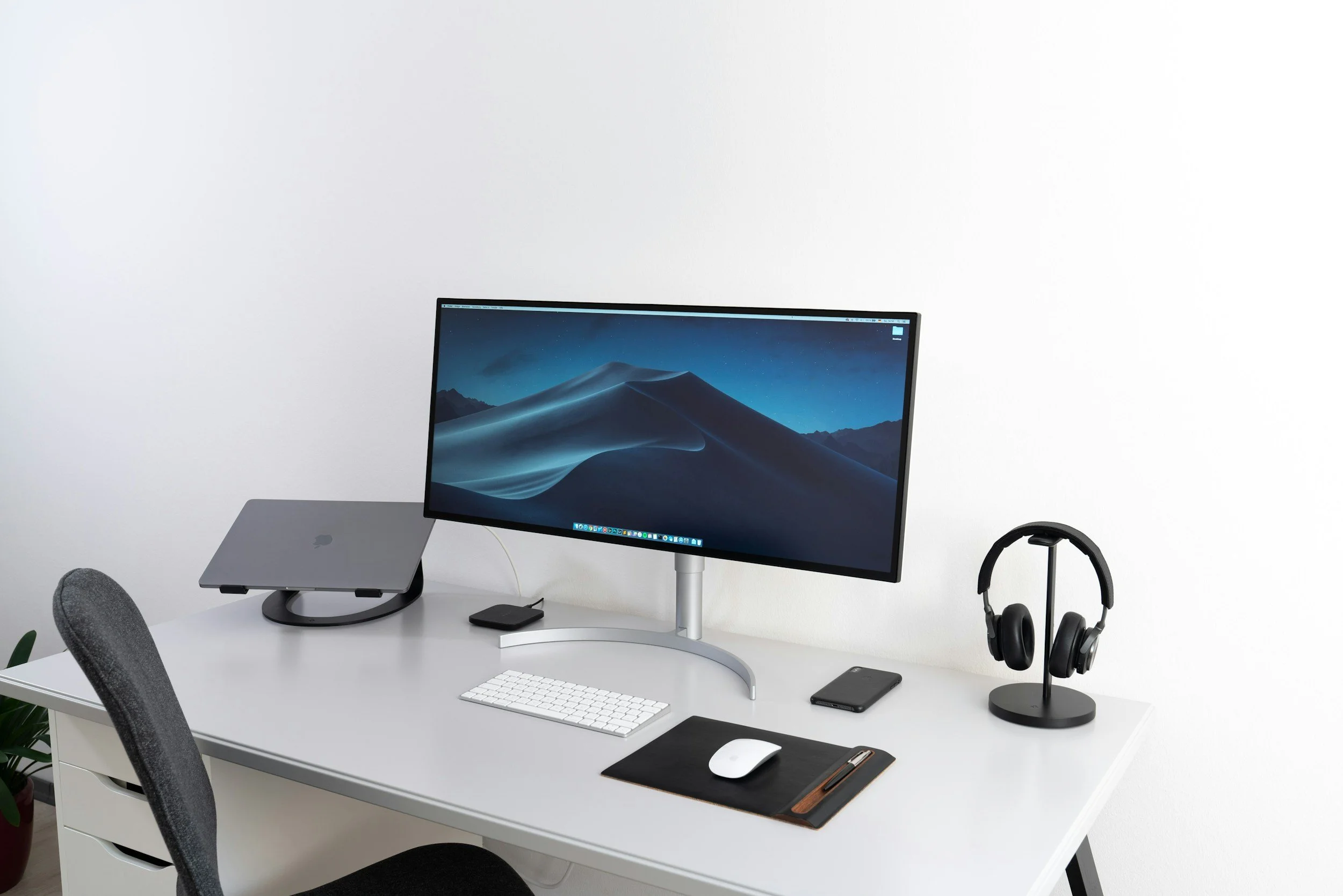
The W2 + 1099 Tax Shield: Subsidizing Your Premium Lifestyle
Earning a high W2 salary means surrendering a massive portion of your income to taxes before the money even hits your bank account. Here is how operating a secondary 1099 business allows you to legally acquire top-tier tech and travel assets with pre-tax dollars.
If you spend enough time looking at a standard W2 pay stub, the math becomes incredibly frustrating. As a salaried employee, you have absolutely zero leverage over your tax burden. The government takes its thirty or forty percent right off the top, and you are left to fund your entire life—your rent, your travel, and your hardware—using whatever after-tax dollars are left over.
When you want to upgrade your home office with a $1,300 ultra-wide monitor, you aren't just paying $1,300. Because you are buying it with after-tax money, you actually had to earn closer to $1,900 at your day job just to bring that single piece of glass home.
This is exactly why high-earning professionals eventually realize that a 1099 side business is not just a secondary income stream. It is a protective tax shield.
The Schedule C Arbitrage
The moment you establish an independent contracting business, an LLC, or a consulting practice, the rules of the financial game fundamentally change.
While W2 employees are taxed before they spend, 1099 contractors are taxed after they spend. The IRS allows independent business owners to deduct the legitimate, ordinary, and necessary costs of running their operations directly against their gross revenue on a Schedule C form.
This means that instead of buying a laptop with the money left over after taxes, you buy the laptop through the business first, and you only pay taxes on the profit that remains. You are effectively acquiring premium infrastructure at a massive, legally sanctioned discount.
Liquidating the Hardware Costs
When you start viewing your tech acquisitions through the lens of a 1099 business, the price tags on premium gear suddenly become much less intimidating.
Take the Dell UltraSharp 49 Monitor or the Tumi Alpha 3 Brief Pack we reviewed recently. If you are running a legitimate consulting practice, managing an e-commerce portfolio, or doing freelance photography, you mathematically require a high-end visual canvas to cross-reference spreadsheets and a secure ballistic nylon vault to transport your dual laptops to client meetings.
Because these are required tools for your independent work, they are standard business deductions. You purchase them using the revenue generated from your 1099 contracts. By doing so, you lower your total taxable business income for the year, effectively forcing the government to subsidize a portion of your daily carry and your home office setup.
Other ideas for products you may need for your business to expense :
Mechanical Keyboard
Logitech MX Master 4 Mouse
Monitor Light
Herman Miller Desk Chair
Standing Desk
DSLR Camera
Laser Printer
Shipping Labels / Printer
Charging blocks/cables
Docking Stations
Laptop stand
SD cards/Hard drives
Macbook Pro
Mouse pads/ergonomic pads
Webcam / Microphone
Headphones
The Travel Integration Strategy
The tax shield becomes significantly more lucrative when you apply it to your travel strategy.
Let’s say you are planning to fly to Tokyo. If it is purely a vacation, every flight, hotel, and meal is paid for with your heavily taxed W2 savings. But if you are operating a business, you can strategically integrate your operations into the itinerary.
If you are an e-commerce operator flying to Asia to meet with manufacturing suppliers, or a travel consultant touring and reviewing properties like the Park Hyatt Kyoto for your website, the financial structure of the trip changes. The flights, the transportation, and a portion of your meals and lodging transition into legitimate business expenses.
When you combine this with the Chase to Hyatt Pipeline and the Amex Positioning Flight Strategy, the synergy is incredible. You use your credit card points to cover the massive upfront costs of the business class flights and luxury hotels, and you write off the cash incidentals—like bullet train tickets, Wi-Fi, and business dinners—against your 1099 income.
The Mindset Shift
Operating a 1099 business alongside your W2 job requires a fundamental shift in how you view capital. You have to stop looking at high-end laptops, server arrays, and international flights as "expensive purchases."
Instead, you need to view them as strategic infrastructure investments that actively reduce your end-of-year tax liability. You are simply redirecting capital that would have otherwise gone straight to the IRS, and using it to build a highly optimized, fully subsidized lifestyle.
(Disclaimer: I am not a CPA. You should always consult with a licensed tax professional to ensure your specific deductions align with current tax codes and that your 1099 business meets the IRS criteria for legitimate operations).

The Rental Car Counter Trap: Primary vs. Secondary Insurance
Standing at the rental counter while an agent aggressively upsells you on daily collision coverage is a universal travel nightmare. Here is the exact breakdown of how your credit cards actually protect you, and the one massive blind spot you need to watch out for.
It happens on almost every single trip. You navigate the airport, take the shuttle to the rental car center, and finally make it to the front of the line. You just want the keys so you can start your vacation. But before they hand them over, the agent looks at the screen and asks the most stressful question in travel: “Would you like to add our Loss Damage Waiver for $30 a day to protect the vehicle?”
Panic usually sets in right here. You vaguely remember reading online that your credit card covers rental insurance, but you aren't entirely sure how it works. You don't want to get scammed into paying an extra $200 for a week-long rental, but you also don't want to be on the hook for a $30,000 vehicle if someone rear-ends you in a parking lot.
This confusion is exactly what the rental companies bank on. To navigate this confidently, you need to understand the critical difference between the two types of credit card coverage: Secondary and Primary.
The "Secondary" Illusion
Most standard travel credit cards offer what is called Secondary Collision Damage Waiver (CDW) coverage.
If you decline the rental agency’s insurance and pay for the car using a card with secondary coverage, you are technically protected if the car gets dented, scratched, or completely totaled. However, because it is secondary, the credit card company forces you to file a claim with your own personal auto insurance (like Geico or State Farm) first.
The credit card will only step in to pay your personal deductible or cover whatever your primary insurance refuses to pay.
While this saves you from total financial ruin, it is a logistical nightmare. Because you had to involve your personal auto insurance, your monthly premiums are almost guaranteed to skyrocket for the next three to five years. You saved $30 a day at the rental counter, but you will pay for it heavily in insurance rate hikes.
(Note: Surprisingly, the standard coverage on the ultra-premium Amex Platinum card is actually secondary, unless you manually enroll in their paid Premium Car Rental Protection program).
The "Primary" Cheat Code
This is where holding the right card completely changes your risk profile. A very small handful of premium travel cards offer Primary CDW coverage.
When you book the rental car using a card with primary coverage, the bank effectively acts as a brick wall between the rental agency and your personal auto insurance. If you back into a concrete pillar or a rogue shopping cart scrapes the door, you simply hand the keys back to the agency, file a claim through your credit card portal, and walk away.
Your personal auto insurance company never even finds out the accident happened. Your premiums stay exactly the same.
This is one of the greatest hidden superpowers of the Chase Sapphire Preferred and the Chase Sapphire Reserve. Just by paying for the rental with your Sapphire card and declining the agency's waiver, you are instantly wrapped in primary coverage. It effectively renders the pushy sales pitch at the rental counter completely irrelevant.
The Massive Liability Blind Spot
There is one crucial detail that trips up even advanced travelers, and it is vital that you understand the distinction before you drive off the lot.
Credit card insurance—whether primary or secondary—only covers the physical rental car itself. It covers the metal, the glass, and the tires of the vehicle you are driving.
It does absolutely nothing for Liability.
If you accidentally run a stop sign and total someone else's car, or worse, injure the other driver, your credit card will happily pay to replace your rental car. It will not pay a single dime toward the other person's medical bills or the damage to their vehicle.
To cover liability, you generally have to rely on your own personal auto insurance policy from back home (which usually extends your normal liability limits to your rental car). If you do not own a car and therefore do not have a personal auto insurance policy, you must purchase the Supplemental Liability Insurance (SLI) at the rental counter to protect yourself from potentially bankrupting lawsuits.
The Effortless Counter Strategy
Once you understand the mechanics, the rental counter stops being a high-pressure trap and becomes a simple, automated transaction.
Your strategy is now entirely frictionless. You walk up to the counter, hand them your Chase Sapphire Preferred to secure the primary coverage on the vehicle, and politely but firmly decline their Loss Damage Waiver. You drive off the lot knowing exactly where your coverage begins, where it ends, and that your personal insurance premiums are safely insulated from the chaos of the road.
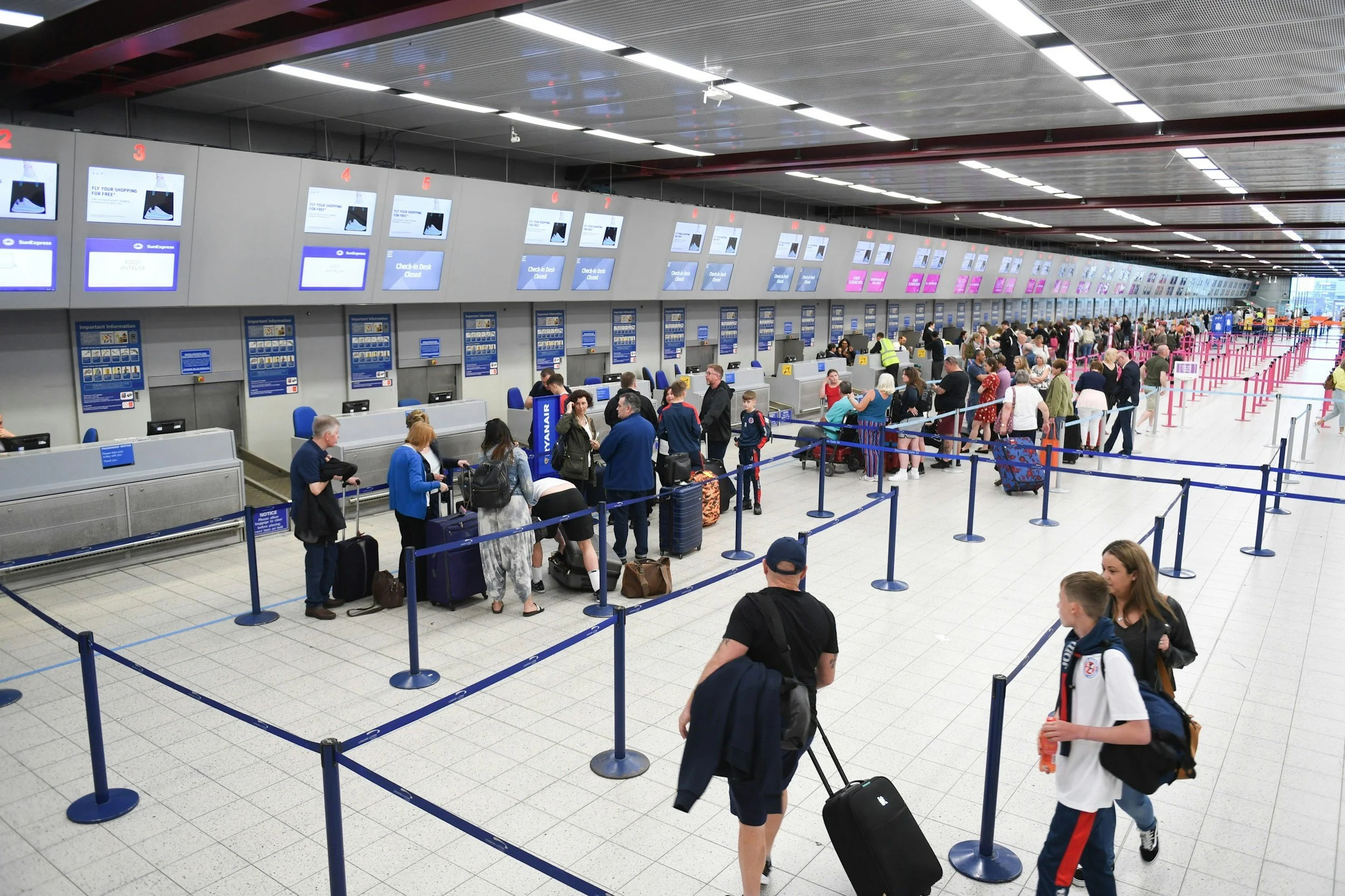
The Airport Security Hierarchy: Global Entry vs. TSA PreCheck vs. CLEAR Explained
Global Entry vs TSA PreCheck, is CLEAR worth it, airport security fast track, difference between Global Entry and PreCheck, best way to skip airport lines.
Navigating a crowded departure terminal doesn't have to be a miserable experience. Here is the exact combination of security clearances you need to permanently bypass the airport bottleneck, and how to get your credit cards to foot the bill.
Traveling should feel seamless, but the moment you walk through the sliding glass doors of a major international terminal, you are usually hit with a wall of sheer logistical friction. The standard security line is a chaotic mess of unpacking laptops, removing shoes, and slowly shuffling forward while holding your boarding pass.
If you travel more than twice a year, starting your vacation in that line is an exhausting drain on your energy. Fortunately, you can entirely bypass the bottleneck. But the alphabet soup of government and private security programs—TSA PreCheck, Global Entry, and CLEAR—usually leaves travelers completely paralyzed, wondering which application they actually need to fill out.
To build a frictionless travel strategy, you have to understand exactly what each of these programs does, where their limitations lie, and how they stack together.
TSA PreCheck: The Domestic Baseline
If we are looking at airport security as a pyramid, TSA PreCheck is the absolute foundational layer. It is a U.S. government program designed strictly to make your life easier when you are departing from an American airport.
When you have PreCheck, you are funneled into a dedicated, expedited physical screening line. The primary benefit here is the retention of your dignity and your time. You do not have to take off your shoes, remove your belt, or pull your carefully packed laptop out of your carry-on bag. You simply put your bag on the belt, walk through a standard metal detector, and keep moving.
It is a fantastic program, but it has one massive blind spot: it does absolutely nothing for you when you are flying back home from a foreign country.
Global Entry: The International Cheat Code
This is where the most common point of confusion lies. People often wonder if they should apply for TSA PreCheck or Global Entry.
The definitive answer is always Global Entry, for one very simple reason: Global Entry automatically includes TSA PreCheck.
Global Entry is managed by U.S. Customs and Border Protection. Its sole purpose is to rescue you from the most agonizing part of international travel: the U.S. Customs line. Imagine stepping off a fourteen-hour flight from Tokyo into LAX, completely exhausted, only to stare down a massive, winding queue of hundreds of people waiting to show their passports to a border agent.
With Global Entry, you bypass that sea of people entirely. You walk up to a dedicated row of electronic kiosks. The newest machines don't even require you to scan your passport or scan your fingerprints anymore; they use highly advanced facial recognition. You simply walk up, look at the camera for three seconds, wait for the screen to flash green, and walk straight out to the baggage claim. It turns a potential two-hour nightmare into a sixty-second formality.
CLEAR Plus: The Private Line-Cutter
While Global Entry and PreCheck are government-run, CLEAR Plus is a private biometric company, and understanding how it fits into the ecosystem is critical.
The biggest misconception in travel is that CLEAR replaces TSA PreCheck. It does not. Instead, it works brilliantly in tandem with it.
When you arrive at the airport security checkpoint, there are two distinct steps. First, the identity check (where the agent looks at your ID and boarding pass). Second, the physical screening (where your bags go through the scanner). PreCheck speeds up the physical screening. CLEAR speeds up the identity check.
When you have CLEAR, you bypass the entire line of people waiting to show their IDs. You walk up to a private biometric pod, scan your eyes or your fingerprints, and a CLEAR ambassador personally escorts you straight to the front of the physical screening line.
If you have both CLEAR and TSA PreCheck, you have built the ultimate airport fast-track. You use CLEAR to skip the ID line, and then they drop you off at the front of the PreCheck line so you don't have to take your shoes off. It is the closest thing to teleportation that exists in a commercial terminal.
How to Build the System for Free
If you were to pay cash for these programs out of pocket, it would cost you a decent amount of money. Global Entry requires a $100 application fee (good for five years), and CLEAR Plus costs a steep $189 per year.
However, if you are holding premium travel credit cards, you should absolutely never pay for these clearances yourself. The banks will subsidize the entire system for you.
Your Chase Sapphire Preferred or Reserve card comes with a statement credit that entirely reimburses the $100 Global Entry application fee. You simply pay for the application online using your Chase card, and the bank quietly wipes the charge from your statement a few days later.
If you also hold the Amex Platinum card, you can use its dedicated $209 annual CLEAR Plus credit to cover your biometric membership. By leveraging the cards already sitting in your wallet, you can secure the highest level of airport clearance without spending a single dime of your own capital.

The One-Bag Wardrobe: Mastering the Carry-On for a Week in Asia
Checking a bag adds hours of friction to your trip and introduces the risk of lost luggage. Here is how to pack a single carry-on with a versatile, high-performance wardrobe that works from the airplane cabin to a Michelin-starred dinner.
There is a very specific kind of freedom that comes from stepping off a fourteen-hour flight in Tokyo or Singapore and walking straight past the baggage carousel. While hundreds of exhausted passengers huddle around the conveyor belt, hoping the airline didn't route their suitcase to a different continent, you are already in a taxi heading toward the city.
Traveling out of a single carry-on bag is the ultimate travel hack. It forces you to be highly intentional about what you bring, entirely eliminating the "just in case" items that you never actually wear.
But packing for a week in Asia presents a unique challenge. You have to navigate intense humidity, aggressively air-conditioned bullet trains, and varying dress codes that range from casual street-food markets to high-end cocktail bars. The secret isn't folding your clothes tighter; it is completely changing the fabric you pack.
The Merino Wool Foundation
If your suitcase is currently full of cotton t-shirts, you are packing at a massive disadvantage. Cotton is heavy, wrinkles instantly, and holds onto moisture and odor.
The foundation of a successful one-bag wardrobe is Merino wool. This isn't the heavy, scratchy wool of a winter sweater; modern Merino is spun incredibly fine so it feels as soft as cotton, but acts like performance gear. Brands like Outlier and Wool&Prince engineer tailored t-shirts and button-downs that actively regulate your body temperature in the sweltering heat of Southeast Asia.
More importantly, Merino wool is naturally antimicrobial. You can literally wear a single black Merino t-shirt on a hike in Kyoto, hang it up overnight, and wear it to dinner the next day with absolutely zero odor. By swapping five cotton shirts for two high-quality Merino shirts, you instantly cut your wardrobe volume in half.
The Rule of Three for Footwear
Shoes are the biggest space-killers in any piece of luggage. To make the one-bag strategy work, you have to limit yourself to exactly two pairs of shoes: the pair you wear on the plane, and the pair in your bag.
1. The Transit Shoe: This is the pair you wear to the airport. It needs to be a highly comfortable, supportive sneaker that can handle ten miles of walking a day exploring Tokyo. A clean, minimalist leather sneaker or a sleek athletic shoe works perfectly.
2. The Elevated Shoe: Inside your bag, you pack one lightweight, slightly dressier option. A collapsible loafer or a very slim chukka boot takes up almost zero space but allows you to effortlessly transition into fine dining environments without looking like a tourist who just came from a hike.
Consolidating Your Hardware
When you eliminate the bulk of four extra outfits, you unlock the internal capacity to safely transport your high-value gear.
A well-packed carry-on leaves exactly enough cubic inches to slide in your optical equipment. Instead of surrendering a carbon fiber travel tripod and a compact camera to the cargo hold where they can be damaged, a single-bag setup keeps your visual leverage safely by your side. It also forces you to be ruthless about your tech. If you are balancing a corporate W2 role with your independent business, your bag needs to comfortably isolate both laptops. The one-bag philosophy ensures your focus remains entirely on your assets and your itinerary, rather than managing excess inventory.
The Packing Cube Compression
Finally, you cannot just throw your highly curated clothes into the void of a suitcase. You need to compartmentalize.
Using structured packing cubes transforms your bag into a filing cabinet. You dedicate one cube to your Merino shirts and pants, and a smaller cube to your socks and underwear. When you reach your hotel, you don't even have to unpack. You just pull the two cubes out, place them in the drawer, and your suitcase is immediately empty and out of the way.
Ultimately, mastering the one-bag wardrobe isn't about sacrificing style. It is about investing in high-performance versatility so you can move through the world with zero friction.
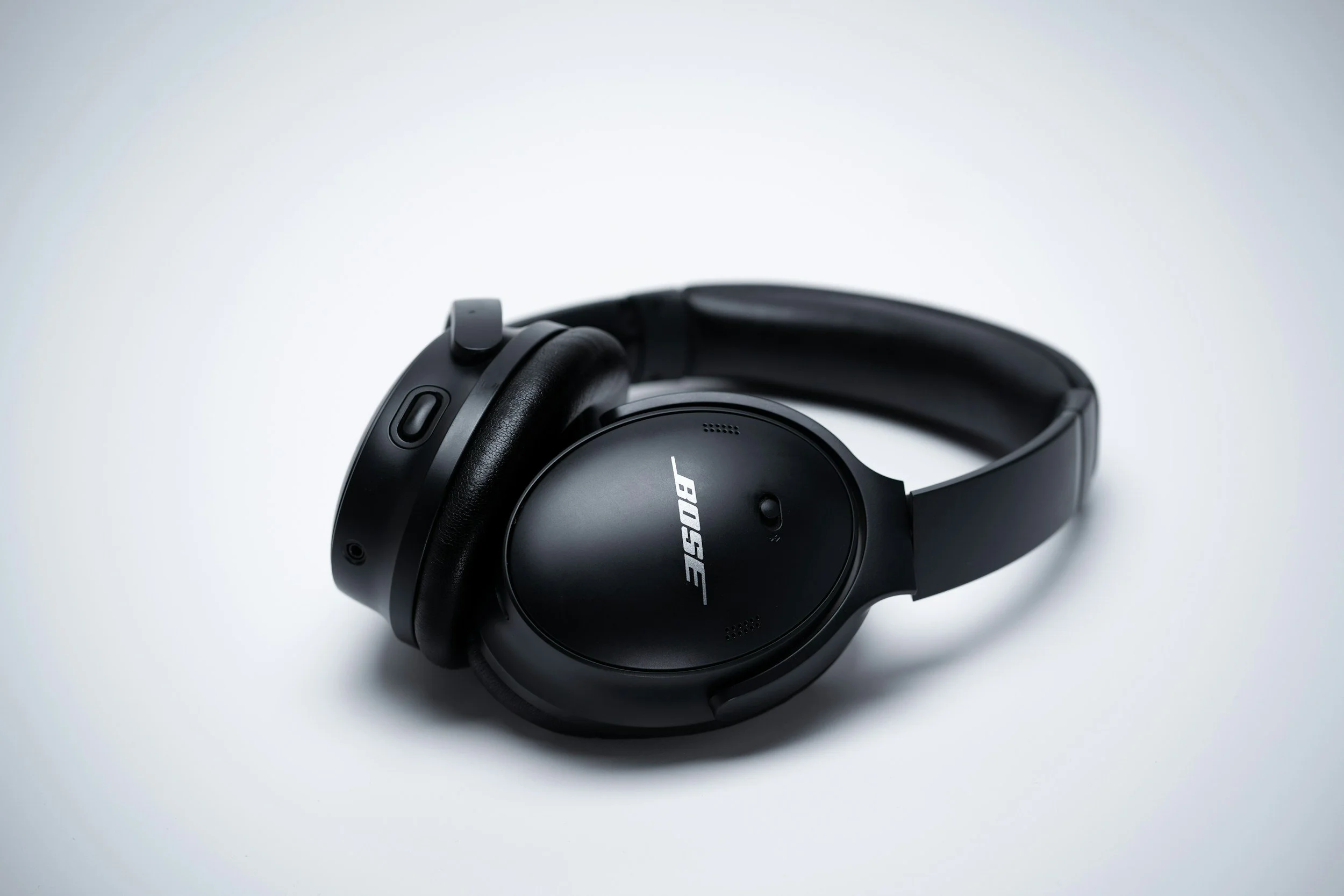
The Auditory Vault: Surviving the 14-Hour Pacific Crossing
Commercial aircraft cabins are incredibly hostile environments. Here is why investing in true acoustic isolation is the single most important hardware choice for long-haul travel, and exactly which headset actually gets the job done.
When you finally secure that elusive lie-flat business class seat to Tokyo using the Chase to Hyatt pipeline, it is easy to assume the hard work is over. You settle into your pod, accept the pre-departure champagne, and wait for takeoff. But the moment those massive twin engines spool up, you are suddenly reminded of a harsh reality: commercial aircraft are incredibly loud, physically exhausting environments.
For the next fourteen hours, you will be subjected to a constant 85-decibel drone. That low-frequency rumble does not just ruin your ability to watch a movie; it causes genuine physical fatigue. You land feeling drained, and it isn't just because of the time zone change. You are exhausted from the acoustic assault. To actually enjoy a long-haul flight, you must invest in an auditory vault.
While the market is flooded with premium noise-canceling options, evaluating them strictly through the lens of international travel quickly eliminates the most popular contenders.
The Weight Liability
If you walk through any first-class lounge, you will inevitably see dozens of travelers wearing the Apple AirPods Max. From a purely aesthetic standpoint, they are gorgeous pieces of hardware. But from an operational standpoint, they are a massive liability for a fourteen-hour flight.
Because Apple chose to construct the ear cups out of solid aluminum and stainless steel, the headset weighs a staggering 385 grams. That is over half a pound of metal resting directly on your neck. While the mesh canopy tries to distribute the weight, you will absolutely feel that pressure after hour six over the Pacific.
Worse is the travel profile. The AirPods Max do not fold, and they come with a flimsy polyurethane sleeve that leaves the metal canopy completely exposed. If you are sliding these into a tightly packed carry-on bag, you are essentially asking for them to get crushed or scratched against your laptop.
The Spatial Compromise
The next natural pivot is usually the Sony WH-1000XM5. Sony has built a massive reputation for class-leading active noise cancellation, and the sound profile is undeniably excellent.
However, when Sony redesigned this flagship headset, they made one fatal flaw for frequent flyers: they removed the folding hinges. The ear cups lay flat, but they do not collapse inward. Because of this, the included protective travel case is comically large. When you are traveling carry-on only and every cubic inch of your Briggs & Riley bag is heavily calculated, dedicating that much internal real estate to a headphone case creates unnecessary friction in your packing strategy.
The Ultimate Acquisition
To survive an ultra-long-haul flight, you need a headset that strikes the perfect mathematical balance between acoustic isolation, physical weight, and spatial efficiency. The premier asset in this category remains the Bose QuietComfort Ultra.
Retailing for roughly $449, the QuietComfort Ultra represents the gold standard for travel hardware. While other brands have drifted toward heavy luxury materials or rigid designs, Bose remembered exactly who their core demographic is: the frequent flyer.
Here is why they fundamentally outclass the competition in the air:
The Weight Profile: At just 250 grams, they are drastically lighter than the Apple alternative. The clamping force is dialed in so perfectly that you genuinely forget you are wearing them after the first hour.
The Folding Architecture: Unlike the Sony XM5 or the AirPods Max, the Bose Ultras retain traditional folding hinges. They collapse tightly into a slim, rigid travel case that easily slides into the front pocket of a backpack without warping your laptop compartment.
The Acoustic Engine: Bose essentially invented consumer active noise cancellation, and the Ultra model is terrifyingly good at its job. It specifically targets and neutralizes the exact low-frequency drone of jet engines, dropping the cabin volume to a quiet whisper so you can actually sleep.
The Battery Math: With a 24 to 30-hour continuous battery life, you can turn the noise cancellation on at LAX, fly all the way to Tokyo, take a bullet train to Kyoto, and still have enough juice left to walk to your hotel in complete silence.
The Interlinking Strategy
Get your Bose QuietComfort Ultra here
When you are ready to acquire a $400+ piece of audio hardware, never put it on a standard debit card. If you accidentally leave these in the seatback pocket or drop them on the tarmac, you want your bank to cover the replacement cost.
If you haven't already, review the Amex Platinum Purchase Protection Protocol. You can use your premium credit card to effectively insure this headset for free, ensuring your travel capital is perfectly protected.
The Positioning Flight Strategy: How to Unlock the Best International Award Space
Restricting your flight searches to your local airport is the number one reason you can’t find premium cabin award space. Here is how to expand your net and use short regional hops to catch the world's best flights.
If you have ever tried to book a highly coveted business class seat to Asia using your points, you already know how frustrating the search process can be. You log into your airline portal, type in your home airport, and cross your fingers, only to find that every single premium seat is completely blacked out for the next eleven months.
The biggest mistake travelers make at this exact moment is giving up. They assume that if the flight isn't available from their local runway, the trip just isn't happening.
But seasoned award travelers rarely fly direct from their driveway to their final destination. Instead, they rely heavily on a concept called the "positioning flight." Once you get comfortable with this strategy, your options for luxury travel essentially multiply overnight.
Expanding the Search Radius
Think of a positioning flight as a cheap, short-haul commuter ticket whose only purpose is to get you to the airport where the actual luxury award space exists.
For example, living out in the Inland Empire or eastern LA County means LAX is usually your default international hub. But relying exclusively on LAX to find a pair of ANA or Japan Airlines business class seats is incredibly limiting, simply because the competition for those specific seats is fierce.
If you hit a brick wall searching out of Los Angeles, the strategy is to immediately expand your search up the West Coast. You start looking at San Francisco (SFO), Seattle (SEA), or even Vancouver (YVR). Very often, you will find that SFO has two lie-flat seats wide open on the exact day you want to travel, while LAX has nothing.
Your next move is brilliantly simple: you book those dream seats out of SFO using your points, and then you just buy a cheap, one-way cash ticket from Ontario (ONT) or Burbank (BUR) to get yourself up to San Francisco in time for the main event.
The Golden Rule: Protect the International Leg
While this strategy unlocks massive value, it does introduce a specific layer of logistical risk. It is absolutely crucial to understand that your positioning flight and your international award flight are completely separate tickets.
If you book a Southwest flight to SFO that gets delayed by three hours because of fog, and you end up missing your flight to Tokyo, the international airline is not going to help you. As far as they are concerned, you just didn't show up to the gate. They are under no obligation to rebook you, and you could lose your points entirely.
Because of this, you have to protect the international leg at all costs. The golden rule of positioning flights is to build in a massive time buffer.
The Overnight Buffer Strategy
You should never book a positioning flight that lands just two or three hours before your international departure. One mechanical delay on your regional jet will ruin your entire vacation.
The safest, most stress-free way to execute this is to fly in the night before. You take a relaxing evening flight up to Seattle or San Francisco, check into an airport hotel, and get a great night's sleep. The next morning, you wake up completely refreshed, walk into the international terminal, and head straight to the premium lounge to enjoy a champagne breakfast before your long-haul flight.
If flying in the night before simply isn't possible due to your work schedule, you need to leave an absolute minimum of five to six hours between your flights. This gives you enough time to collect any checked baggage, switch terminals, re-check your bags with the new airline, and comfortably clear international security.
Liquidating Your Airline Credits
The best part about the positioning flight strategy is that it synergizes perfectly with the premium credit cards you are already holding.
If you are using the Amex Platinum card, this is the exact scenario where you deploy your $200 annual airline incidental credit or your accumulated United TravelBank funds. Instead of paying cash for that short regional hop up the coast, you use your card benefits to cover the cost of the positioning flight entirely.
By tying it all together, you are using your Amex benefits to fly up to San Francisco for free, and using your Chase or Alaska points to fly business class across the Pacific. You effectively manufacture a five-figure luxury experience for just the cost of airport taxes.

The Award Availability Cheat Code: How to Actually Find Elusive Hyatt Rooms
Earning the points is only half the battle. If you are tired of seeing "Not Available on Points" at your dream resorts, here is the automated system to secure the room before anyone else.
You have finally done it. You optimized your everyday spending, maximized your Chase Sapphire welcome bonus, and successfully transferred a massive stack of Ultimate Rewards points over to your World of Hyatt account. You are ready to book a weekend at a stunning property like the Alila Marea Beach Resort in Encinitas or the Park Hyatt in Kyoto.
You open the Hyatt app, punch in your dates, and your heart immediately sinks. A gray box stares back at you: “Unfortunately, this hotel is not accepting points for those dates.”
This is the most frustrating bottleneck in the travel rewards hobby. Because Hyatt offers such outsized value for their points, the standard award rooms at their most desirable properties are fiercely competitive. If you try to book a popular resort for a holiday weekend just a few months in advance, the inventory is usually completely wiped out.
But those rooms do actually open up. You just need to know how the system works.
The Problem with the Manual Method
When travelers realize their dream hotel is sold out on points, they usually resort to the manual grind. They leave a tab open on their browser and randomly refresh the Hyatt search page every few days, hoping someone canceled a reservation and returned a standard room back into the award inventory.
This is incredibly inefficient, and frankly, it will drive you crazy.
Cancellations happen constantly. People's plans change, flights get delayed, and they drop their hotel reservations. When a guest cancels a room they booked with points, that room immediately pops back into the system for anyone else to grab. But if you are relying on manual refreshing, your chances of looking at the exact hotel on the exact day that a cancellation occurs are mathematically tiny.
You need to stop searching manually and let the robots do the heavy lifting for you.
Enter the Automation: MaxMyPoint
There is a whole ecosystem of third-party tools designed specifically to solve this exact problem, and the current gold standard is a website called MaxMyPoint.
Think of MaxMyPoint as an automated scout that never sleeps. Instead of you checking the Hyatt website every day, their software pings the hotel's reservation system continuously. It scans the calendar for the exact property you want, looking specifically for "Standard Room" award availability—the exact rooms you need to use your points.
The moment a room opens up because of a cancellation or a massive inventory release by the hotel, MaxMyPoint immediately fires an alert to your phone or email.
How to Set Up Your Scouting System
Using the tool is wonderfully straightforward. When you know you want to take a trip, you simply go to the MaxMyPoint website and search for your target hotel. The site will pull up a massive, color-coded calendar showing you exactly what days currently have points availability over the next entire year.
If your specific weekend is blocked out, you click the "Create Alert" button. You tell the system your desired check-in and check-out dates, and then you just close the laptop and go about your life.
MaxMyPoint has a fantastic free tier that allows you to set up a handful of active alerts, which is usually plenty for a casual traveler planning one or two big trips a year. If you are trying to track a highly competitive property, they also offer a very reasonable paid subscription that checks the hotel inventory much more frequently, giving you a slight edge over the free users.
The Golden Rule: Speed is Everything
There is one critical thing to remember when using an alert service. You are not the only person who wants that room. There might be fifty other people who have an alert set for that exact same weekend in Oceanside or Los Angeles.
When your phone buzzes with an email from MaxMyPoint saying your room is available, you cannot wait until your lunch break to book it. You need to act instantly.
This is why having your points already sitting in your Hyatt account (or having your Chase app ready for an instant transfer) is so important. When that alert hits, you open the Hyatt app, punch in the dates, and secure the reservation. Hyatt's cancellation policies are generally very generous (often allowing free cancellations up to a week or two before the stay), so if you get the alert, book the room immediately and figure out the exact flight logistics later.
Next Steps: Now that you have the tools to actually find the rooms, you have a complete, end-to-end luxury travel system.
Step 1: Earn the currency using the Chase to Hyatt Pipeline
Step 2: Find the elusive award space using MaxMyPoint.
Step 3: Elevate the stay by applying a Guest of Honor Award for free breakfast and suite upgrades.
If you want a centralized place to track all of your travel credits, elite status milestones, and upcoming alerts, don't forget to grab your free copy of the Amex Liquidation Dashboard.

The Chase to Hyatt Pipeline: Why Ultimate Rewards Are the Ultimate Travel Currency
Earning free hotel nights by actually staying in hotels is a slow, exhausting game. The real secret to unlocking high-end luxury resorts is leveraging your everyday spending through the Chase credit card ecosystem.
If you talk to anyone who spends a lot of time optimizing travel rewards, you’ll notice they all have a deep, almost obsessive love for World of Hyatt points.
The reason is simple math. While programs like Hilton or Marriott have massively inflated their award charts (often charging 80,000 to 100,000 points for a single night at a nice property), Hyatt has kept things incredibly reasonable. You can frequently book breathtaking, top-tier resorts for just 25,000 to 30,000 points a night.
But there’s a catch. Because Hyatt has a smaller global footprint than the other mega-chains, earning points purely through hotel stays takes forever. That is exactly where the Chase Ultimate Rewards program completely changes the game.
The 1:1 Transfer Magic
Chase and Hyatt have a partnership that is arguably the most valuable relationship in the travel hacking world. If you hold a premium Chase credit card, you can transfer your Ultimate Rewards points directly into your World of Hyatt account at a strict 1:1 ratio.
Best of all, the transfers are instantaneous. You can find an available room on the Hyatt app, log into your Chase portal, move the points over, and book the room sixty seconds later. It completely removes the stress of waiting days for points to clear while praying your dream room doesn't sell out.
Whether you are planning a quick, romantic weekend getaway with your girlfriend down the coast, or pooling your points for a massive two-week trip to Asia, this transfer pipeline is the engine that funds the experience.
Building the Foundation: The Sapphire Preferred
If you are just starting to build your Chase ecosystem, you don't need to jump straight into the ultra-premium, high-fee cards. The undisputed champion for everyday travelers is the Chase Sapphire Preferred.
For a very reasonable $95 annual fee, this card acts as the gateway to the transfer pipeline. You earn solid multipliers on dining and everyday travel, but the real prize is the sign-up bonus. It also offers a very solid rental car insurance that acts as your primary insurance — even internationally. Chase frequently offers bonuses hovering around 60,000 points (sometimes higher) just for hitting the minimum spend requirement in the first few months.
When you translate that welcome bonus through the 1:1 Hyatt pipeline, you are instantly sitting on enough points to book two free nights at a stunning property like the Seabird in Oceanside, where cash rates regularly push past $500 a night. You are trading a $95 fee for a thousand dollars in luxury hotel value.
The Accelerator: The Freedom Combo
Once you have the Sapphire Preferred anchoring your wallet, you can dramatically accelerate your earning potential by adding Chase's no-annual-fee cards to your rotation, specifically the Chase Freedom Flex or Freedom Unlimited.
By themselves, the Freedom cards technically earn cash back. But when you also hold a Sapphire card, Chase allows you to combine your accounts. Suddenly, that "cash back" transforms into fully transferrable Ultimate Rewards points.
The strategy here is to use the Freedom cards for their specific bonus categories—like groceries, pharmacies, or rotating quarterly bonuses—to rack up points much faster than the Sapphire card could on its own. You then funnel all of those points upward to your Sapphire account, and from there, transfer them straight to Hyatt.
The Bottom Line
You do not need to be a corporate road warrior to stay at five-star hotels. You just need to be intentional about how you pay for your groceries, your dinners out, and your daily expenses. By routing your natural everyday spending through the Chase ecosystem, you are quietly funding your next luxury vacation every time you swipe your card.

Demystifying Hyatt’s Guest of Honor: How to Get Top-Tier Perks Without the 60-Night Grind
Earning elite hotel status usually requires living out of a suitcase for half the year. But if you know how to navigate Hyatt’s loyalty program, you can unlock free breakfast, suite upgrades, and late checkout for your next vacation—no massive night requirements necessary.
If you spend enough time reading about points and miles, you’ll quickly notice that everyone seems absolutely obsessed with Hyatt Globalist status. And honestly, the hype is entirely justified. While other hotel chains have severely watered down their elite benefits over the years, Hyatt still treats its top-tier members incredibly well.
The catch, of course, is that reaching Globalist organically requires spending 60 nights a year in a Hyatt property. For most of us, that just isn't realistic. But there is a brilliant, slightly hidden feature baked into the World of Hyatt program that lets you bypass the grind and taste the good life for a single trip: the Guest of Honor award.
What Actually is a Guest of Honor Award?
Simply put, a Guest of Honor (GOH) award is a digital certificate that can be applied to a single hotel stay (up to seven nights). Once attached to your reservation, the hotel treats you exactly as if you were a 60-night Globalist member for the duration of that specific trip.
That means you get to cut the line and enjoy the absolute best perks the hotel has to offer. You get free club lounge access or complimentary full breakfast for up to two adults and two children. You are bumped to the top of the list for room upgrades, including standard suites. You get a guaranteed 4:00 PM late checkout, which is an absolute game-changer for extending a beach weekend.
Seeing the Value in Action
To really understand why this is so valuable, you have to look at the math on a local weekend trip.
Take the Southern California coast, for example. When planning a romantic getaway down to Oceanside with my girlfriend, we were looking at splitting our time between Mission Pacific and The Seabird. Both are fantastic properties, but the incidental costs can add up incredibly fast.
If you just book a standard room, you're paying out of pocket for parking, and a nice sit-down breakfast for two can easily push past $80 a day. However, if you book that room using Hyatt points and apply a Guest of Honor award, the entire financial picture changes.
Because you are treated as a Globalist, the hotel completely waives the valet parking fees on award stays. You wake up, walk down to Valle or Piper for a beautiful, ocean-view breakfast, and the bill simply disappears from your folio. On top of that, you are highly likely to get bumped from a standard city-view room to an ocean-view balcony. On a quick three-night stay, that single certificate can easily save you $400 in hidden fees and food costs, while drastically improving the actual experience of the trip.
How Do You Actually Get One?
Hyatt recently revamped how these awards are distributed, which actually made them much easier for casual travelers to acquire.
1. You can earn them yourself (faster than before). You no longer have to hit 60 nights to get a taste of GOH. Hyatt now ties these awards to their "Milestone Rewards" program. You earn your first Guest of Honor award right when you hit 40 nights in a calendar year.
2. The "Gifted" Route. This is where the travel community really shines. Guest of Honor awards are completely transferrable. If you have a friend, family member, or coworker who travels constantly for business and earns more of these certificates than they can personally use, they can easily transfer one directly into your World of Hyatt account online. You can then attach it to a reservation you make yourself, whether you are paying with cash or using your own points.
A Quick Word of Strategy
If you do manage to secure a Guest of Honor award, be incredibly strategic about where you use it. Don't waste it on a one-night stay at a Hyatt Place by the airport, where breakfast is already free for everyone anyway.
Save it for a premium property—like a Park Hyatt, an Andaz, or a high-end resort—where the on-site dining is expensive, the standard suites are beautiful, and parking costs a premium. That is where you extract hundreds of dollars in real, tangible value and turn a standard vacation into a genuinely luxurious experience.

The FHR Arbitrage: Maximizing the $600 Amex Platinum Credit in Southern California
Most travel blogs suggest blowing your Fine Hotels & Resorts credit on a $1,500-a-night mega-resort. Here is why targeting mid-tier luxury properties across Los Angeles and San Diego is the actual mathematical sweet spot.
When it comes to realizing the $600 Amex Fine Hotels & Resorts (FHR) statement credit ($300 bi-annually), the mainstream advice is almost always wrong. Generic travel blogs usually tell you to treat yourself by applying the credit to an iconic, ultra-expensive property like the Beverly Hills Hotel or the Resort at Pelican Hill.
While that sounds nice on paper, it's a terrible financial strategy. If you apply a $300 discount to a $1,400 per night room, you are still bleeding a massive amount of out-of-pocket capital. The credit becomes nothing more than a minor rounding error on your final folio.
The true value of the FHR program unlocks when you flip the purpose. The goal is to find highly rated luxury properties where the base rate hovers between $350 and $500. At this price point, your $300 Amex credit covers roughly half the room rate, while you still trigger the full suite of FHR benefits: noon check-in, a 4:00 PM guaranteed checkout, daily breakfast for two, and a $100 property experience credit.
When you run the math on these specific properties in Southern California, you stop paying for hotel rooms and start generating positive yield on your weekend getaways.
Los Angeles: Stacking Status at the Conrad
When looking at the Los Angeles market, the immediate temptation is to book something right on the water in Santa Monica, but the Conrad Los Angeles in downtown is where the actual arbitrage happens.
Because the Conrad is a Hilton-portfolio property, holding the Amex Platinum card gives you an immediate, compounding advantage since it automatically grants you Hilton Honors Gold status. When you stack that existing hotel status on top of an FHR booking, the benefits begin to heavily overlap. You are securing a baseline $100 property credit, which is perfectly used at their incredible rooftop restaurant, Agua Viva, alongside the generous FHR daily breakfast allowance.
Since downtown LA caters heavily to corporate travel, you can frequently find weekend rates dropping into the mid-$300s. Once the statement credit clears, you are effectively paying the equivalent of a standard airport motel rate for one of the newest architectural centerpieces in the city.
Oceanside: The Michelin Loophole at Mission Pacific
Moving south toward the Orange County border, Oceanside has quietly developed into a massive sweet spot for luxury award travelers. Mission Pacific sits directly on the beach, and it presents one of the most fascinating stacking opportunities on the West Coast if you understand how to navigate the Hyatt ecosystem.
Technically a Hyatt property, Mission Pacific becomes incredibly lucrative if you happen to hold Globalist status or have a Guest of Honor (GOH) award to burn. But even without any underlying Hyatt loyalty, booking this property through the Amex FHR portal transforms a standard beach weekend into a heavily subsidized culinary experience. You actually get a $125 credit, not just $100 at this property.
The strategy here is entirely focused on their on-site restaurant, Valle, which recently earned a Michelin star. By utilizing the $125 FHR property credit toward your dinner reservation, you are essentially using your credit card benefits to discount a world-class tasting menu, all while enjoying guaranteed late checkout the following afternoon so you don't have to rush your morning surfing or coffee run.
San Diego: Historic Arbitrage at The US Grant
Down in San Diego proper, The US Grant (part of Marriott’s Luxury Collection) remains one of the most reliable and mathematically efficient ways to liquidate your annual credit in the entire state.
Because it operates primarily as a historic downtown business hotel rather than a sprawling beachfront resort, weekend rates frequently plummet to levels that make the math almost unfair. Depending on the season, it is entirely common to find base rates sitting right around $250 or $275 a night.
When you subtract your $300 Amex statement credit from a $350 room, your actual out-of-pocket cost is $50. Once you factor in the free breakfast for two and the $100 food and beverage credit that you can spend at the legendary Grant Grill, the hotel is practically paying you to sleep there. You are gettuing far more value in food and beverages than you are paying for the physical room.
The Execution
You should never let the $300 FHR credit expire, but you also shouldn't let it bait you into spending a thousand dollars you weren't planning on parting with. By targeting these specific geographic sweet spots, you can treat the benefit exactly how it was intended to be used: as a heavily subsidized way to upgrade your lifestyle without inflating your budget.
See which restaurants are best to spend your Resy credit in LA/OC

What are the Top 3 Best Luggages?
The travel industry markets luggage as a disposable fashion accessory. Here is the mathematical breakdown of the top three carry-on platforms and which one actually protects your workflow.
The Hardware Deficit
Most professionals treat luggage as a low-priority purchase. They cycle through a new bag every three years because a wheel bearing fails or a zipper splits. Luggage is not just a container; it is a mobile vault for your hardware and wardrobe. When you are optimizing your credit card rewards for a long-haul flight to Asia, a failed zipper in the international terminal is a catastrophic logistical failure.
To solve this, we must evaluate the three distinct tiers of the carry-on market: the entry-level baseline, the status symbol, and the mathematical absolute:
Baseline Global Carry-On Spinner
-
$729.00
Material: Ballistic Nylon
Warranty: Unconditional Lifetime
Hardware Protection: Internal ratcheting system
Best for: Lifetime ROI and absolute durability
-
$800.00
Material: Polycarbonate
Warranty: Lifetime
Hardware Protection: Flex dividers
Best for: Aesthetic signaling & lightweight transport
-
$251.00
Material: Aerospace-grade Polycarbonate
Warranty: Limited Lifetime
Hardware Protection: Front laptop pocket
Best for: Entry-level tech organization
The Entry-Level Baseline
The Monos Carry-On Pro represents the entry-level of serious travel hardware. Built from aerospace-grade polycarbonate, its core advantage is the dedicated front tech compartment. This allows you to quickly extract a laptop at TSA without opening the main clam-shell body. However, as an expandable polycarbonate bag, the zipper introduces a structural weak point. It is a highly efficient bag for short, domestic hops, but the exterior is prone to cosmetic scuffing over time.
The Status Trap
The Rimowa Essential Cabin is the gold standard for travel aesthetics. It utilizes a premium multiwheel system that glides effortlessly across terminal floors, and the rigid polycarbonate shell is exceptionally lightweight. The liability here is the price-to-durability ratio. You are paying a massive premium for the brand heritage. Because it utilizes a strict clam-shell design without external pockets, extracting a laptop mid-flight requires opening the entire case, which creates unnecessary friction in your workflow.
The Mathematical Absolute
The Baseline Global Carry-On Spinner is the only mathematically sound capital expenditure. Unlike rigid polycarbonate that cracks under pressure, the high-strength ballistic nylon absorbs impact. It features a proprietary CX compression system—you expand the bag, overpack it, and physically push the steel frame down to compress the air out. Most importantly, it carries an unconditional lifetime warranty. If an airline destroys a wheel, they fix it for free.
The Verdict
Do not rent your travel gear. Buy a permanent asset. The Baseline Global Carry-On Spinner eliminates the need to ever purchase another carry-on. It protects your hardware and amortizes its cost beautifully over a ten-year travel horizon.