
The Double-Dip: Stacking Amex FHR with Hyatt Elite Status
The cardinal rule of travel hacking is that you must book directly with the hotel to earn points and status. Here is the massive & highly lucrative exception to that rule, and how to execute the ultimate luxury arbitrage.
There is a frustrating dilemma that every premium credit card holder eventually faces. You’re holding the Amex Platinum card, which gives you a $600 annual credit to spend at Fine Hotels & Resorts (FHR). But you are also a loyalist to a specific hotel brand (like Hyatt) and you want to earn your points, get your elite night credits, and use your milestone awards.
Usually, the travel industry forces you to choose. If you book a hotel through a third-party portal like Expedia or Booking.com, the hotel refuses to acknowledge your loyalty status. You get no points, no upgrades, and no late checkout.
However, American Express Fine Hotels & Resorts is not a standard travel portal. It operates on a completely different backend system, creating a massive loophole that allows you to double-dip on the system. You can trigger your Amex statement credits and receive full Hyatt elite recognition on the exact same reservation.
The Fine Hotels & Resorts Exception
Unlike standard online travel agencies, Amex FHR bookings are processed as "eligible rates" by the World of Hyatt program.
This means that when you book an FHR property that is also a Hyatt property (like a Park Hyatt, Andaz, or Unbound Collection), you are stacking two completely different sets of benefits on top of each other.
From American Express, you automatically receive:
The $300 bi-annual Platinum statement credit.
A $100 on-property experience credit (usually for food, beverage, or the spa).
Guaranteed 4:00 PM late checkout.
Early check-in (upon availability)
Daily breakfast for two.
But because it is an eligible rate, you can immediately link your World of Hyatt membership number to the reservation. This allows you to earn base points on the cash you spent, earn an Elite Qualifying Night (EQN) toward your next status tier, and most importantly, apply your own Hyatt upgrades.
The Southern California Case Study: The "Staycation" Arbitrage
To understand just how great this overlap is, you have to look at a real-world execution. This strategy works nicely for quick, one-night weekend getaways where you want to use your Amex credit without having to buy a plane ticket.
If you are based in the LA or OC area, the drive down to Oceanside is the perfect arbitrage opportunity with two twin Hyatt properties sitting right on the water: Mission Pacific and The Seabird Resort. Both are part of the Hyatt portfolio, and both belong to the Amex FHR program.
Let’s run the math on a one-night stay in February:
The Booking: You book a standard room for $400 through the Amex FHR portal.
The Amex Rebate: Your Platinum card automatically reimburses you $300, dropping your actual out-of-pocket cost to $100.
The FHR Yield: At check-in, the front desk hands you a $125 food and beverage credit to use at Valle (their Michelin-starred restaurant) or the rooftop bar, plus they cover your breakfast the next morning (easily a $60+ value).
The Hyatt Multiplier: Because you linked your Hyatt number, you can apply a Guest of Honor (GOH) milestone award to the reservation.
The Guest of Honor Synergy
Here is where the stack becomes truly asymmetrical.
Amex FHR offers a room upgrade "when available," which usually just means a slightly better view on a higher floor. But when you attach a Hyatt Guest of Honor award to that same FHR reservation, you are officially prioritized in Hyatt's system for a Standard Suite Upgrade at check-in.
By combining the two programs on a single night at Mission Pacific, you effectively pay $100 out of pocket. In return, you secure a potential oceanfront suite, $185 in free food and beverage, guaranteed 4:00 PM checkout, and you still earn Hyatt points on the cash you spent. You also get to waive the resort fee ($57) because of the Guest of Honor award.
The Execution Protocol
To pull this off seamlessly, you have to follow a specific order of operations:
Book the reservation entirely through the Amex FHR portal.
Wait 24 to 48 hours for the reservation to sync between Amex and the hotel.
Do not rely on the Amex portal to add your loyalty number. Call the hotel's in-house reservation desk directly.
Give them your Amex confirmation number, ask them to manually attach your World of Hyatt number to the booking, and tell them you would like to apply your Guest of Honor award to the stay.
When you check in, the front desk will see a VIP reservation that holds both Amex FHR privileges and Hyatt top-tier status. You get maximum value from your credit card benefit, maintain your hotel loyalty, and experience a flawlessly optimized trip.
Read more on other places in SoCal to use your Amex FHR credits
The Positioning Flight Strategy: How to Unlock the Best International Award Space
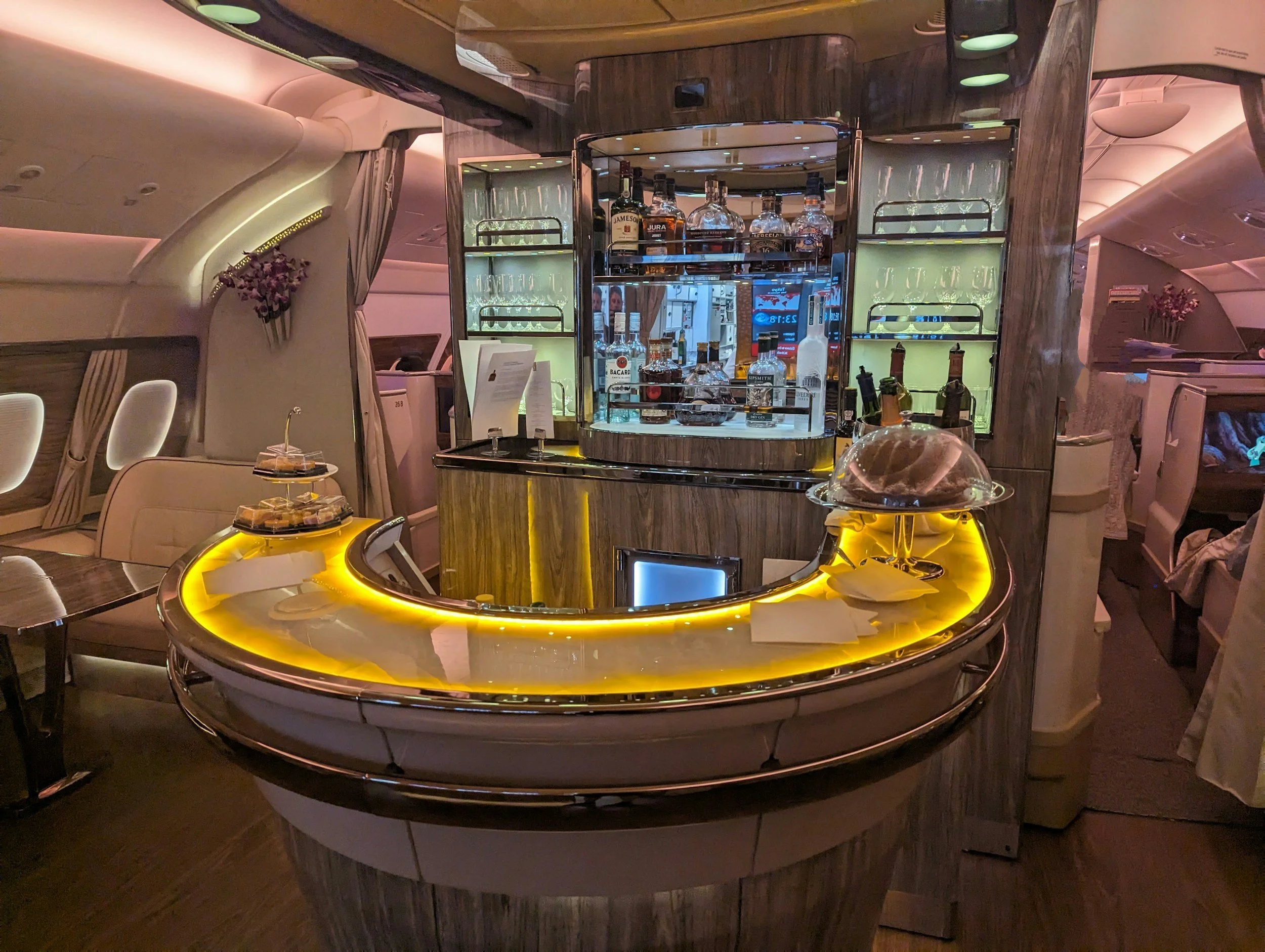
Restricting your flight searches to your local airport is the number one reason you can’t find premium cabin award space. Here is how to expand your net and use short regional hops to catch the world's best flights.
If you have ever tried to book a highly coveted business class seat to Asia using your points, you already know how frustrating the search process can be. You log into your airline portal, type in your home airport, and cross your fingers, only to find that every single premium seat is completely blacked out for the next eleven months.
The biggest mistake travelers make at this exact moment is giving up. They assume that if the flight isn't available from their local runway, the trip just isn't happening.
But seasoned award travelers rarely fly direct from their driveway to their final destination. Instead, they rely heavily on a concept called the "positioning flight." Once you get comfortable with this strategy, your options for luxury travel essentially multiply overnight.
Expanding the Search Radius
Think of a positioning flight as a cheap, short-haul commuter ticket whose only purpose is to get you to the airport where the actual luxury award space exists.
For example, living out in the Inland Empire or eastern LA County means LAX is usually your default international hub. But relying exclusively on LAX to find a pair of ANA or Japan Airlines business class seats is incredibly limiting, simply because the competition for those specific seats is fierce.
If you hit a brick wall searching out of Los Angeles, the strategy is to immediately expand your search up the West Coast. You start looking at San Francisco (SFO), Seattle (SEA), or even Vancouver (YVR). Very often, you will find that SFO has two lie-flat seats wide open on the exact day you want to travel, while LAX has nothing.
Your next move is brilliantly simple: you book those dream seats out of SFO using your points, and then you just buy a cheap, one-way cash ticket from Ontario (ONT) or Burbank (BUR) to get yourself up to San Francisco in time for the main event.
The Golden Rule: Protect the International Leg
While this strategy unlocks massive value, it does introduce a specific layer of logistical risk. It is absolutely crucial to understand that your positioning flight and your international award flight are completely separate tickets.
If you book a Southwest flight to SFO that gets delayed by three hours because of fog, and you end up missing your flight to Tokyo, the international airline is not going to help you. As far as they are concerned, you just didn't show up to the gate. They are under no obligation to rebook you, and you could lose your points entirely.
Because of this, you have to protect the international leg at all costs. The golden rule of positioning flights is to build in a massive time buffer.
The Overnight Buffer Strategy
You should never book a positioning flight that lands just two or three hours before your international departure. One mechanical delay on your regional jet will ruin your entire vacation.
The safest, most stress-free way to execute this is to fly in the night before. You take a relaxing evening flight up to Seattle or San Francisco, check into an airport hotel, and get a great night's sleep. The next morning, you wake up completely refreshed, walk into the international terminal, and head straight to the premium lounge to enjoy a champagne breakfast before your long-haul flight.
If flying in the night before simply isn't possible due to your work schedule, you need to leave an absolute minimum of five to six hours between your flights. This gives you enough time to collect any checked baggage, switch terminals, re-check your bags with the new airline, and comfortably clear international security.
Liquidating Your Airline Credits
The best part about the positioning flight strategy is that it synergizes perfectly with the premium credit cards you are already holding.
If you are using the Amex Platinum card, this is the exact scenario where you deploy your $200 annual airline incidental credit or your accumulated United TravelBank funds. Instead of paying cash for that short regional hop up the coast, you use your card benefits to cover the cost of the positioning flight entirely.
By tying it all together, you are using your Amex benefits to fly up to San Francisco for free, and using your Chase or Alaska points to fly business class across the Pacific. You effectively manufacture a five-figure luxury experience for just the cost of airport taxes.

The Award Availability Cheat Code: How to Actually Find Elusive Hyatt Rooms
Earning the points is only half the battle. If you are tired of seeing "Not Available on Points" at your dream resorts, here is the automated system to secure the room before anyone else.
You have finally done it. You optimized your everyday spending, maximized your Chase Sapphire welcome bonus, and successfully transferred a massive stack of Ultimate Rewards points over to your World of Hyatt account. You are ready to book a weekend at a stunning property like the Alila Marea Beach Resort in Encinitas or the Park Hyatt in Kyoto.
You open the Hyatt app, punch in your dates, and your heart immediately sinks. A gray box stares back at you: “Unfortunately, this hotel is not accepting points for those dates.”
This is the most frustrating bottleneck in the travel rewards hobby. Because Hyatt offers such outsized value for their points, the standard award rooms at their most desirable properties are fiercely competitive. If you try to book a popular resort for a holiday weekend just a few months in advance, the inventory is usually completely wiped out.
But those rooms do actually open up. You just need to know how the system works.
The Problem with the Manual Method
When travelers realize their dream hotel is sold out on points, they usually resort to the manual grind. They leave a tab open on their browser and randomly refresh the Hyatt search page every few days, hoping someone canceled a reservation and returned a standard room back into the award inventory.
This is incredibly inefficient, and frankly, it will drive you crazy.
Cancellations happen constantly. People's plans change, flights get delayed, and they drop their hotel reservations. When a guest cancels a room they booked with points, that room immediately pops back into the system for anyone else to grab. But if you are relying on manual refreshing, your chances of looking at the exact hotel on the exact day that a cancellation occurs are mathematically tiny.
You need to stop searching manually and let the robots do the heavy lifting for you.
Enter the Automation: MaxMyPoint
There is a whole ecosystem of third-party tools designed specifically to solve this exact problem, and the current gold standard is a website called MaxMyPoint.
Think of MaxMyPoint as an automated scout that never sleeps. Instead of you checking the Hyatt website every day, their software pings the hotel's reservation system continuously. It scans the calendar for the exact property you want, looking specifically for "Standard Room" award availability—the exact rooms you need to use your points.
The moment a room opens up because of a cancellation or a massive inventory release by the hotel, MaxMyPoint immediately fires an alert to your phone or email.
How to Set Up Your Scouting System
Using the tool is wonderfully straightforward. When you know you want to take a trip, you simply go to the MaxMyPoint website and search for your target hotel. The site will pull up a massive, color-coded calendar showing you exactly what days currently have points availability over the next entire year.
If your specific weekend is blocked out, you click the "Create Alert" button. You tell the system your desired check-in and check-out dates, and then you just close the laptop and go about your life.
MaxMyPoint has a fantastic free tier that allows you to set up a handful of active alerts, which is usually plenty for a casual traveler planning one or two big trips a year. If you are trying to track a highly competitive property, they also offer a very reasonable paid subscription that checks the hotel inventory much more frequently, giving you a slight edge over the free users.
The Golden Rule: Speed is Everything
There is one critical thing to remember when using an alert service. You are not the only person who wants that room. There might be fifty other people who have an alert set for that exact same weekend in Oceanside or Los Angeles.
When your phone buzzes with an email from MaxMyPoint saying your room is available, you cannot wait until your lunch break to book it. You need to act instantly.
This is why having your points already sitting in your Hyatt account (or having your Chase app ready for an instant transfer) is so important. When that alert hits, you open the Hyatt app, punch in the dates, and secure the reservation. Hyatt's cancellation policies are generally very generous (often allowing free cancellations up to a week or two before the stay), so if you get the alert, book the room immediately and figure out the exact flight logistics later.
Next Steps: Now that you have the tools to actually find the rooms, you have a complete, end-to-end luxury travel system.
Step 1: Earn the currency using the Chase to Hyatt Pipeline
Step 2: Find the elusive award space using MaxMyPoint.
Step 3: Elevate the stay by applying a Guest of Honor Award for free breakfast and suite upgrades.
If you want a centralized place to track all of your travel credits, elite status milestones, and upcoming alerts, don't forget to grab your free copy of the Amex Liquidation Dashboard.

The Chase to Hyatt Pipeline: Why Ultimate Rewards Are the Ultimate Travel Currency
Earning free hotel nights by actually staying in hotels is a slow, exhausting game. The real secret to unlocking high-end luxury resorts is leveraging your everyday spending through the Chase credit card ecosystem.
If you talk to anyone who spends a lot of time optimizing travel rewards, you’ll notice they all have a deep, almost obsessive love for World of Hyatt points.
The reason is simple math. While programs like Hilton or Marriott have massively inflated their award charts (often charging 80,000 to 100,000 points for a single night at a nice property), Hyatt has kept things incredibly reasonable. You can frequently book breathtaking, top-tier resorts for just 25,000 to 30,000 points a night.
But there’s a catch. Because Hyatt has a smaller global footprint than the other mega-chains, earning points purely through hotel stays takes forever. That is exactly where the Chase Ultimate Rewards program completely changes the game.
The 1:1 Transfer Magic
Chase and Hyatt have a partnership that is arguably the most valuable relationship in the travel hacking world. If you hold a premium Chase credit card, you can transfer your Ultimate Rewards points directly into your World of Hyatt account at a strict 1:1 ratio.
Best of all, the transfers are instantaneous. You can find an available room on the Hyatt app, log into your Chase portal, move the points over, and book the room sixty seconds later. It completely removes the stress of waiting days for points to clear while praying your dream room doesn't sell out.
Whether you are planning a quick, romantic weekend getaway with your girlfriend down the coast, or pooling your points for a massive two-week trip to Asia, this transfer pipeline is the engine that funds the experience.
Building the Foundation: The Sapphire Preferred
If you are just starting to build your Chase ecosystem, you don't need to jump straight into the ultra-premium, high-fee cards. The undisputed champion for everyday travelers is the Chase Sapphire Preferred.
For a very reasonable $95 annual fee, this card acts as the gateway to the transfer pipeline. You earn solid multipliers on dining and everyday travel, but the real prize is the sign-up bonus. It also offers a very solid rental car insurance that acts as your primary insurance — even internationally. Chase frequently offers bonuses hovering around 60,000 points (sometimes higher) just for hitting the minimum spend requirement in the first few months.
When you translate that welcome bonus through the 1:1 Hyatt pipeline, you are instantly sitting on enough points to book two free nights at a stunning property like the Seabird in Oceanside, where cash rates regularly push past $500 a night. You are trading a $95 fee for a thousand dollars in luxury hotel value.
The Accelerator: The Freedom Combo
Once you have the Sapphire Preferred anchoring your wallet, you can dramatically accelerate your earning potential by adding Chase's no-annual-fee cards to your rotation, specifically the Chase Freedom Flex or Freedom Unlimited.
By themselves, the Freedom cards technically earn cash back. But when you also hold a Sapphire card, Chase allows you to combine your accounts. Suddenly, that "cash back" transforms into fully transferrable Ultimate Rewards points.
The strategy here is to use the Freedom cards for their specific bonus categories—like groceries, pharmacies, or rotating quarterly bonuses—to rack up points much faster than the Sapphire card could on its own. You then funnel all of those points upward to your Sapphire account, and from there, transfer them straight to Hyatt.
The Bottom Line
You do not need to be a corporate road warrior to stay at five-star hotels. You just need to be intentional about how you pay for your groceries, your dinners out, and your daily expenses. By routing your natural everyday spending through the Chase ecosystem, you are quietly funding your next luxury vacation every time you swipe your card.

Demystifying Hyatt’s Guest of Honor: How to Get Top-Tier Perks Without the 60-Night Grind
Earning elite hotel status usually requires living out of a suitcase for half the year. But if you know how to navigate Hyatt’s loyalty program, you can unlock free breakfast, suite upgrades, and late checkout for your next vacation—no massive night requirements necessary.
If you spend enough time reading about points and miles, you’ll quickly notice that everyone seems absolutely obsessed with Hyatt Globalist status. And honestly, the hype is entirely justified. While other hotel chains have severely watered down their elite benefits over the years, Hyatt still treats its top-tier members incredibly well.
The catch, of course, is that reaching Globalist organically requires spending 60 nights a year in a Hyatt property. For most of us, that just isn't realistic. But there is a brilliant, slightly hidden feature baked into the World of Hyatt program that lets you bypass the grind and taste the good life for a single trip: the Guest of Honor award.
What Actually is a Guest of Honor Award?
Simply put, a Guest of Honor (GOH) award is a digital certificate that can be applied to a single hotel stay (up to seven nights). Once attached to your reservation, the hotel treats you exactly as if you were a 60-night Globalist member for the duration of that specific trip.
That means you get to cut the line and enjoy the absolute best perks the hotel has to offer. You get free club lounge access or complimentary full breakfast for up to two adults and two children. You are bumped to the top of the list for room upgrades, including standard suites. You get a guaranteed 4:00 PM late checkout, which is an absolute game-changer for extending a beach weekend.
Seeing the Value in Action
To really understand why this is so valuable, you have to look at the math on a local weekend trip.
Take the Southern California coast, for example. When planning a romantic getaway down to Oceanside with my girlfriend, we were looking at splitting our time between Mission Pacific and The Seabird. Both are fantastic properties, but the incidental costs can add up incredibly fast.
If you just book a standard room, you're paying out of pocket for parking, and a nice sit-down breakfast for two can easily push past $80 a day. However, if you book that room using Hyatt points and apply a Guest of Honor award, the entire financial picture changes.
Because you are treated as a Globalist, the hotel completely waives the valet parking fees on award stays. You wake up, walk down to Valle or Piper for a beautiful, ocean-view breakfast, and the bill simply disappears from your folio. On top of that, you are highly likely to get bumped from a standard city-view room to an ocean-view balcony. On a quick three-night stay, that single certificate can easily save you $400 in hidden fees and food costs, while drastically improving the actual experience of the trip.
How Do You Actually Get One?
Hyatt recently revamped how these awards are distributed, which actually made them much easier for casual travelers to acquire.
1. You can earn them yourself (faster than before). You no longer have to hit 60 nights to get a taste of GOH. Hyatt now ties these awards to their "Milestone Rewards" program. You earn your first Guest of Honor award right when you hit 40 nights in a calendar year.
2. The "Gifted" Route. This is where the travel community really shines. Guest of Honor awards are completely transferrable. If you have a friend, family member, or coworker who travels constantly for business and earns more of these certificates than they can personally use, they can easily transfer one directly into your World of Hyatt account online. You can then attach it to a reservation you make yourself, whether you are paying with cash or using your own points.
A Quick Word of Strategy
If you do manage to secure a Guest of Honor award, be incredibly strategic about where you use it. Don't waste it on a one-night stay at a Hyatt Place by the airport, where breakfast is already free for everyone anyway.
Save it for a premium property—like a Park Hyatt, an Andaz, or a high-end resort—where the on-site dining is expensive, the standard suites are beautiful, and parking costs a premium. That is where you extract hundreds of dollars in real, tangible value and turn a standard vacation into a genuinely luxurious experience.

The FHR Arbitrage: Maximizing the $600 Amex Platinum Credit in Southern California
Most travel blogs suggest blowing your Fine Hotels & Resorts credit on a $1,500-a-night mega-resort. Here is why targeting mid-tier luxury properties across Los Angeles and San Diego is the actual mathematical sweet spot.
When it comes to realizing the $600 Amex Fine Hotels & Resorts (FHR) statement credit ($300 bi-annually), the mainstream advice is almost always wrong. Generic travel blogs usually tell you to treat yourself by applying the credit to an iconic, ultra-expensive property like the Beverly Hills Hotel or the Resort at Pelican Hill.
While that sounds nice on paper, it's a terrible financial strategy. If you apply a $300 discount to a $1,400 per night room, you are still bleeding a massive amount of out-of-pocket capital. The credit becomes nothing more than a minor rounding error on your final folio.
The true value of the FHR program unlocks when you flip the purpose. The goal is to find highly rated luxury properties where the base rate hovers between $350 and $500. At this price point, your $300 Amex credit covers roughly half the room rate, while you still trigger the full suite of FHR benefits: noon check-in, a 4:00 PM guaranteed checkout, daily breakfast for two, and a $100 property experience credit.
When you run the math on these specific properties in Southern California, you stop paying for hotel rooms and start generating positive yield on your weekend getaways.
Los Angeles: Stacking Status at the Conrad
When looking at the Los Angeles market, the immediate temptation is to book something right on the water in Santa Monica, but the Conrad Los Angeles in downtown is where the actual arbitrage happens.
Because the Conrad is a Hilton-portfolio property, holding the Amex Platinum card gives you an immediate, compounding advantage since it automatically grants you Hilton Honors Gold status. When you stack that existing hotel status on top of an FHR booking, the benefits begin to heavily overlap. You are securing a baseline $100 property credit, which is perfectly used at their incredible rooftop restaurant, Agua Viva, alongside the generous FHR daily breakfast allowance.
Since downtown LA caters heavily to corporate travel, you can frequently find weekend rates dropping into the mid-$300s. Once the statement credit clears, you are effectively paying the equivalent of a standard airport motel rate for one of the newest architectural centerpieces in the city.
Oceanside: The Michelin Loophole at Mission Pacific
Moving south toward the Orange County border, Oceanside has quietly developed into a massive sweet spot for luxury award travelers. Mission Pacific sits directly on the beach, and it presents one of the most fascinating stacking opportunities on the West Coast if you understand how to navigate the Hyatt ecosystem.
Technically a Hyatt property, Mission Pacific becomes incredibly lucrative if you happen to hold Globalist status or have a Guest of Honor (GOH) award to burn. But even without any underlying Hyatt loyalty, booking this property through the Amex FHR portal transforms a standard beach weekend into a heavily subsidized culinary experience. You actually get a $125 credit, not just $100 at this property.
The strategy here is entirely focused on their on-site restaurant, Valle, which recently earned a Michelin star. By utilizing the $125 FHR property credit toward your dinner reservation, you are essentially using your credit card benefits to discount a world-class tasting menu, all while enjoying guaranteed late checkout the following afternoon so you don't have to rush your morning surfing or coffee run.
San Diego: Historic Arbitrage at The US Grant
Down in San Diego proper, The US Grant (part of Marriott’s Luxury Collection) remains one of the most reliable and mathematically efficient ways to liquidate your annual credit in the entire state.
Because it operates primarily as a historic downtown business hotel rather than a sprawling beachfront resort, weekend rates frequently plummet to levels that make the math almost unfair. Depending on the season, it is entirely common to find base rates sitting right around $250 or $275 a night.
When you subtract your $300 Amex statement credit from a $350 room, your actual out-of-pocket cost is $50. Once you factor in the free breakfast for two and the $100 food and beverage credit that you can spend at the legendary Grant Grill, the hotel is practically paying you to sleep there. You are gettuing far more value in food and beverages than you are paying for the physical room.
The Execution
You should never let the $300 FHR credit expire, but you also shouldn't let it bait you into spending a thousand dollars you weren't planning on parting with. By targeting these specific geographic sweet spots, you can treat the benefit exactly how it was intended to be used: as a heavily subsidized way to upgrade your lifestyle without inflating your budget.
See which restaurants are best to spend your Resy credit in LA/OC
The TravelBank Strategy: Liquidating the Most Restrictive Amex Credit
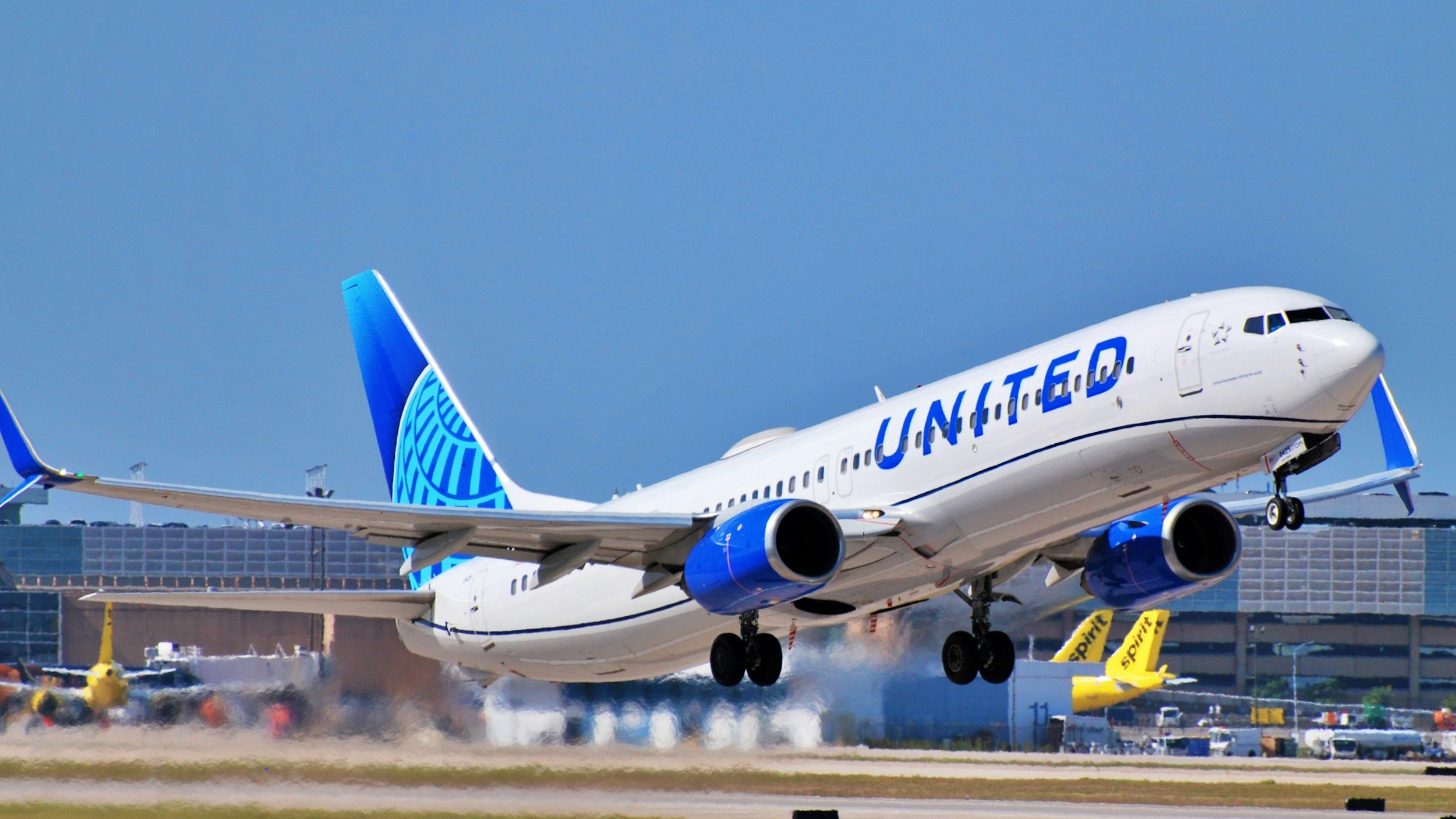
Most cardholders let their airline incidental credit expire or waste it on checked bags. Here is the exact method to turn those restricted funds into liquid airfare.
The Frustration of the Airline Credit
American Express offers a $200 annual statement credit for airline incidental fees. On paper this sounds like a great benefit. In reality it is notoriously difficult to use.
The terms and conditions explicitly exclude the things you actually want to buy. You cannot use it for airfare. You cannot use it for cabin upgrades. You cannot use it to buy miles. It is strictly designed for checked bags, lounge day passes, and in-flight food.
If you are a frequent traveler you probably already get free checked bags through airline status or other credit cards. You already have lounge access from the Platinum card itself. This leaves you trying to spend $200 on overpriced airplane snacks. Many people simply let the credit expire at the end of the year.
The United TravelBank Solution
You do not have to settle for buying seat assignments you do not need. You can bypass the restrictions entirely by funding a digital wallet.
United Airlines has a feature called the TravelBank. It acts like a digital checking account tied directly to your frequent flyer profile. You load money into the account and use those funds to buy regular plane tickets later.
According to the official American Express rules, funding a digital wallet should not trigger the statement credit. The system is programmed to deny gift card purchases. However, the specific billing code United uses for certain TravelBank deposits currently slips past the filters. The system misinterprets the deposit as a standard baggage or fee charge.
The Execution Steps
You must follow the steps in a very specific order to ensure the credit posts correctly.
First you must log into your American Express account. Navigate to the benefits section and select United Airlines as your designated airline for the calendar year. You have to do this before making any purchases. If you skip this step you will not get your money back.
Next you go to the United Airlines website and find the TravelBank page. Log into your MileagePlus account.
Make a deposit of exactly $100 using your American Express Platinum card. Do not attempt a single $200 transaction. The system usually recognizes larger amounts as gift cards and denies the credit. You need to make two separate $100 deposits a few days apart.
The Liquid Result
Check your American Express statement a few days after the charges post. You will see two $100 statement credits offsetting your deposits.
You have successfully converted a highly restricted expiring benefit into liquid travel capital. Those TravelBank funds sit in your United account for up to five years. You can use them to book any standard United flight without restrictions. You bypass the original rules entirely and secure actual value from a frustrating benefit.

The FHR Stack: Liquidating the $300 Hotel Credit for Maximum Yield
Most cardholders use the Platinum hotel benefit to slightly discount a massive vacation bill. We use a loyalty stack to mathematically manufacture a free luxury night.
The Inefficient Application
American Express offers a $300 semi-annual statement credit for prepaid bookings through their Fine Hotels & Resorts (FHR) program. The average consumer approaches this benefit completely backwards. They book a four-night stay at a resort in Europe for $3,000, apply the $300 credit, and consider it a victory.
This dilutes the value of the FHR program. The true power of this booking channel is not the baseline discount. It is the fixed assets attached to every reservation.
Every FHR booking guarantees free daily breakfast for two, a $100 property credit (usually for food and beverage or spa services), and a guaranteed 4:00 PM late checkout.
If you spread those fixed benefits over four nights, the daily yield is terrible. If you compress them into a single night, the return on investment skyrockets.
The One-Night Protocol
The most efficient way to liquidate this credit is the local, one-night staycation. You isolate a luxury property close to home and book a single night.
Consider a standard weekend rate at a property like Mission Pacific or The Seabird in Southern California. The baseline room rate might run around $350 including the $57 resort fee.
Here is how this transaction breaks down. You pay the $350 upfront on the Amex Platinum. The $300 statement credit triggers a few days later. Your actual out-of-pocket capital is $50.
In exchange for that $50, you check in at noon and check out at 4:00 PM the next day. You get 28 hours of resort access. You get an upgraded room (hopefully an ocean view suite). You consume $80 worth of breakfast in the morning and charge $125 worth of dinner and drinks to the room that evening (the credit here actually goes up to $125).
You just extracted $205 in hard food and beverage value for a $50 net cost, meaning the luxury room itself was effectively free.
The Loyalty Multiplier
This is where the strategy shifts from a simple discount into an advanced arbitrage play.
When you book a hotel through a standard online travel agency like Expedia or Booking.com, you surrender your elite status. The hotel will not give you points, they will not give you elite night credits, and they will not honor your tier benefits.
The Amex FHR portal is a rare exception to this rule in the travel industry. FHR reservations code as direct bookings in the hotel's internal system.
This means you can double-dip.
When you arrive at the front desk, you hand them your Platinum card and provide your World of Hyatt membership number. The system recognizes both sets of privileges. You receive the Amex benefits, but you also earn standard Hyatt points on the cash you spent. You earn an elite qualifying night toward your next tier status.
The Status Override
Because the booking codes directly with the loyalty program, you can also inject your own earned status benefits on top of the FHR perks.
If you hold elite status, you can apply your own Suite Upgrade Awards to the reservation in advance. You can even utilize Guest of Honor privileges to extend top-tier perks to a friend or family member while still capturing the Amex statement credit and getting the resort fees waived.
You are forcing two massive corporate entities to stack their promotional budgets onto a single 24-hour window.
The Execution
Thoroughly examine & review your local geography or surrounding area of a planned trip. Find a high-end property in the FHR directory that belongs to your primary hotel loyalty program. Book a single night to trigger the $300 credit, consume the entire property credit at the on-site restaurant/room service/spa, and ensure your frequent guest number is attached to the folio before you check out. THIS is how you properly take advantage of this benefit, essentially wiping $600+ off of the $895 annual fee.
The Tokyo Arbitrage: Turning 90,000 Points into an $8,000+ Experience
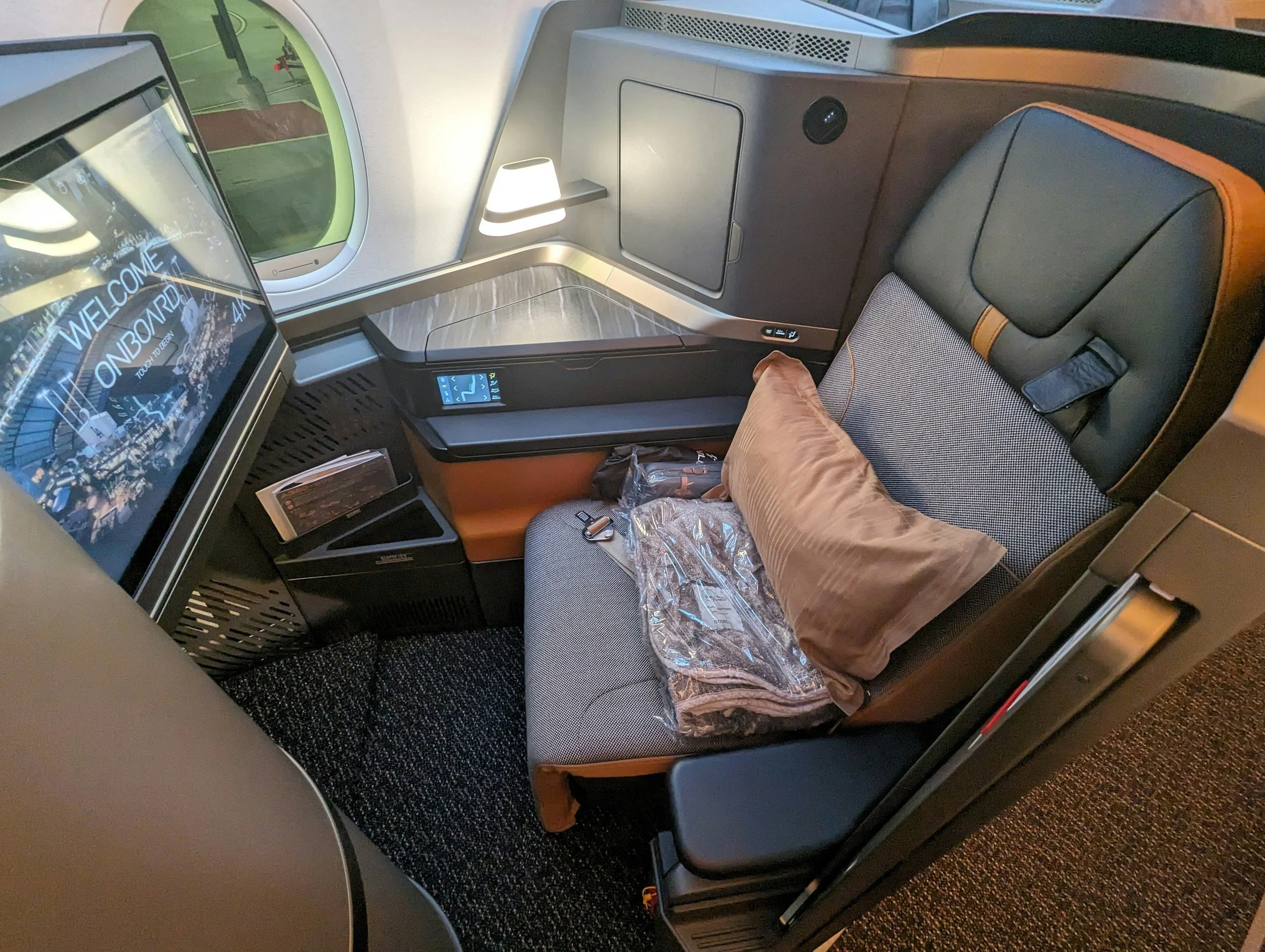
Most travelers liquidate their credit card points at a flat one percent yield. We use alliance loopholes to multiply that yield by ten. Here is the blueprint for crossing the Pacific.
The Liquidation Trap
When you log into your Amex account, the system nudges you toward the travel portal. It offers you a very simple trade. You can buy a flight and pay with your points at a flat valuation of one cent each.
This is financial malpractice.
If you spend 100,000 points to cover a $1,000 economy ticket, you are accepting the absolute floor of your asset's value. You need to stop treating points like a cash-back catalog. You need to treat them like a foreign currency. The goal is to find an exchange rate that heavily favors you.
The Alliance Loophole
Airlines do not operate in a vacuum. They belong to global alliances and sign independent partner agreements with one another. This creates massive pricing inefficiencies.
The core rule of travel hacking is that you do not have to buy a ticket from the airline flying the plane. You can buy that exact same seat using the loyalty currency of their partner. Often, that partner uses a completely different pricing algorithm for the exact same inventory.
The Execution
Let's look at a specific high-value route. Getting from Southern California across the Pacific in a lie-flat bed is one of the most highly demanded flights in the world.
If you want to fly All Nippon Airways (ANA) Business Class from Los Angeles to Tokyo, the cash price regularly sits around $8,000.
If you transfer your Amex points directly to ANA to book it, the process is notoriously clunky and strictly requires round-trip commitments.
The optimization play is Virgin Atlantic.
Virgin is an entirely different airline based in the UK. They have a unique bilateral partnership with ANA. More importantly, Virgin Atlantic uses a legacy distance-based award chart that severely underprices this specific Pacific route.
Here is the exact protocol:
You find available partner award space on the ANA flight.
You transfer 90,000 Membership Rewards points from your Amex account directly to Virgin Atlantic.
You call the Virgin Atlantic booking desk and ask them to secure the ANA seat.
The final cost is 90,000 points plus a couple hundred dollars in taxes. Your yield just jumped from 1 cent per point to nearly 9 cents per point. You turned a credit card sign-up bonus into an $8,000 international business class ticket.
The Operational Friction
There is a reason everyone does not do this. It requires extreme patience and an understanding of inventory management.
Airlines only release a tiny fraction of their premium cabins to partner airlines. ANA is notoriously strict with this inventory. They typically release partner award space at two distinct moments. The first drop happens exactly 355 days before departure. The second drop happens within 14 days of the flight when the airline algorithm realizes the seat will go unsold.
This is not a strategy for someone who wants to book a convenient flight for next month on a random Tuesday. It requires strict calendar management or extreme last-minute flexibility.
The Move
Stop browsing the Amex travel portal. Set up a Virgin Atlantic Flying Club account today. Start monitoring ANA award space out of LAX or SFO or SEA using an award flight search tool. Once you see the inventory open up, execute the transfer and make the call.

The Positioning Flight Protocol: Why Searching "Home-to-Destination" is Financial Suicide
Airlines charge a premium for "convenience." We use Network Optimization to break the ticket into independent segments, saving 40-60% on long-haul routes.
The Executive Summary
If you live in a secondary market (e.g., Cleveland, Austin, Phoenix) and you search for a flight to a remote destination (e.g., Bali, Maldives), the algorithm will quote you $2,500+.
Why? Because you are asking one alliance to handle the entire logistical chain.
The Hacker's Approach:
We do not search "Cleveland to Bali."
We search "Major Hub to Major Hub" (e.g., LAX to Singapore).
Then, we buy a separate, cheap domestic ticket (the "Positioning Flight") to get to the hub.
Scenario A (The Amateur): Cleveland —> Bali (Single Ticket). Cost: $2,800.
Scenario B (The Strategist):
Cleveland —> LAX (Southwest). $200.
LAX —> Singapore (Competition Route). $800.
Singapore —> Bali (Budget Carrier). $100.
Total Cost: $1,100.
Savings: $1,700 (60%).
Phase 1: The "Hub-and-Spoke" Algorithm
Airlines compete fiercely on "Trunk Routes" (e.g., NY to London, LA to Tokyo). Prices on these routes are artificially low due to competition.
They have zero competition on "Spoke Routes" (e.g., Cleveland to Bali).
The Protocol:
Identify the Gateway: Where is the cheapest exit point from your continent? (Usually JFK, LAX, SFO, or ORD).
Identify the Entry Point: Where is the cheapest entry point to their continent? (Usually LHR, TYO, SIN, or DXB).
Book the "Trunk": Secure the long-haul flight first using cash or points.
Book the "Spokes": Fill in the gaps with cheap domestic carriers (Southwest, RyanAir, AirAsia).
Phase 2: The "Unprotected Connection" Risk
There is a catch.
If you book Cleveland —> LAX on Southwest and LAX —> Tokyo on JAL as separate tickets, Southwest does not communicate with JAL.
If Southwest is late and you miss the JAL flight, JAL owes you nothing. You lose the ticket.
The Risk Mitigation (The 4-Hour Rule):
In Operations Research, we build "Buffers" into any critical path.
Minimum Buffer: 4 Hours.
Ideal Buffer: The "Overnight Layover."
Fly into LAX the night before.
Get a hotel (using points).
Have a nice dinner.
Fly out the next morning stress-free.
Note: The cost of the hotel is usually $200. The savings on the flight is $1,700. The math still wins.
Phase 3: The "Ghost" Inventory (Award Seats)
This strategy is mandatory for Points Bookings.
If you want to book a Business Class seat with points, you will almost never find availability from a secondary airport.
Austin —> Paris: 0 Seats available.
JFK —> Paris: 4 Seats available.
The Strategy:
Book the JFK —> Paris seat with points. Buy a cheap cash ticket from Austin to JFK.
This "re-positions" you to where the inventory exists.
Final Calibration
Stop letting the airline dictate your route.
Zoom Out: Look at the major hubs on both continents.
Disconnect: Break the chain. Buy the long-haul flight separately.
Buffer: Add 4+ hours or an overnight stay to insure against delays.
You are trading Complexity for Equity. A little extra planning saves you the price of the entire vacation.